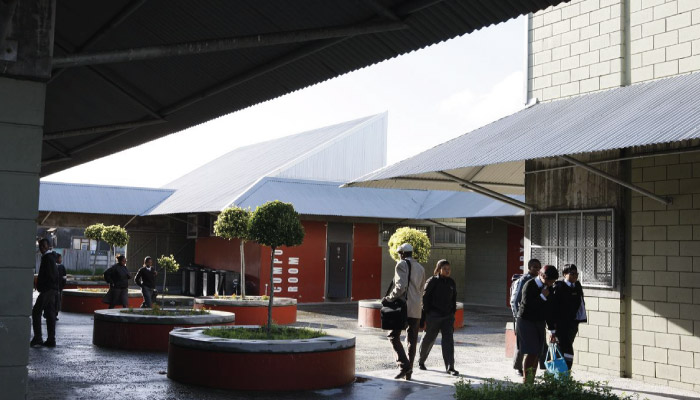
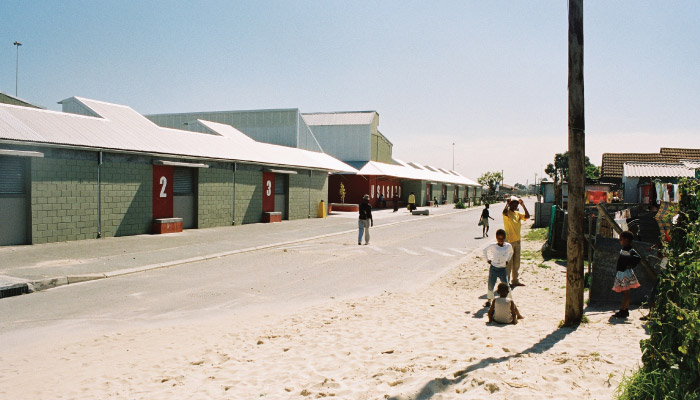
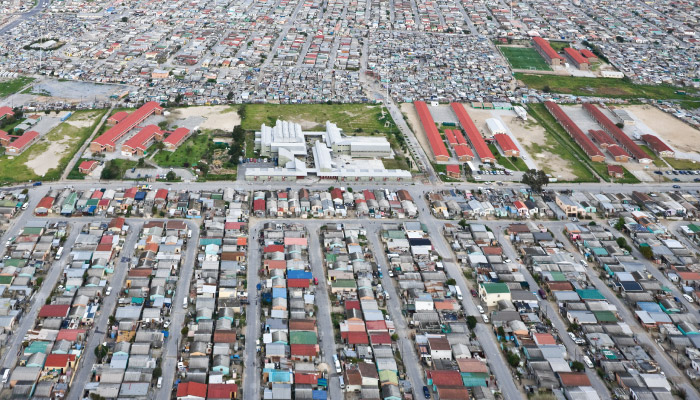
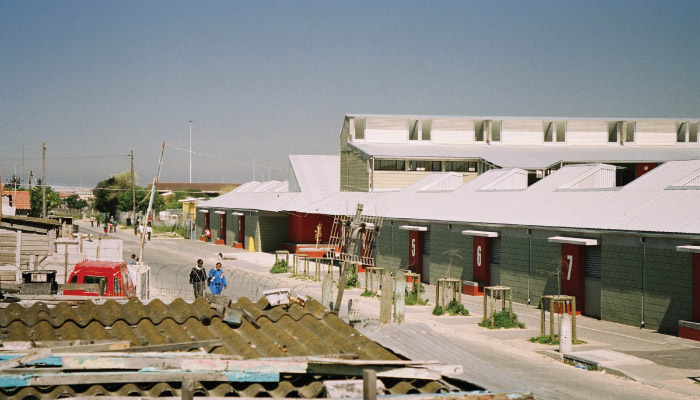
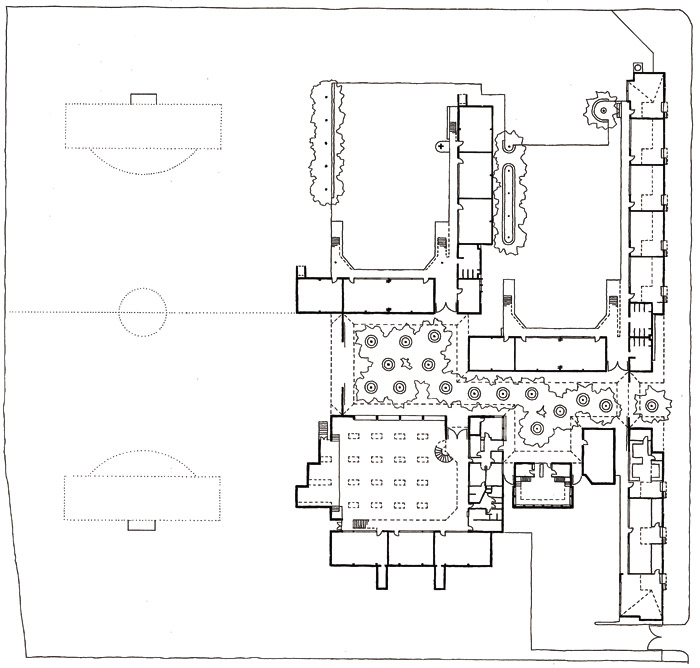
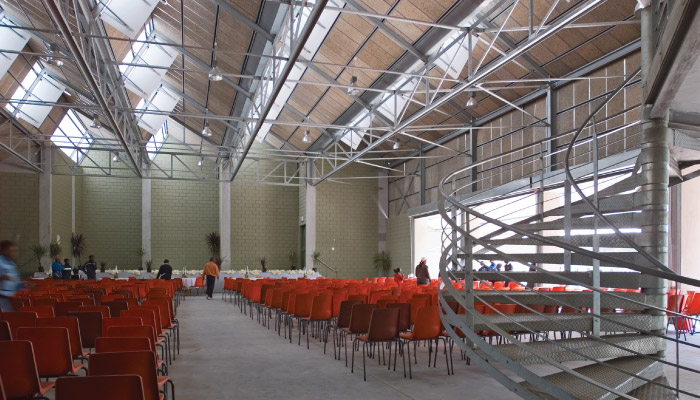
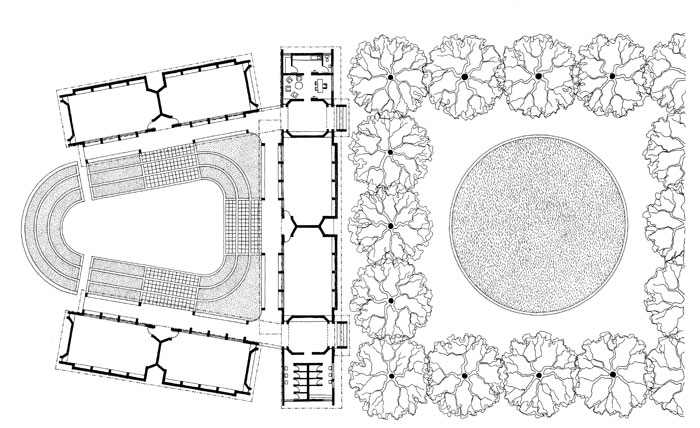
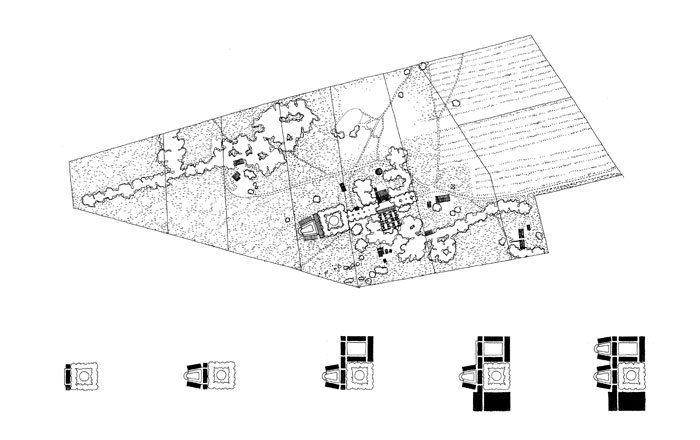
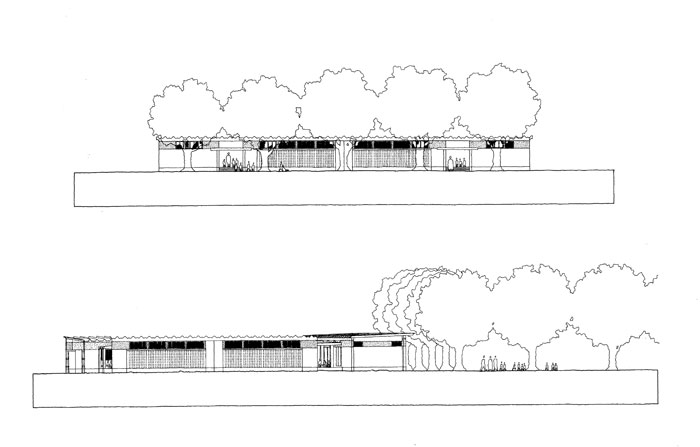
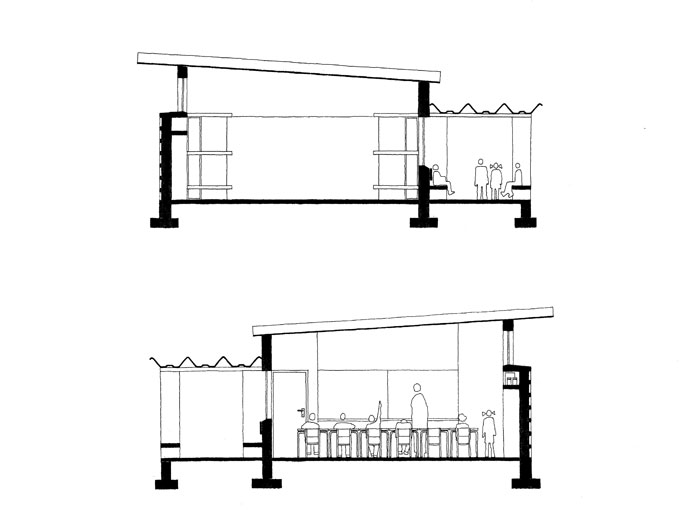
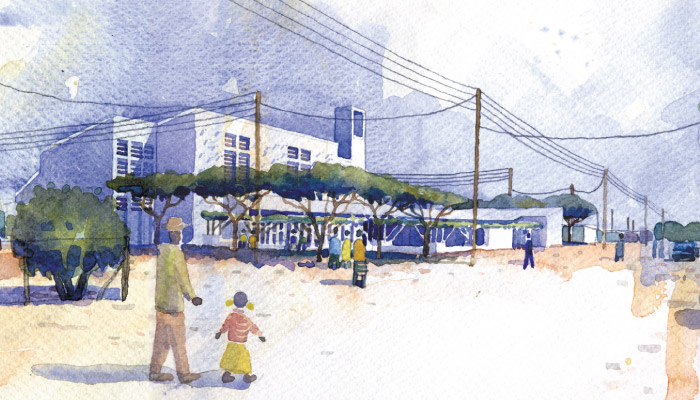
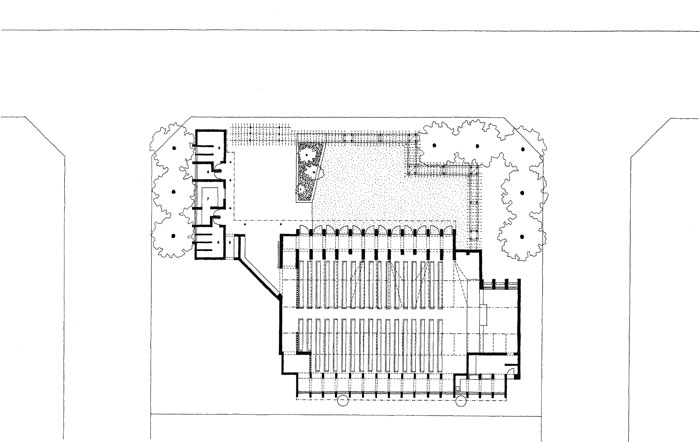
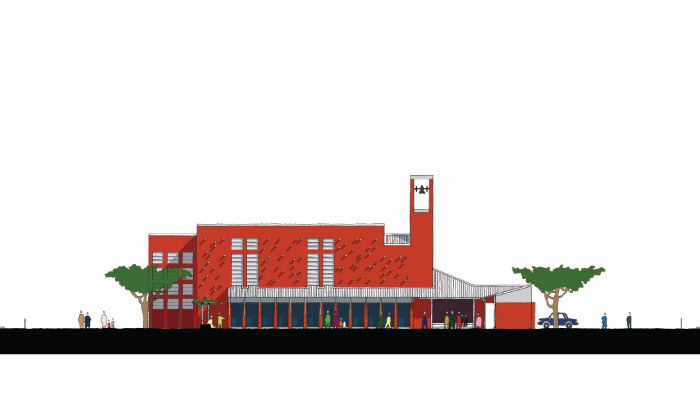
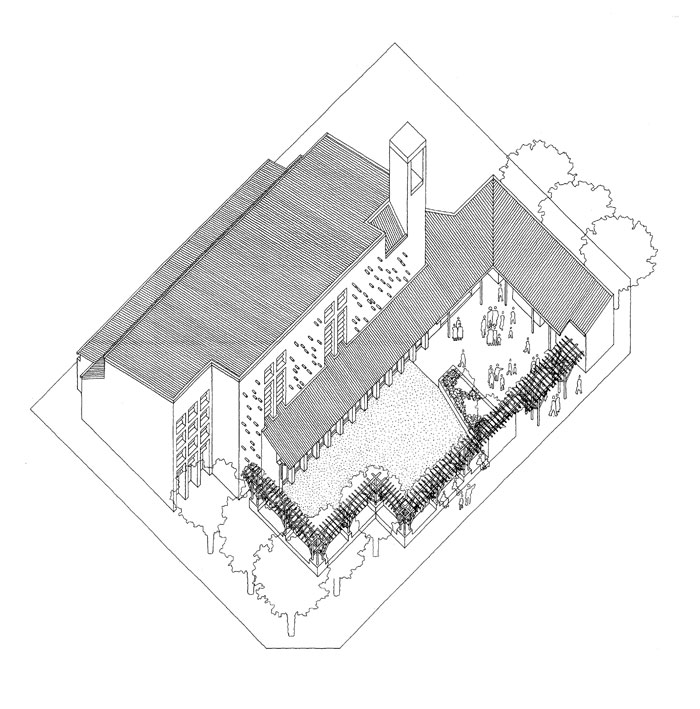
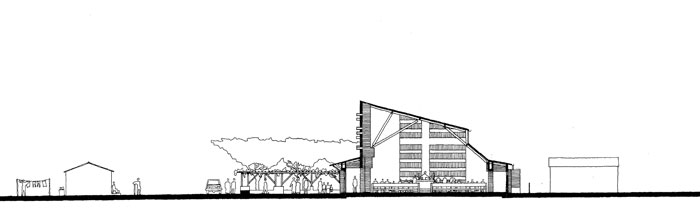
This secondary school was commissioned by the Provincial Government and consists of 37 classrooms, a library, computer room, hall and an administration section. The brief was expanded by the architects to allow the school to be adapted to new Further Education and Training (FET) legislation which calls for more entrepreneurial training.
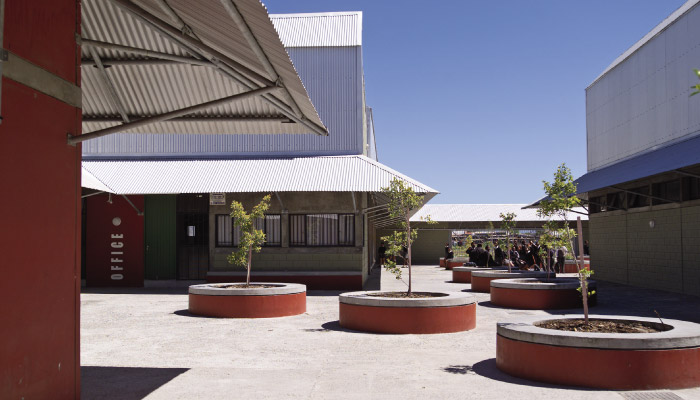
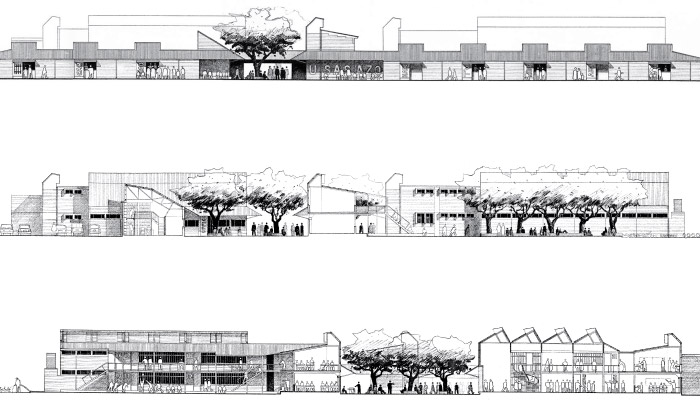
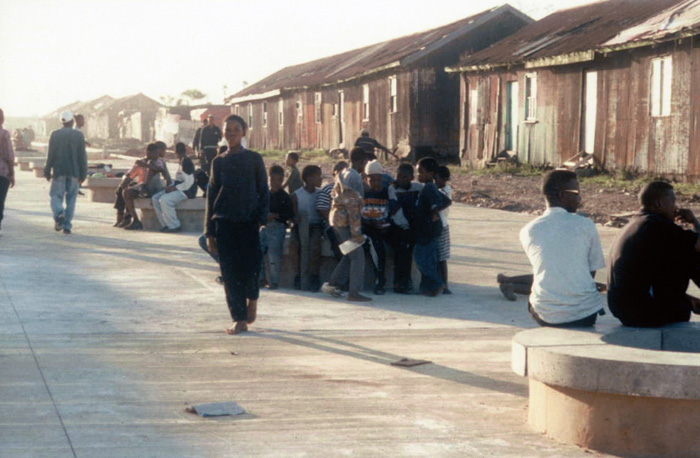
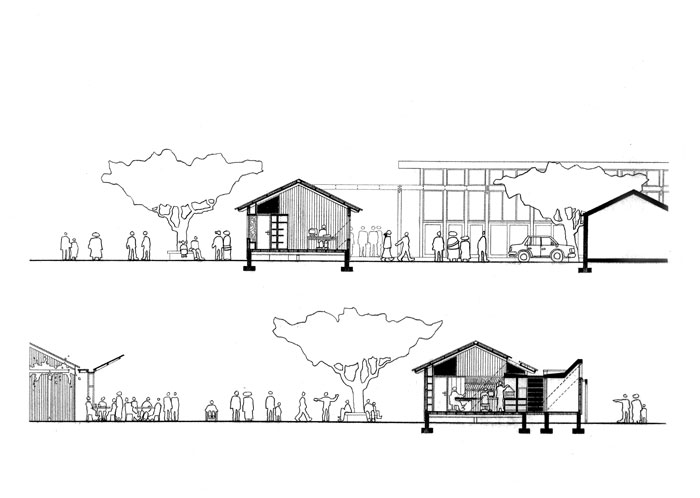
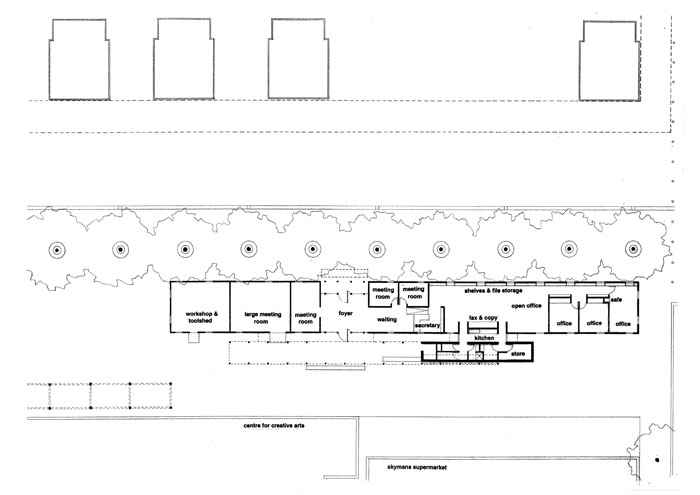
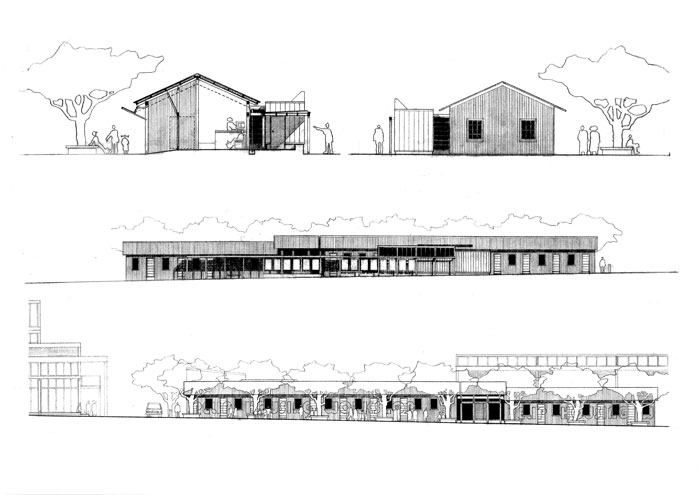
The classrooms on the street edge are designed to be used for entrepreneurial teaching with hatches that open to the street to allow interaction with the public. These classrooms would be used for subjects like car and appliance repair, hair care and food trade. This single storey line of classrooms have a fragmented articulation that mimics the scale of the informal settlement around it, whilst also declaring its institutional character by the giant order of this wall of classrooms.
In an area like Khayelitsha, the schools are often the first public buildings and for a long time the only permanent, durable and expensive buildings. The schools therefore have a critical role in the formation of good quality urban environments. The design of the Usasazo school attempts to perpetuate and formalise the street character of this area in Khayelitsha. The street facade of the school has a strong image that can always be associated with the school.
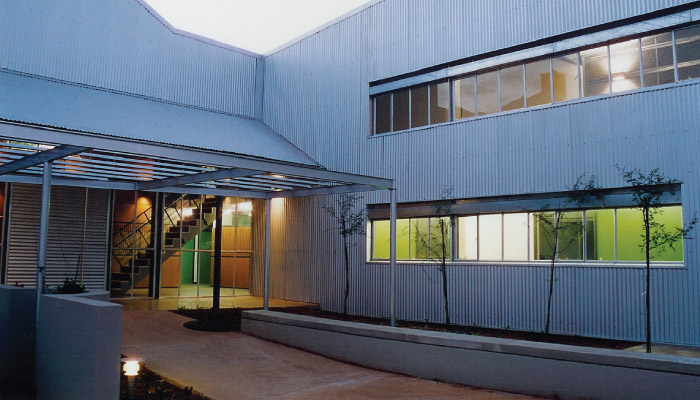
The undulating central circulation space is similar in character to the organic urban spaces created in informal settlements. This space is filled with trees and benches to receive its many users. The canopies on the perimeter of this space are designed to facilitate circulation on the scale of an individual and of a crowd. From this space one enters the various functional blocks of the school.
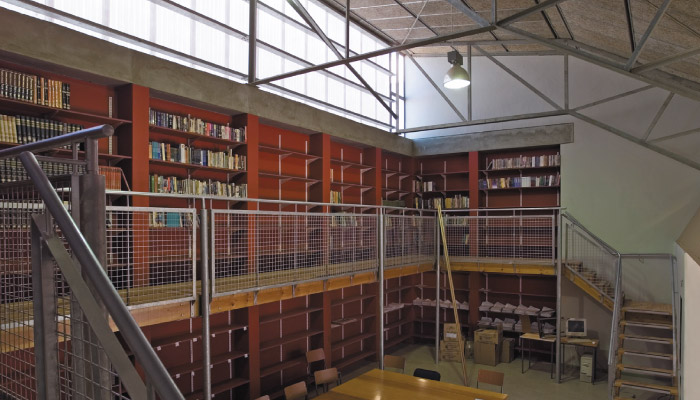
The double volume of the library with its U-shaped wall of books becomes a celebration of academic study.
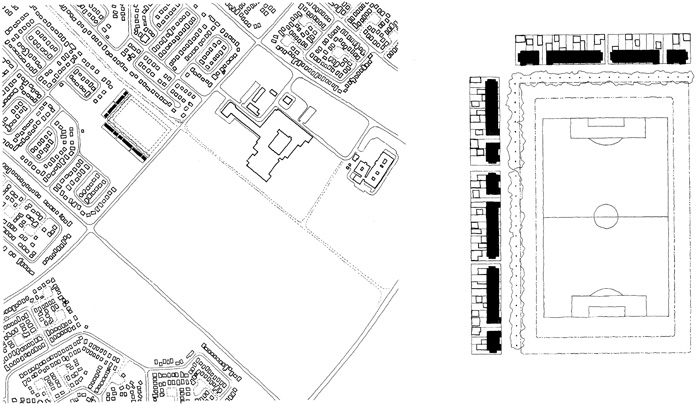
The site for the school is in a densely populated informal settlement. There is an incredible need for land which makes all space very valuable. Therefore the school occupies the smallest possible area and leaves the remaining land for a communal sport field and productive agricultural use.
The L-shaped forms of the classroom blocks protect the open spaces from the strong directional winds and wind driven sand. The section of the buildings are designed to minimise the amount of openings on the windward side of the building that are exposed to the corrosive wind. The roof lights are shaped to cause suction on the leeward side of the roof and to improve natural ventilation in summer when the warmer South-easterly wind blows.
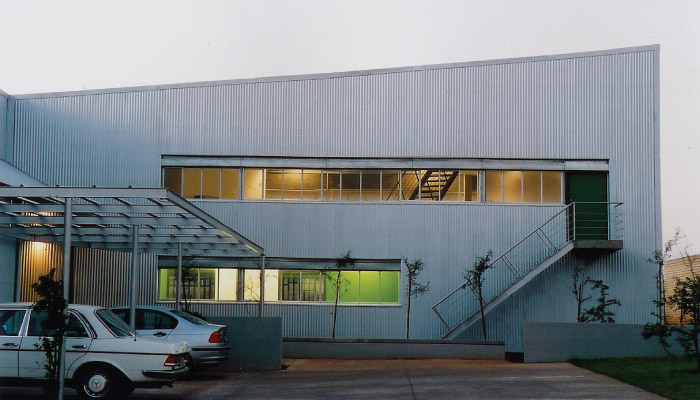
This office and warehouse building was designed for Indigenous Systems, manufacturers and suppliers of specialised medical equipment. The brief called for a building that would not only house the manufacturing and storage requirements of the company but would also serve as a venue for promoting its products.
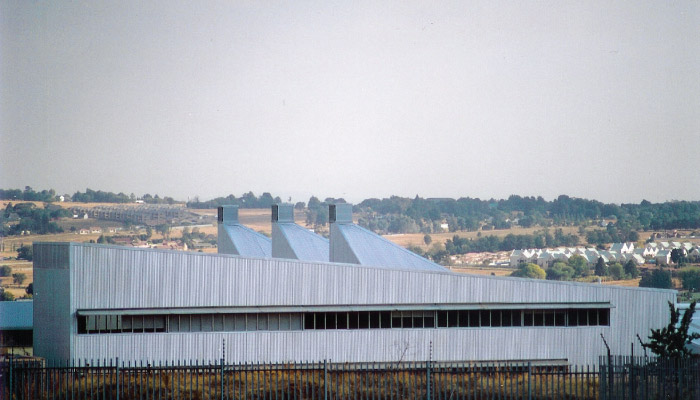
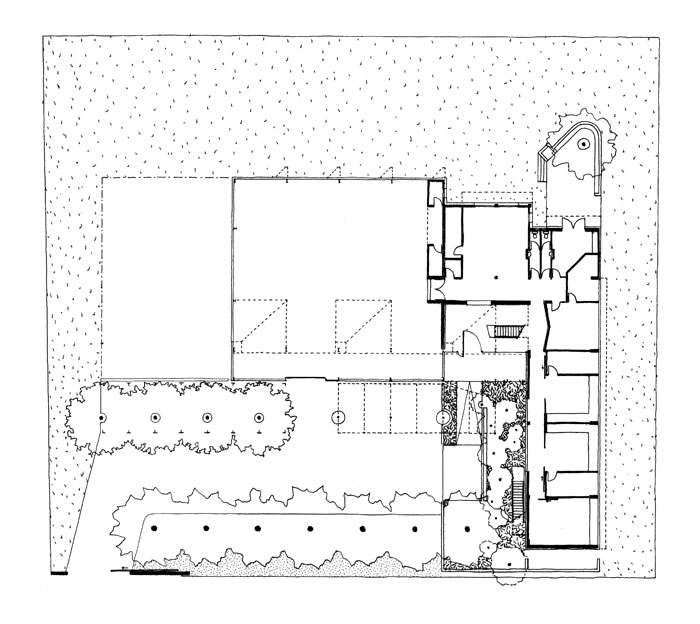
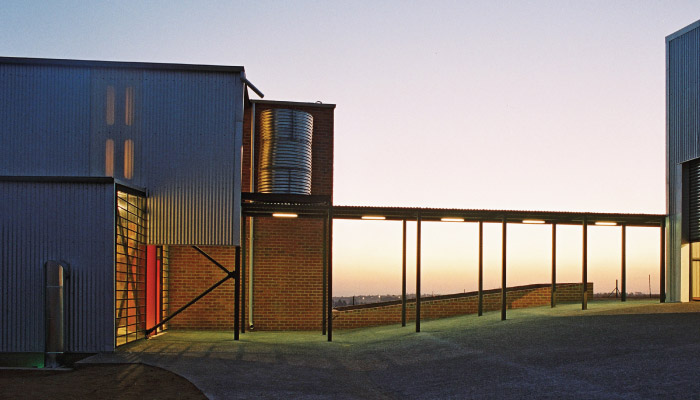
The site is located in a large light industrial office park in Midrand. The office park is next to the N1 Highway and the site for this building is right next to a road reserve for a future road that would cross the N1 highway. The northern facade of this building would face this future road and is visible from the N1. For this purpose the northern facade has a bold and simply articulated facade with a “giant order” forming an iconic image of the building for passing motorists.
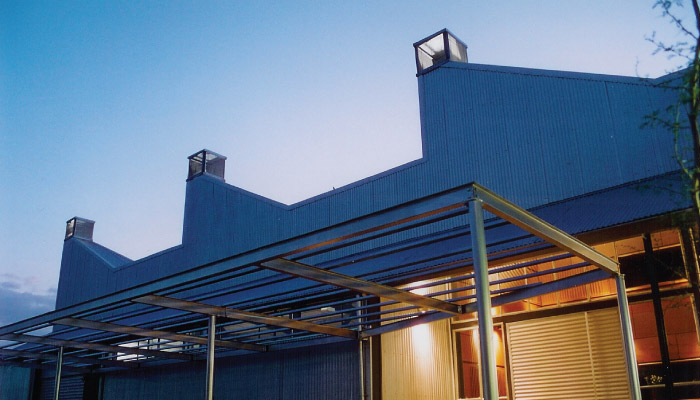
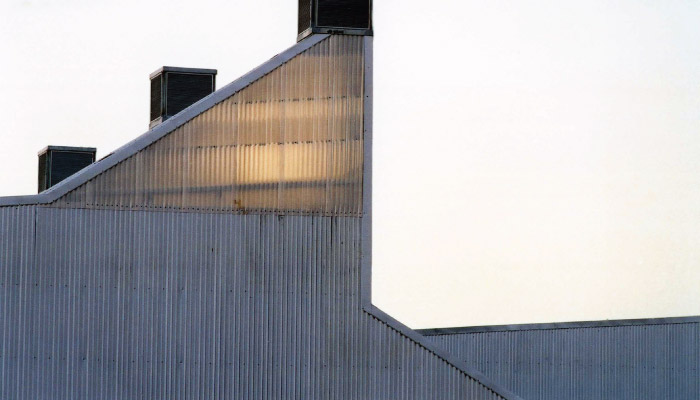
In contrast, the building is approached from a dead -end road inside the office park. The Eastern elevation that faces the visitor has a reduced scale with the roof lights forming a recognisable profile.
The architecture has grown out of two attitudes. The first is a sculptural “solid form” with simply articulated openings and strong profiles. The second idea is that the forms of the architecture should be mediated by a primary layer of landscaping. The landscaping mediates the power of the sculptural forms. The sculptural forms seem to rotate in space as cars move past it, but remain a backdrop to the landscape layer when experienced on foot.
The beauty of the indigenous Highveld grasslands has almost entirely been replaced by spatially incongruent architectures that reflect the divergent cultural aspirations of the people of Gauteng. In the context of such diversity and where the oldest buildings are 15 years old, the landscape layer is the only reasonable unifying device available. The primary architectural layer – the planted landscaped of the forecourt – connects new and old, and neighbour to neighbour.
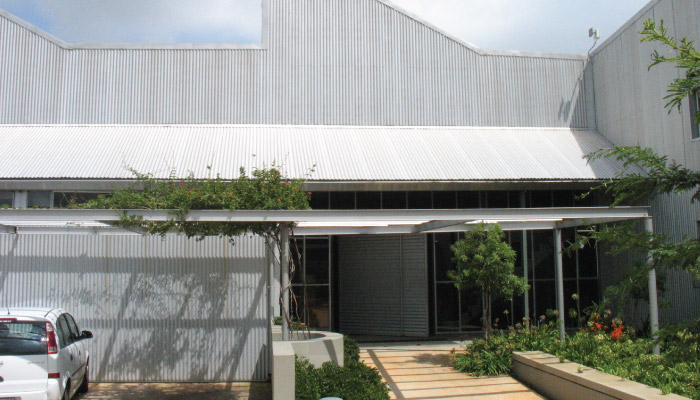
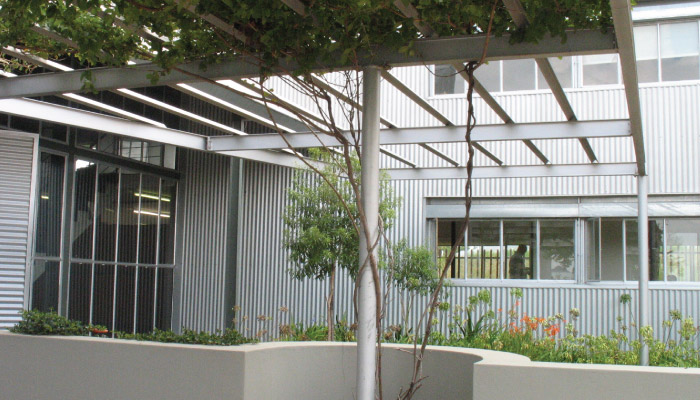
The landscaped forecourt consists of two lines of trees providing shaded parking. One half of the parking is on a hard surface, the other is a grassed parking area. A shade structure with colourful creeper extends from the parking area over the entrance court. The entrance court is planted with low shrubs and Acacia trees. The entrance itself is designed as a stoep. The indigenous grass was restored on site after construction to reconnect the site with its original landscape.
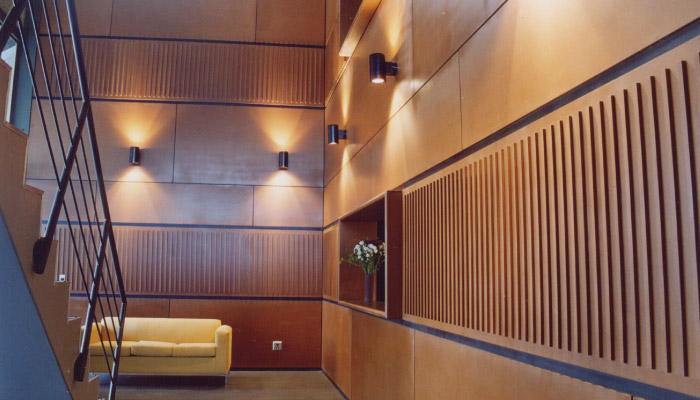
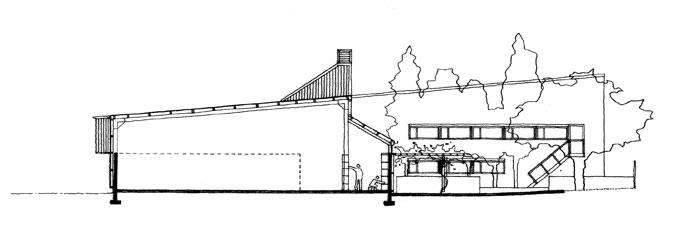
The corrugated sheet cladding unifies the walls and roofs into a single form. The interior of the office section has an additional brick skin on the inside to insulate against sound and temperature. The entrance foyer is clad in Supawood.
The building is naturally ventilated. The roof lights/ventilators ventilate the warehouse and the foyer by allowing the rising hot air to escape at the highest point. The office section can be cross-ventilated because of its narrow width.
The rooflights are lit at night to describe the roof form.
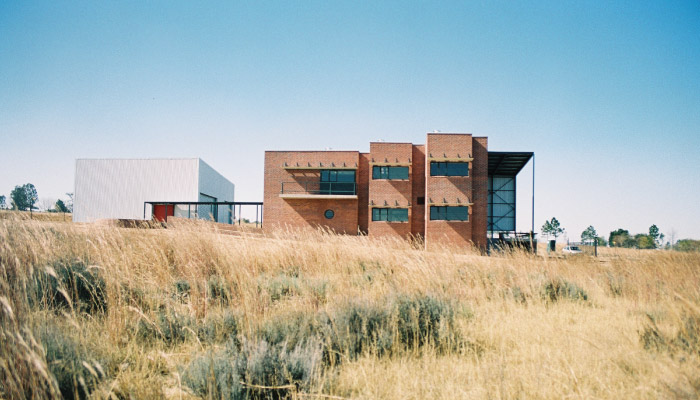
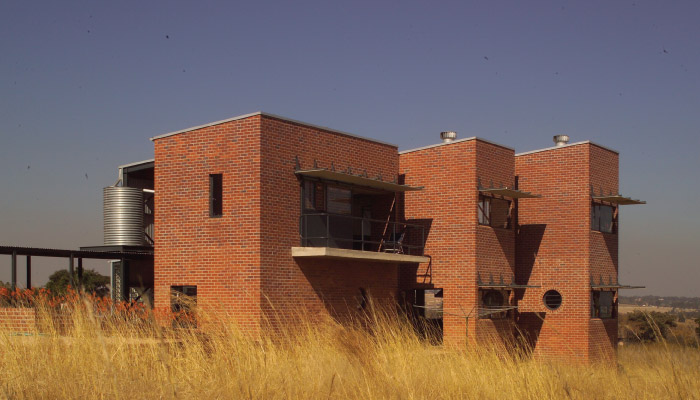
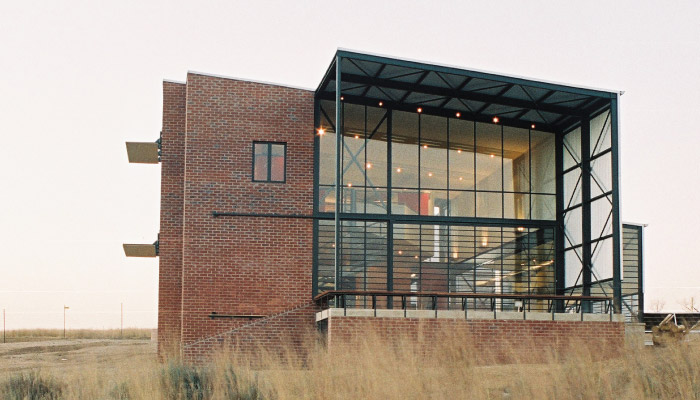
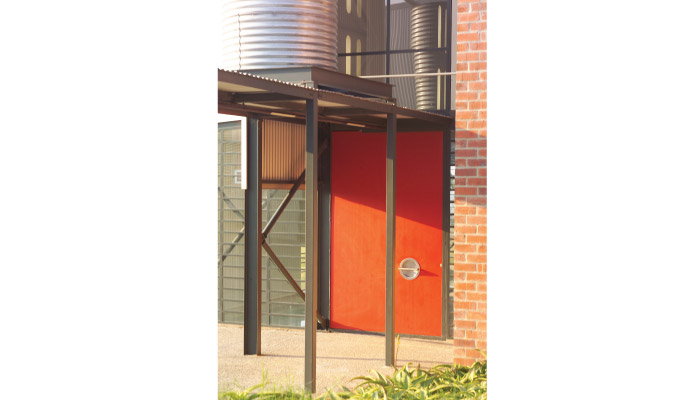
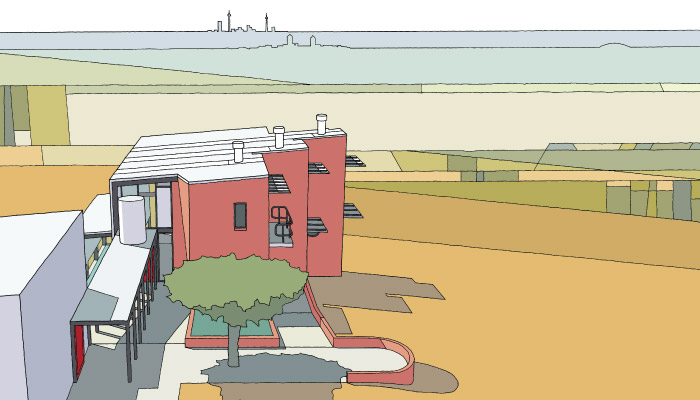
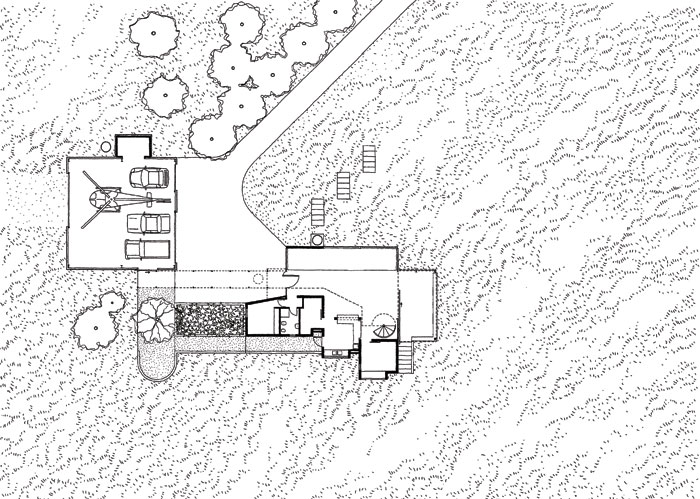
The natural highveld grass on this gently sloping site was preserved to form an abstracted “field” within which the house is located. To avoid the house “drifting” on this big open site, the house and hangar were separated to hold an arrival space between them. The repetition of the same profile in the house and hangar becomes the icon of the place. The landscape is framed and drawn into the architecture, upon arrival, by the walkway between the house and hangar.
Since the client is a helicopter enthusiast, the house will be approached by air at times and therefore the roof was designed as a fifth elevation to the house. The stripes of the roof lights articulate this plane.
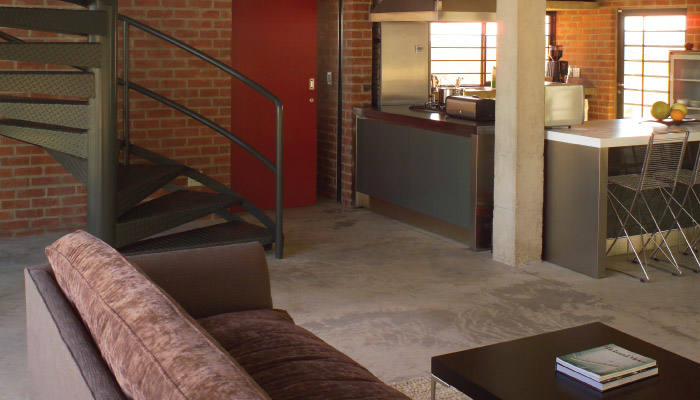
The roof forming a simple lid to the brick section, extends beyond to form a “folded plate” of steel and corrugated sheeting which encloses the double volume. A secondary fold encloses the pool. This “folded plate” is bent and cut in relation to views and sun. The outer skin of the “folded plate” remains unpainted and extends past the inner skin like layers of clothing – each layer just doing what it should.
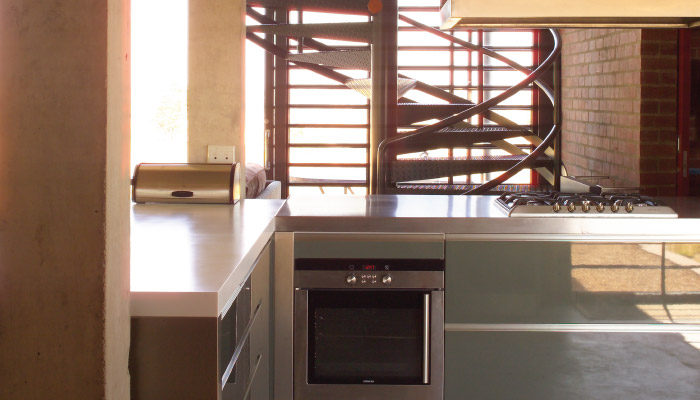
A series of layered perforated roof lights allow winter sun in while blocking the summer sun.
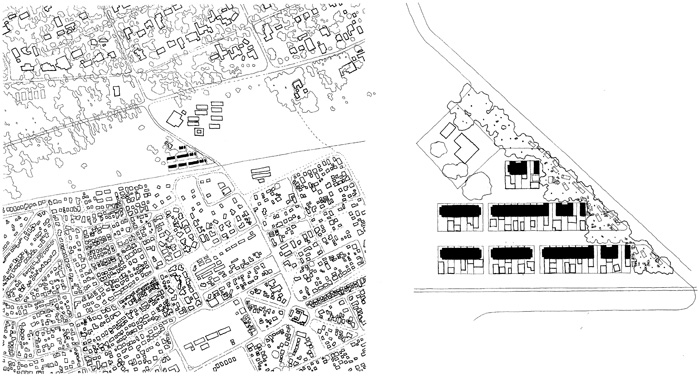
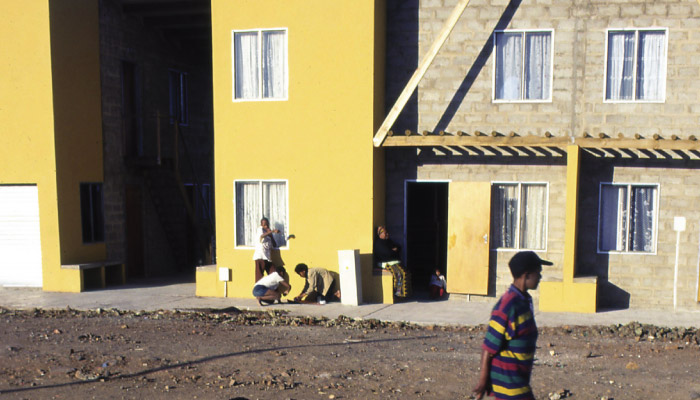
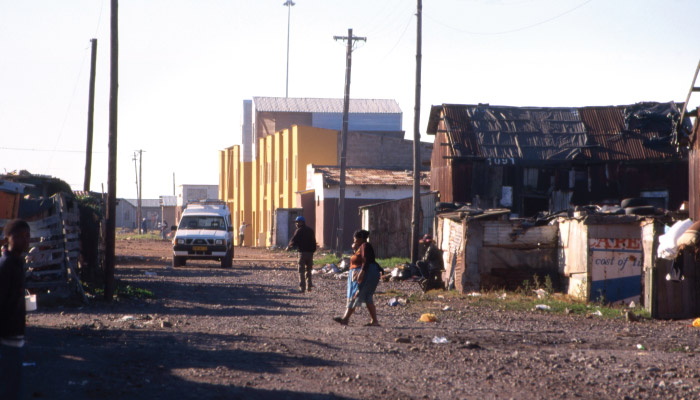
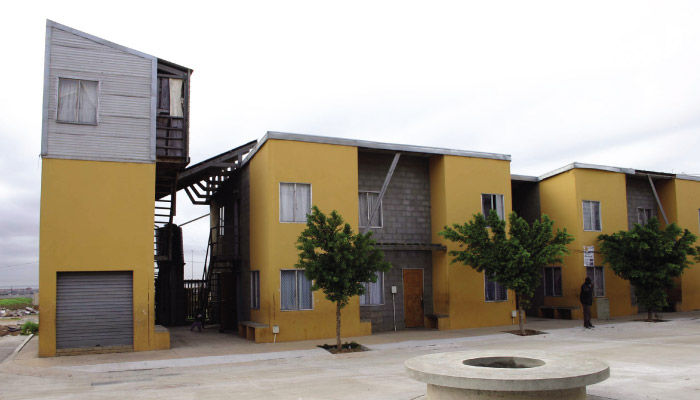
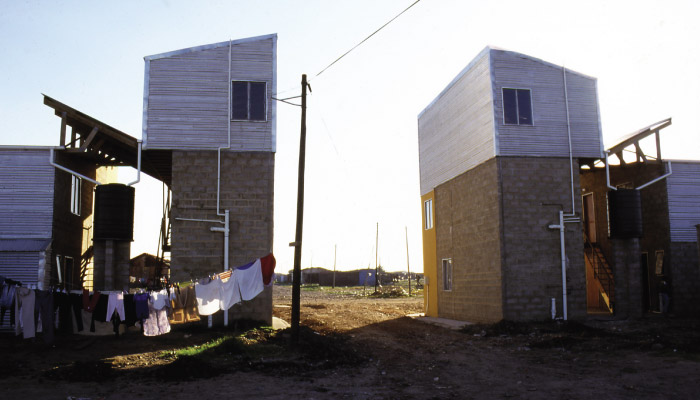
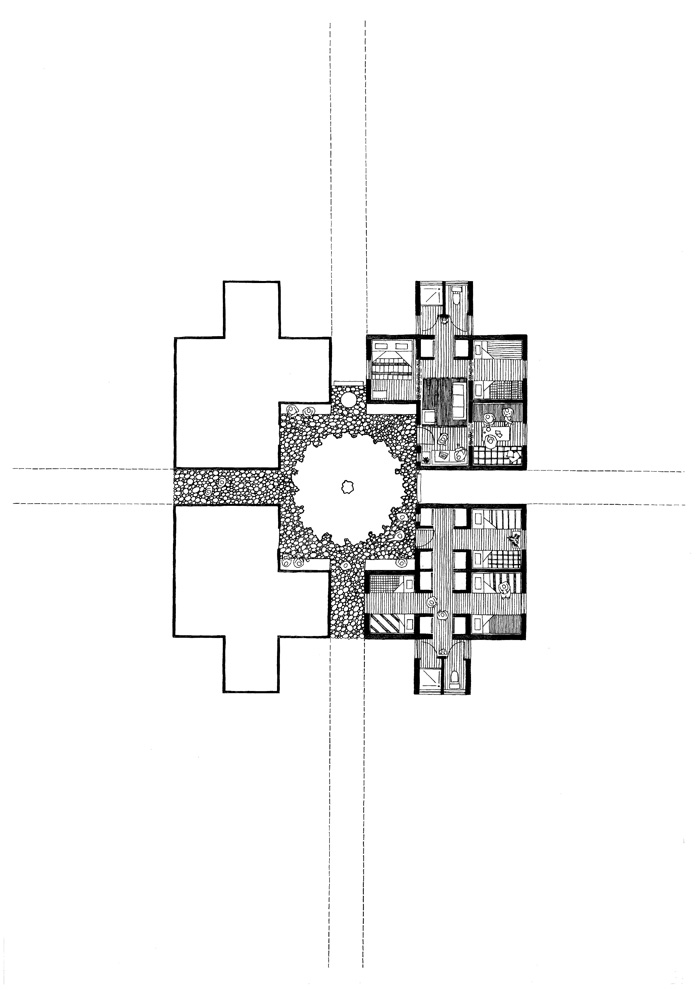
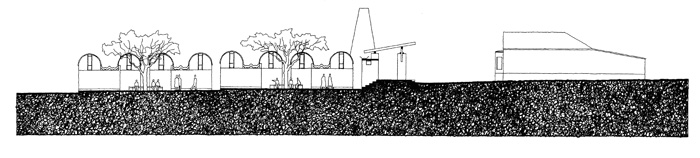
We were approached by the Swedish International Development Agency to design some houses in Red Location that could challenge the generally accepted norms for social housing in South Africa. With basic infrastructure now in place, we started by forming street space in a spatially undefined area; the houses were designed in line with one of the few brick structures in the area.
The idea was that every part of this project, the street, this housing, the museum and the further buildings, would each contribute to making street space that has intensity and vitality to it. The primary streets were located between major public transport nodes to stimulate economic opportunity and to intensify social interaction.
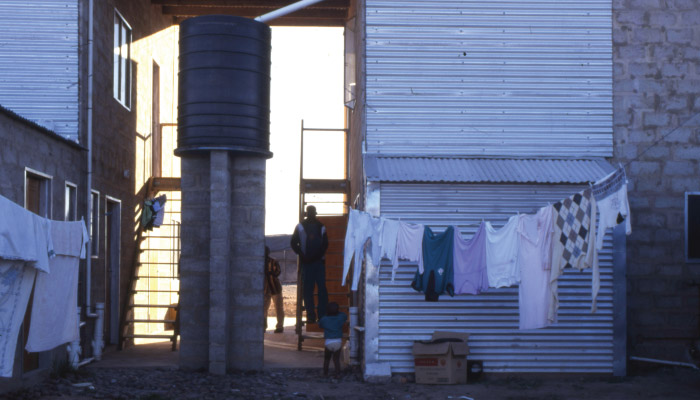
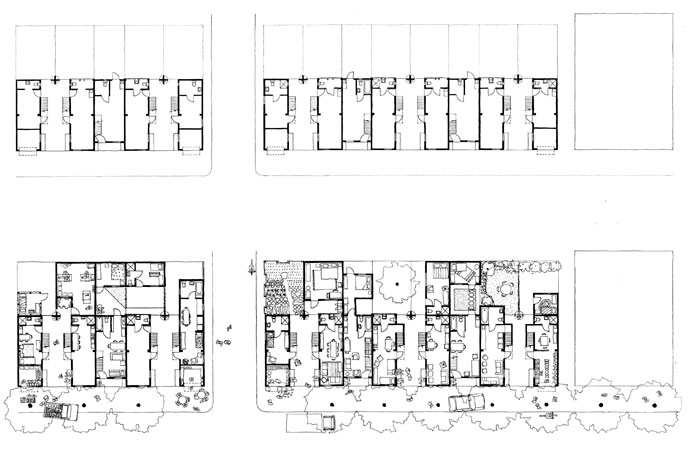
The houses were designed to allow ground floor shops, accommodate people with physical disabilities, store water for urban agriculture, while catering for the possibility of future additions. Most importantly, most of the units were made with a second entrance to allow the owners to sublet the house and thereby generate an income. The backyard space also allowed space for the construction of a self-built shack that could be rented out. These income generating possibilities were demonstrated through “additions” that were made to the project from the start.
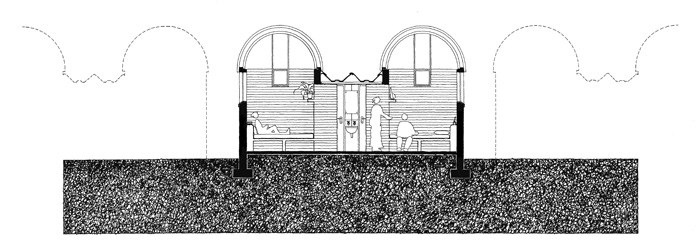
This farm school had to educate children from the farm that it was on and children from the surrounding farms that would be brought by truck or bus.
The farmers had good bricklayers on their farm but not any other skilled artisans. For this reason a construction system was developed that only used brickwork with long span fibre cement roof sheets placed directly onto the walls. The long span sheets would also give dramatic cantilevers and would protect the windows from sun.
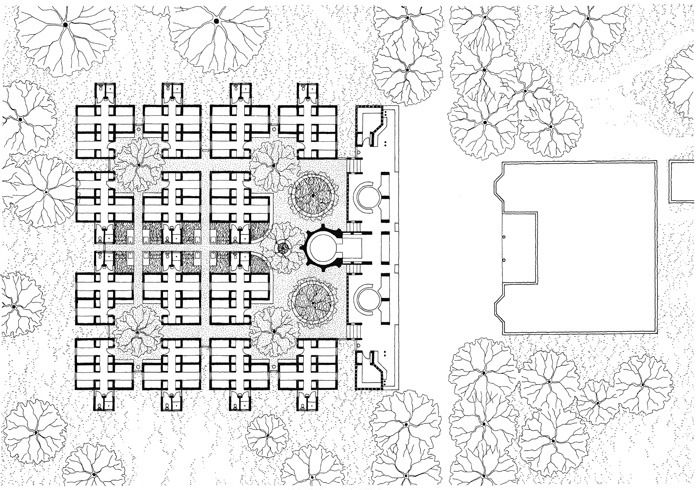
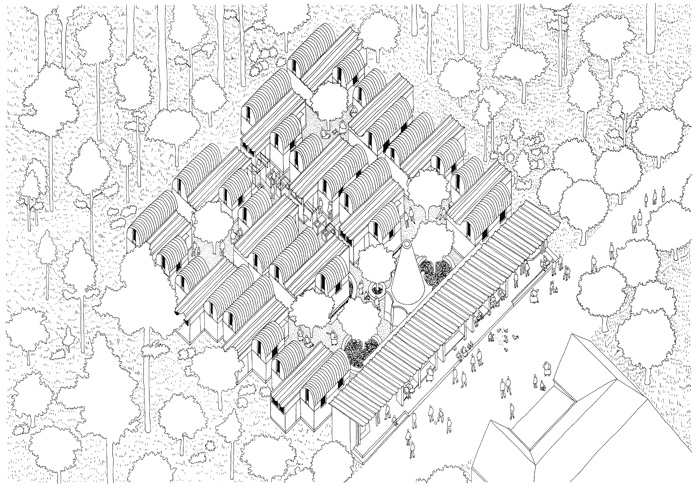
A quad of trees defines the arrival space and a large roundabout facilitates arrival by large scale vehicles.
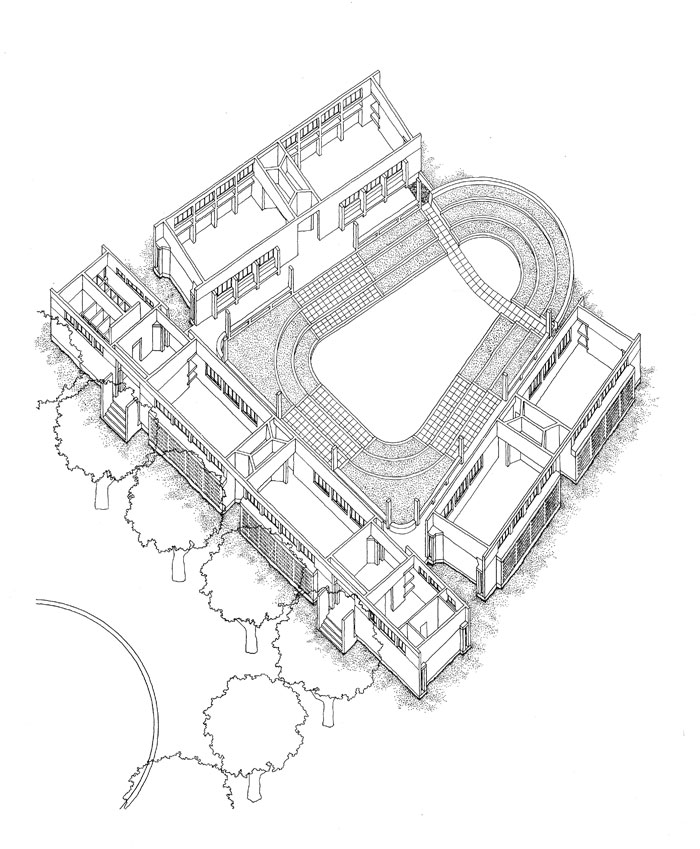
The school was planned in modules to allow for phased implementation. The first phase would contain two classrooms, ablutions and staff facilities. The next two blocks of classrooms would taper towards each other to contain the central space. This tapering also prevents the view from the entrances to be just straight down the corridors which would make the courtyard feel less enclosed. A series of seats provide shelter from the sun or makes places in the sun, whichever is required.
The skill in bricklaying was used to create a material poetic for the building; soldier course bricks were turned at 45 degrees to make a decorative wall texture that would be revealed in light.
Lebaleng is part of Makwassie in the North West Province, where the landscape is dominated by large structures such as grain silos and mines. The church, in its massing and articulation, makes reference to these structures.
The church is located in a residential area along a street where several other public buildings are built. The building has a civic presence without its size dominating the area. This has been achieved by placing the biggest building mass in the centre of the site and wrapping low scale elements around it. The street edge is defined by a planted pergola with a generous space seat underneath it. This device creates a sacred space for the church, whilst still being a public gesture. The entry space to the church is defined by the pergola and an “arm” that extends from the building to hold the space. This “arm” contains toilets and kitchen.
The section has the classical arrangement of a nave and aisles, but the nave is asymmetrically shaped in response to the context. The aisles become a scaling device that meditates between the large volume of the church and the neighbourhood. The roof slopes down towards the south in order to avoid the church casting a big shadow onto the houses next to it.