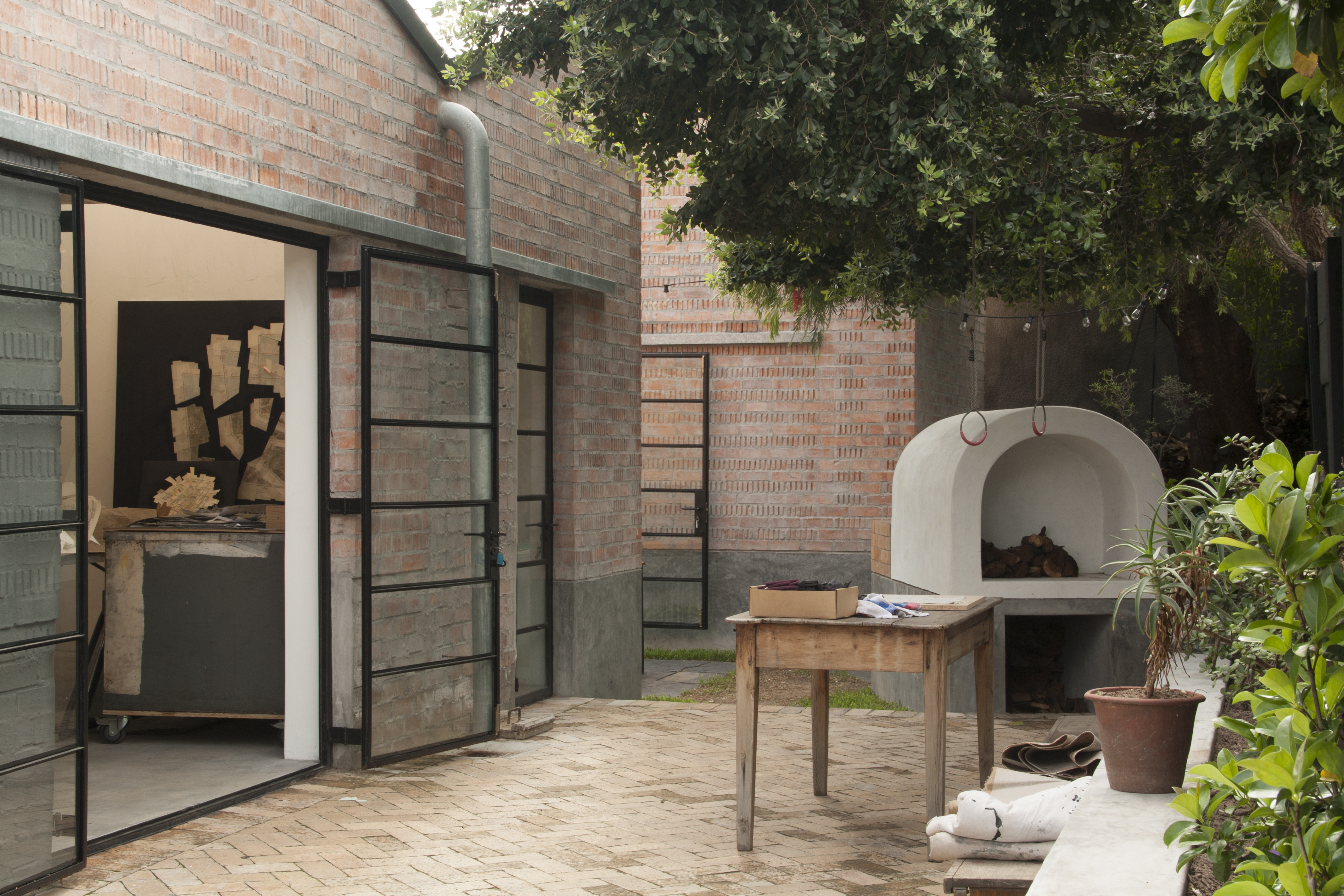
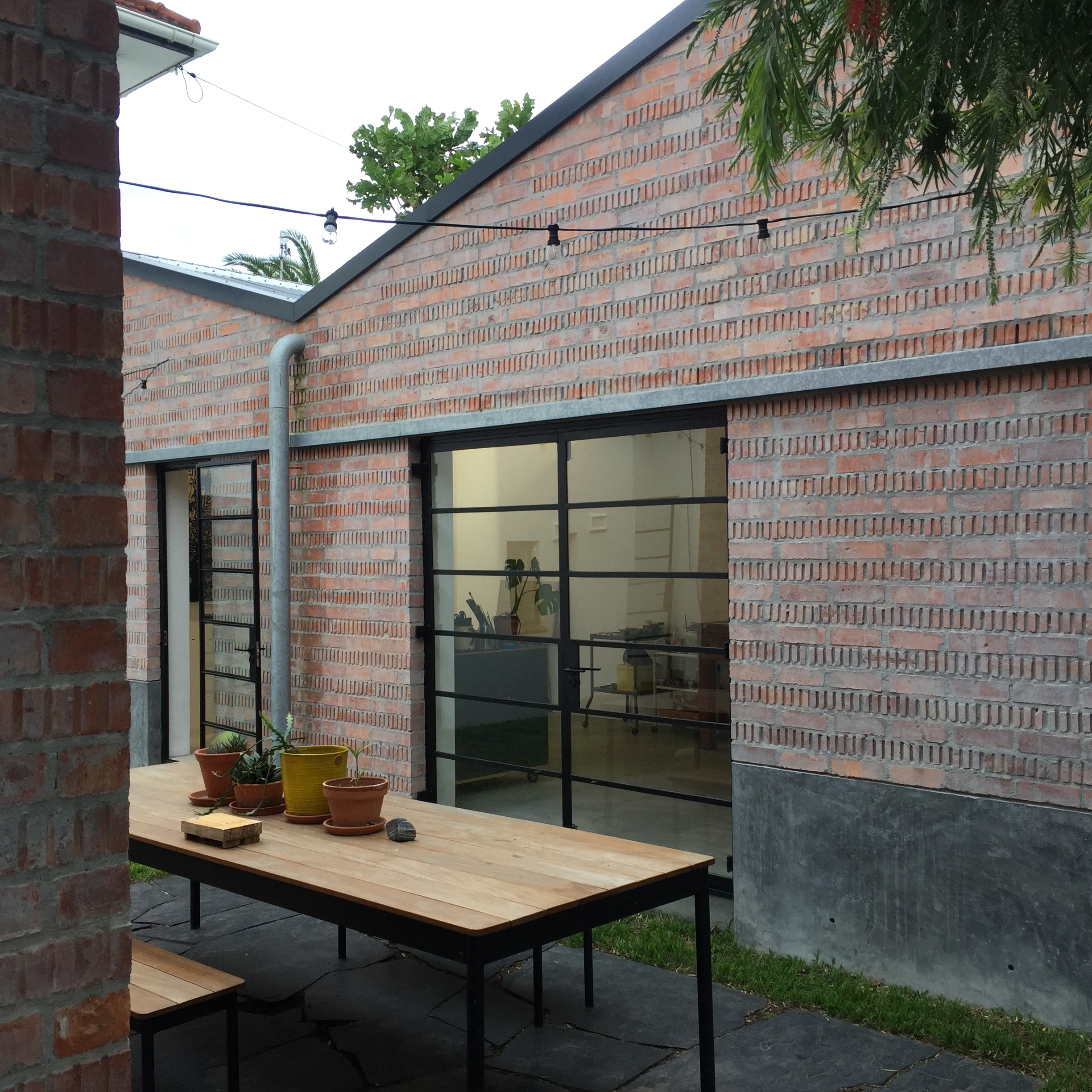
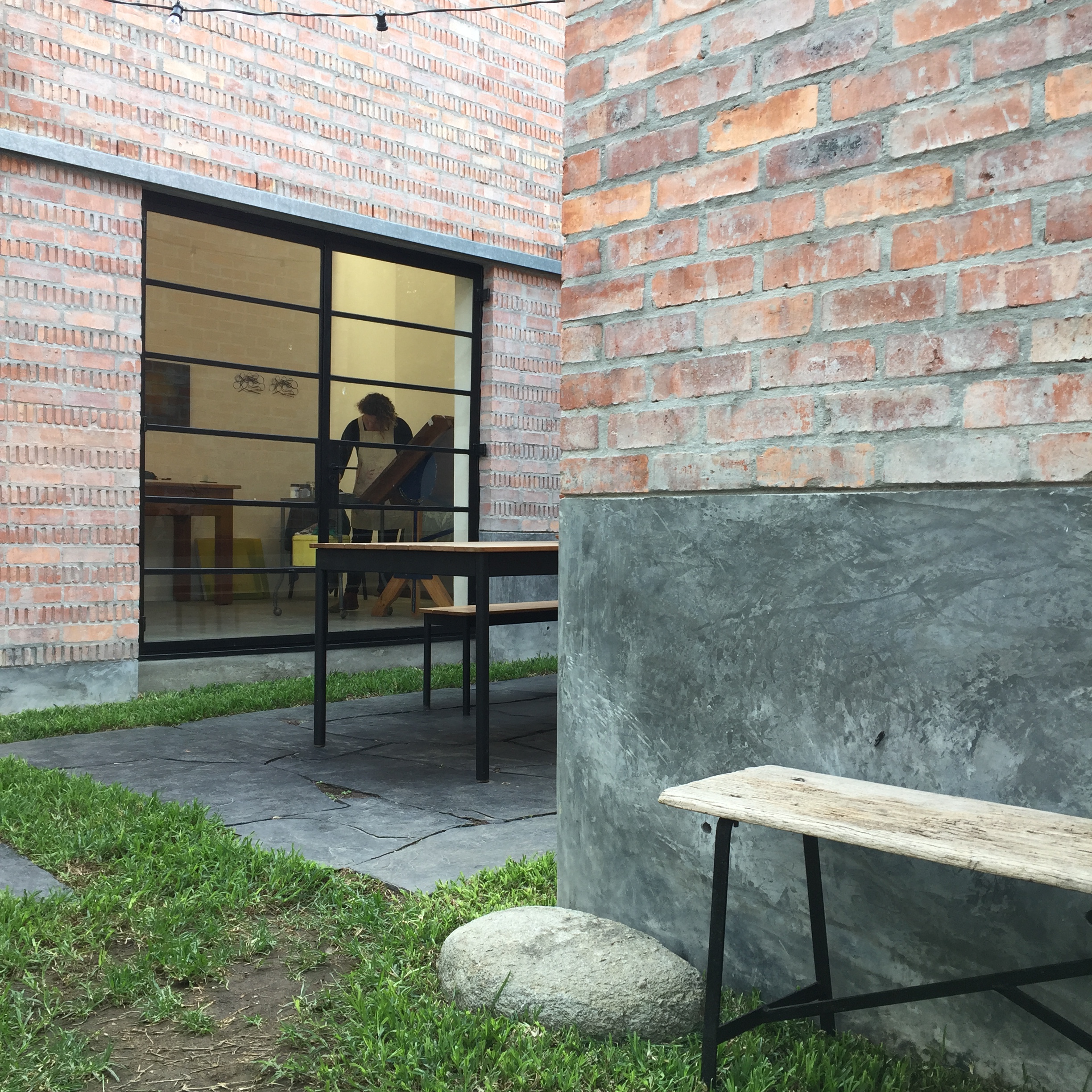
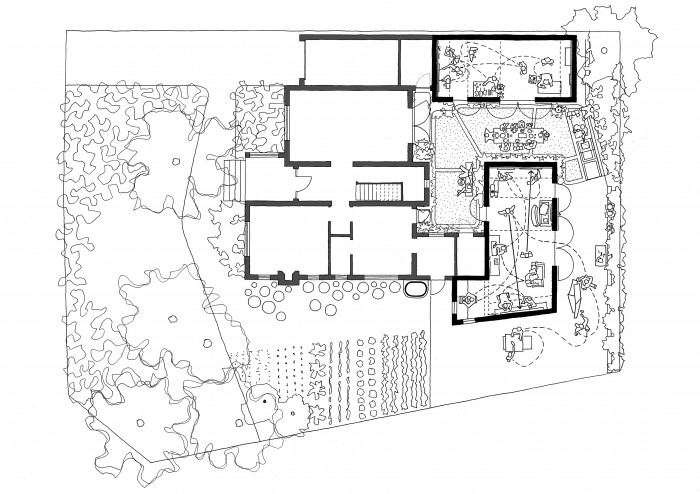
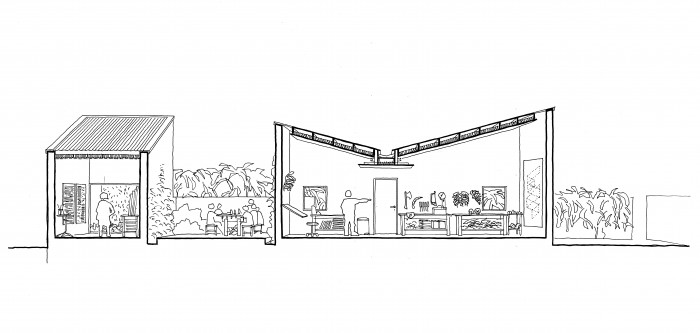
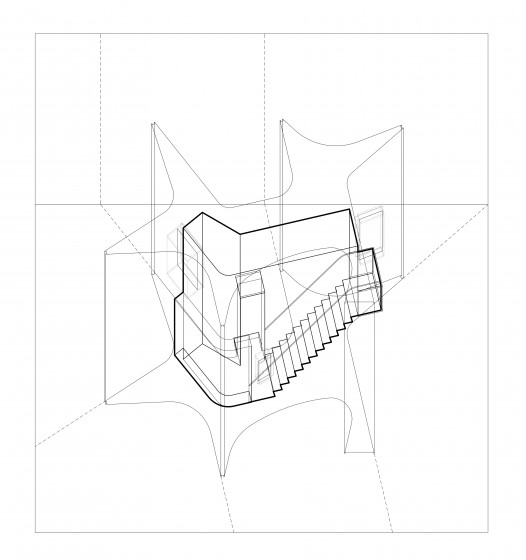
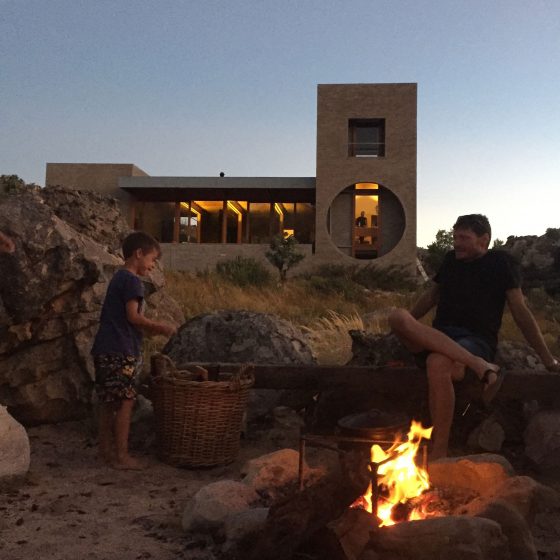
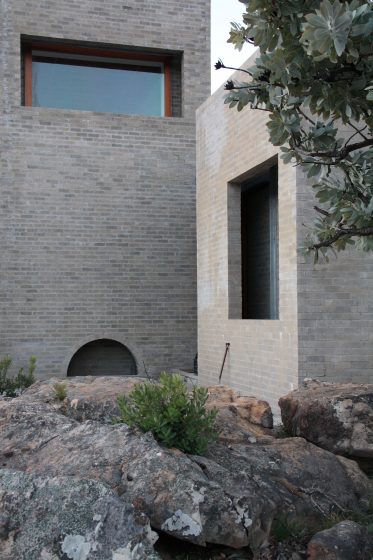
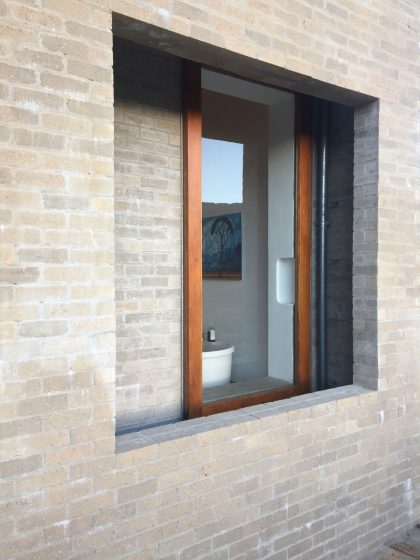
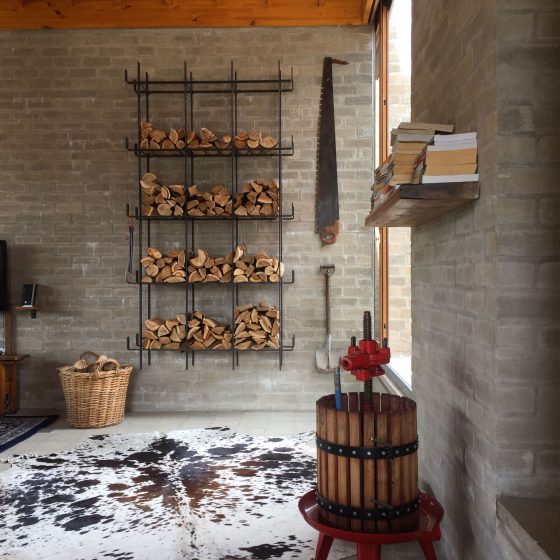
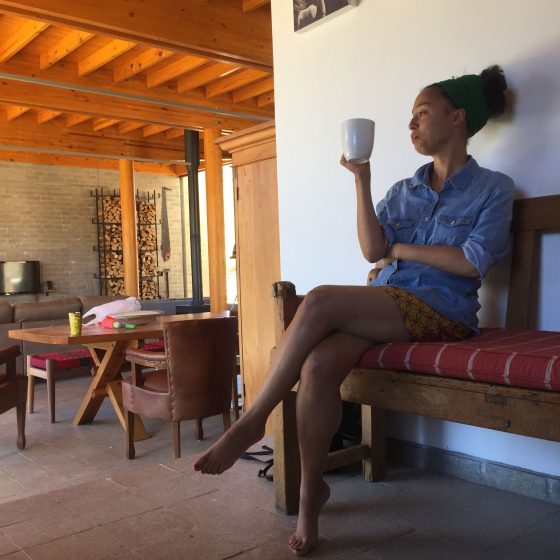
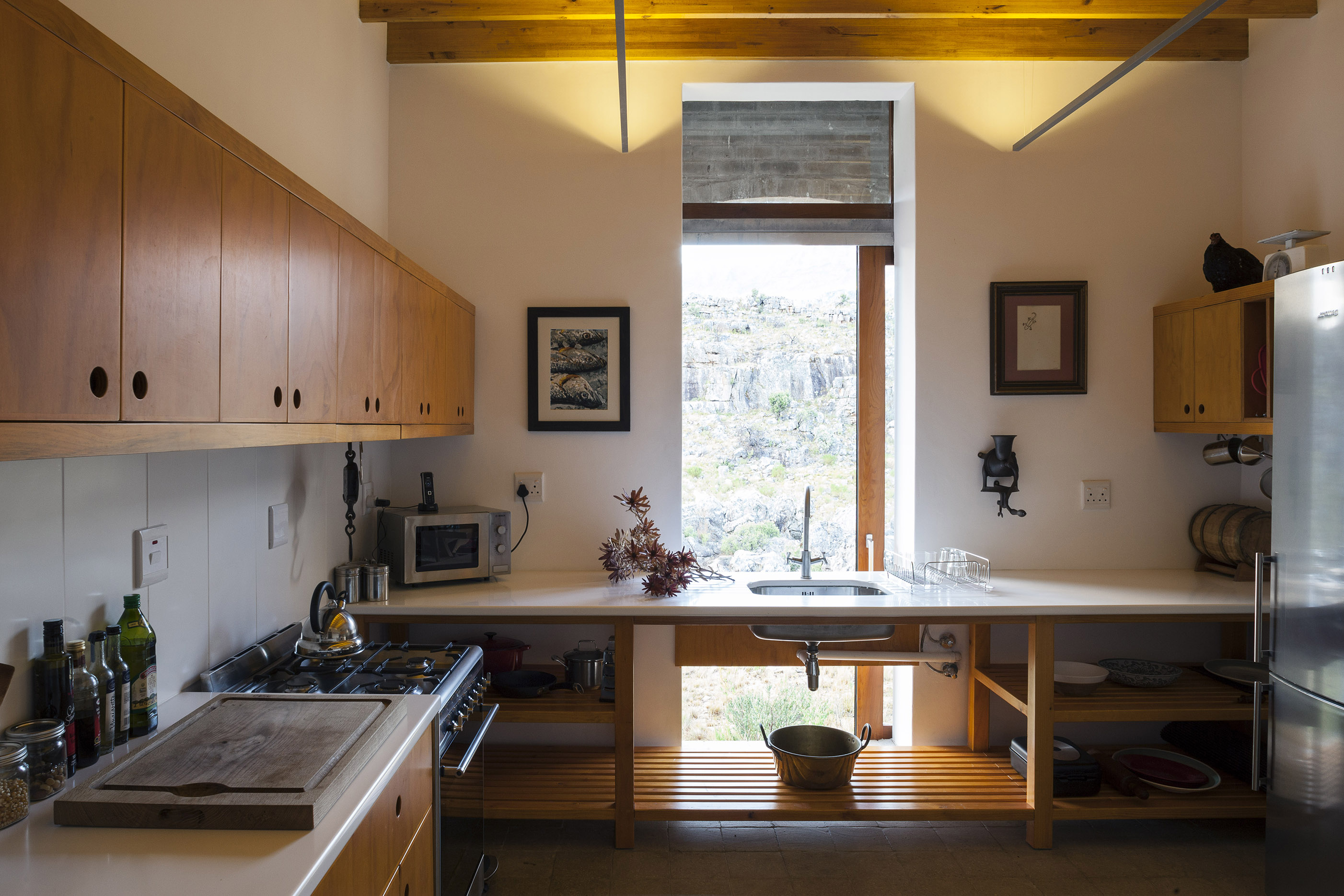
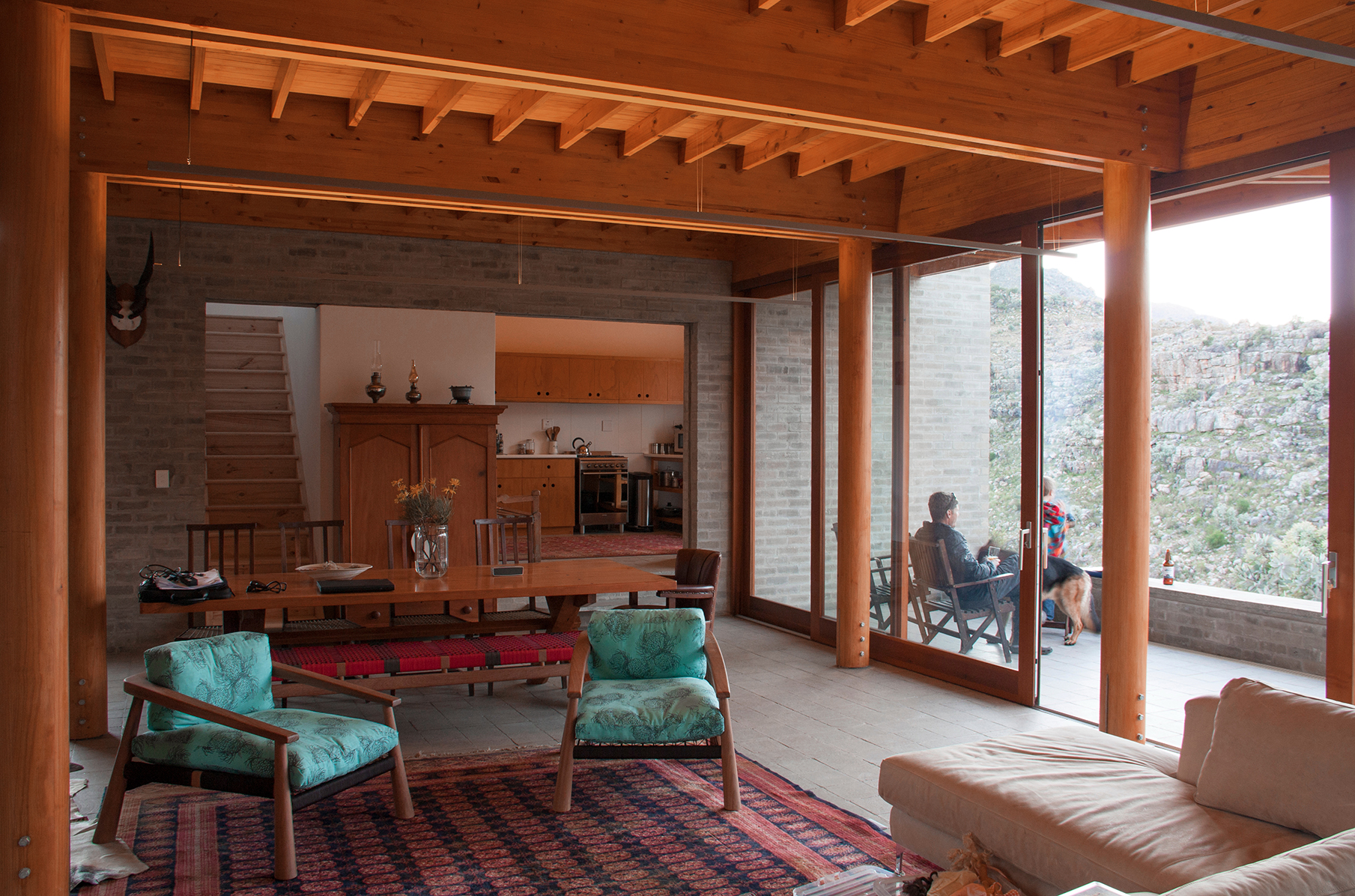
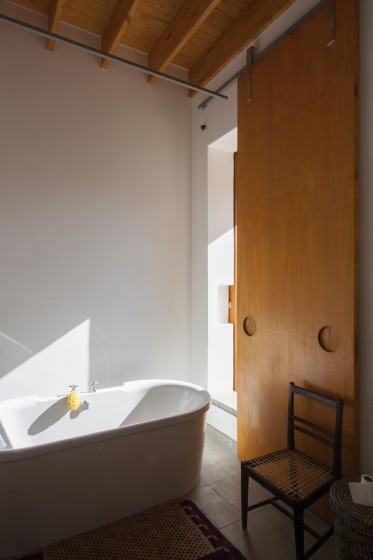
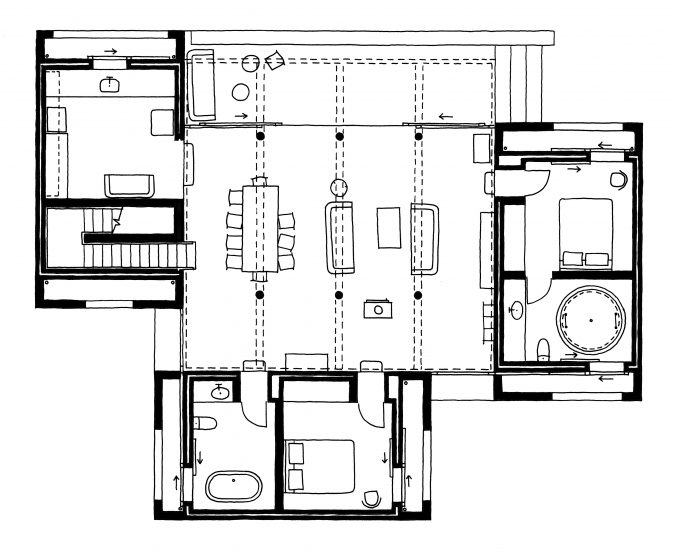
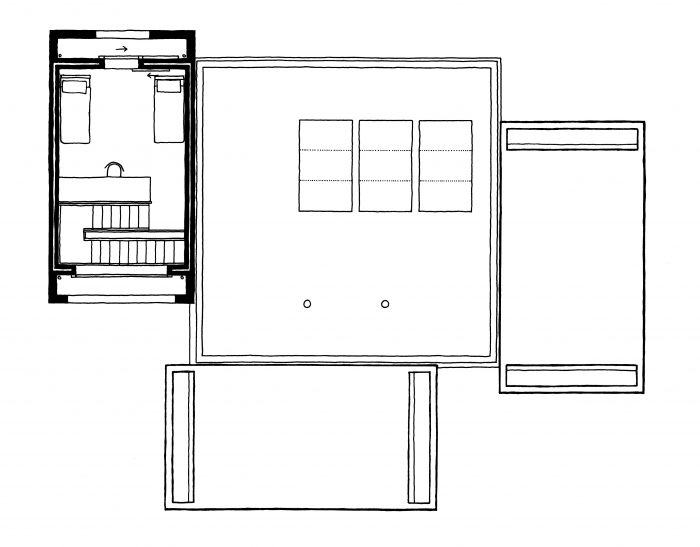
This project involved the addition of two separate artist studios to the house of Maja and Gerhard Marx. The studios are added onto an existing house to create a new court between the studios. This court is an extension of the living spaces of the house. Formally, it is a bent space which curves from the kitchen, past the living room and studios and terminates in a break and outdoor oven. The oven is made as a half-size building and forms the visual termination of the living space.


IMG_2687


IMG_5336


IMG_5335


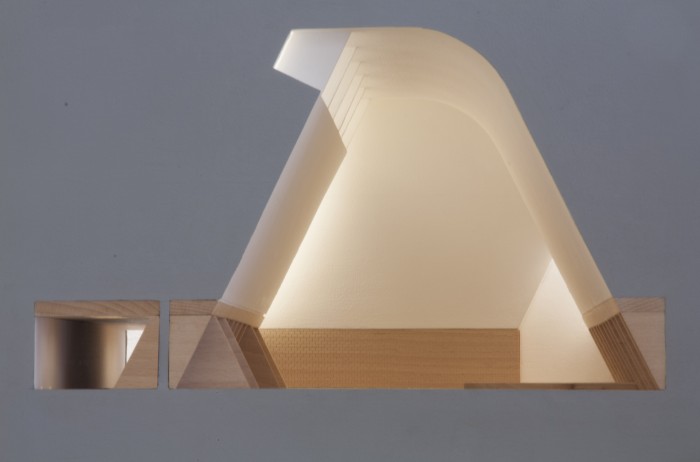
The studios were shaped in response to the process of making art; while working there is a continual movement of the artists around the art and away from the art. It was important to the artists that the walls of their studio have a sufficient size for large scale work and that the character of the walls should be similar to those of the galleries where their works are displayed. The section was generated in response to these demands; a butterfly section allowed for the biggest walls to be at the ends of the rectilinear space and equally allows the artists to step far away from their work and be able to see the full work.


IMG_5334


IMG_5337


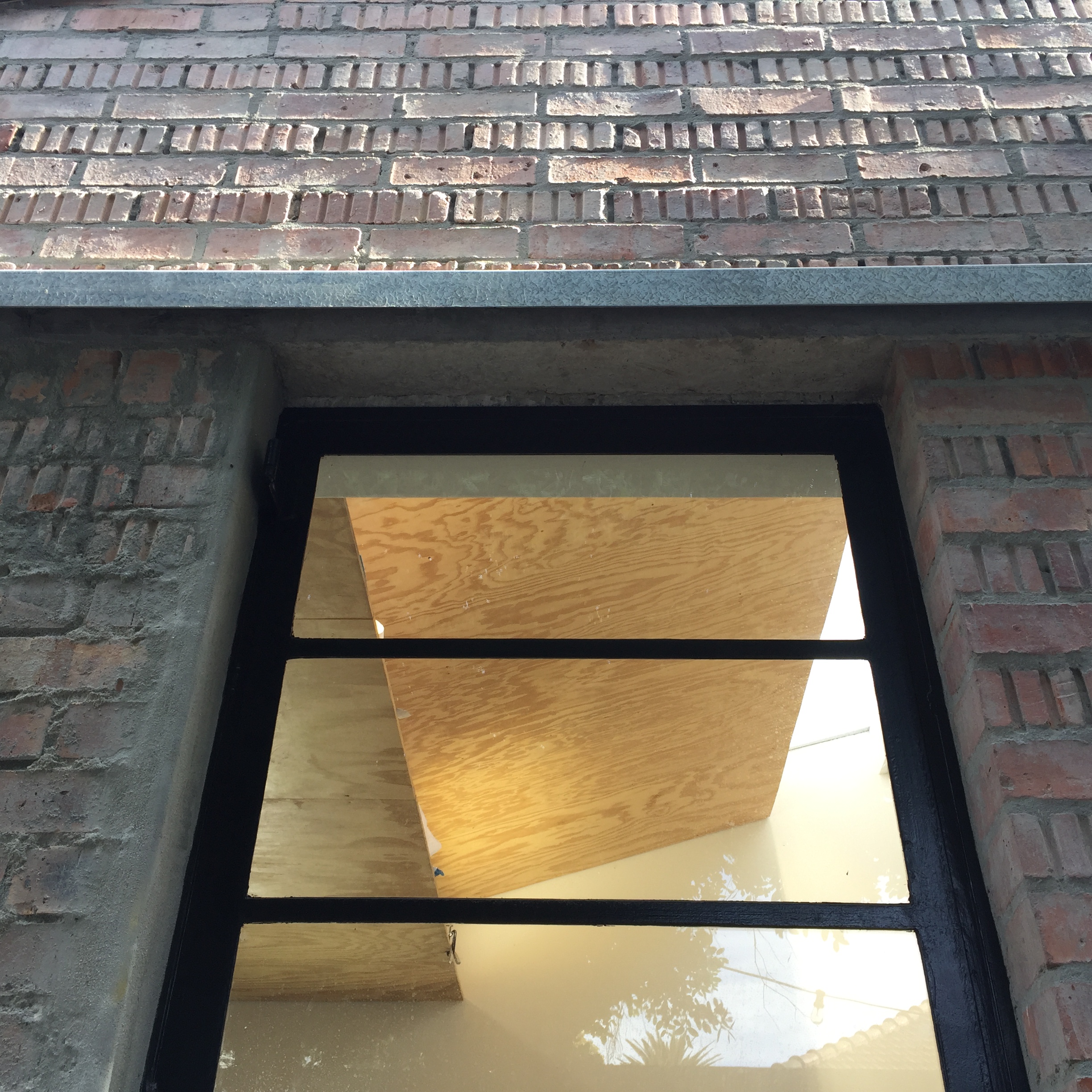
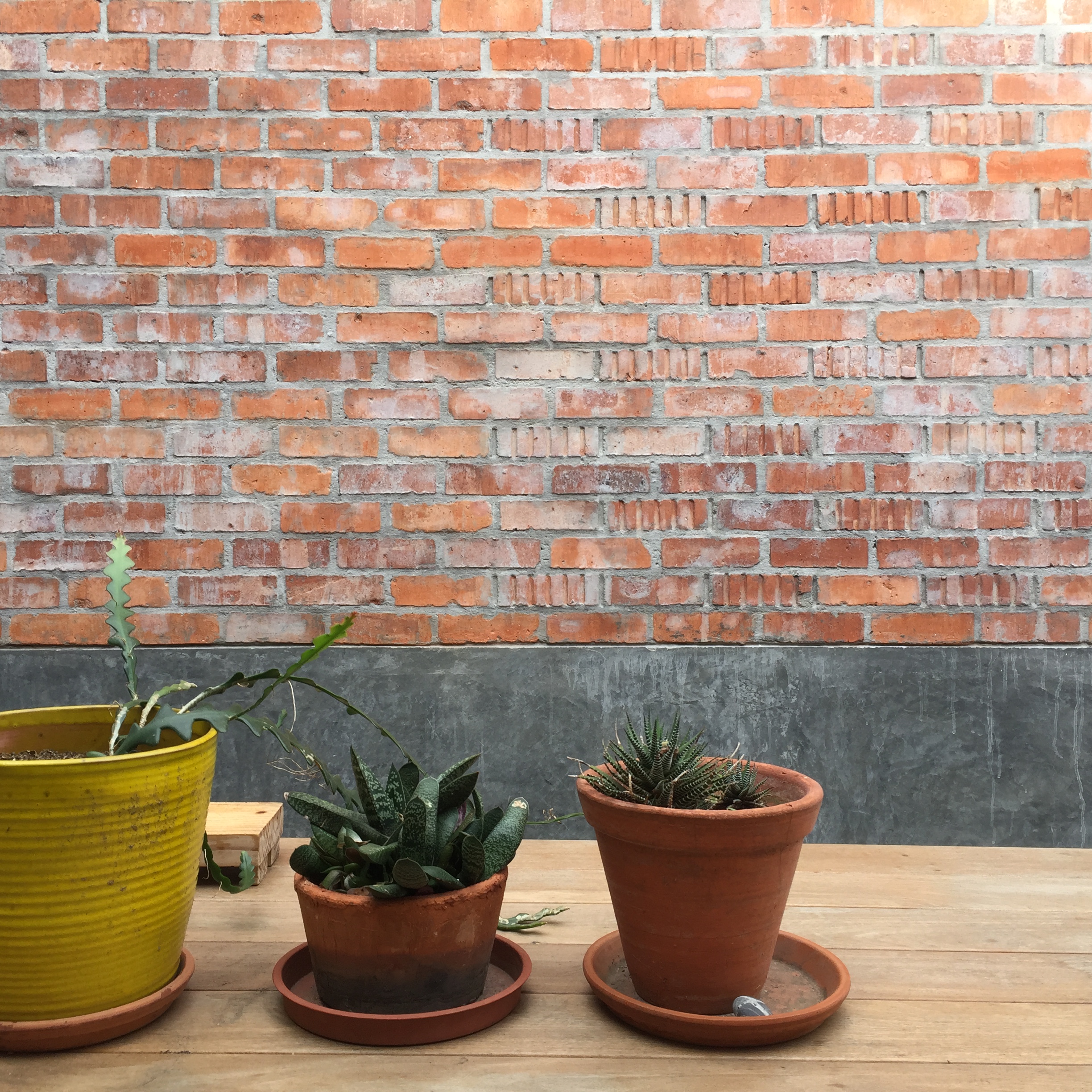
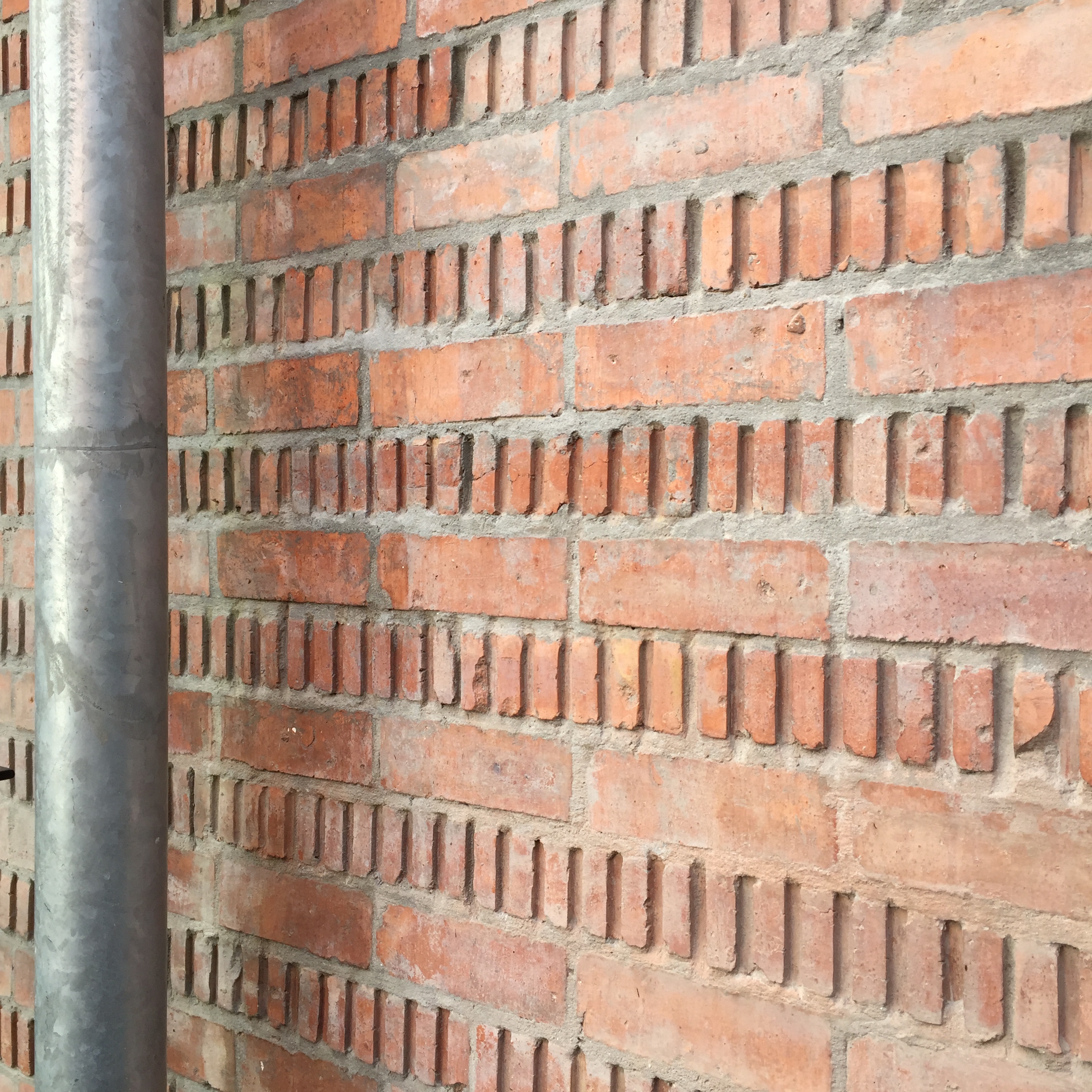
Wolff Architects were also the builders of the project. The opportunity of being both makers and designers was seized by making patterns in the brickwork that had reflected the work of the artists; Maja’s work is often striated and hence the linear brickwork patterns, Gerhard’s work often involves collages of fragments of paper and hence we retained the remnants of the existing structure and we “collaged” the new brickwork onto the old fragments.


IMG_5338


Plan_website


section-perspective


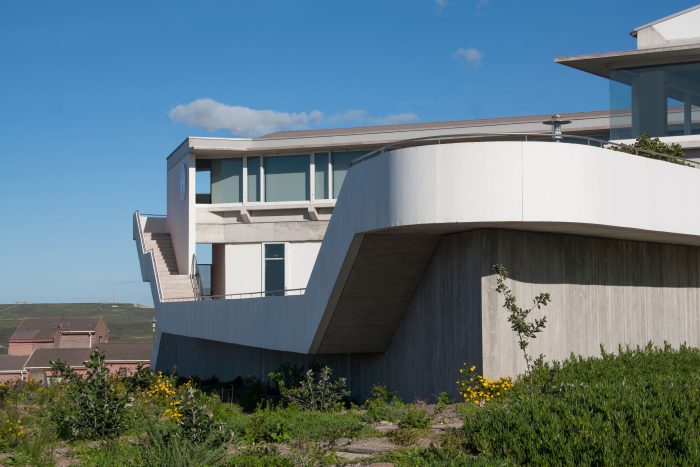
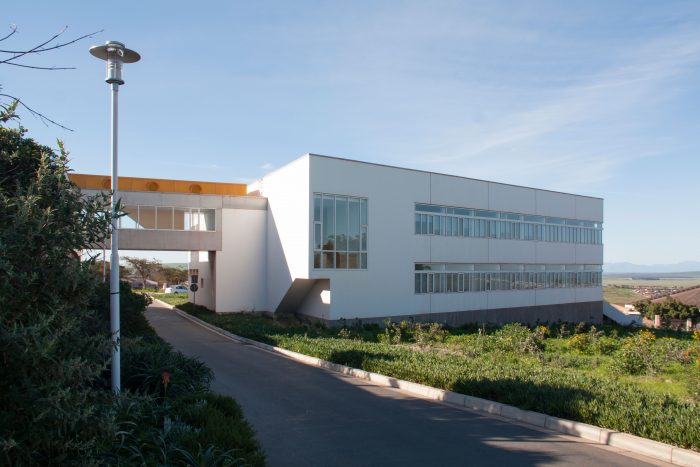
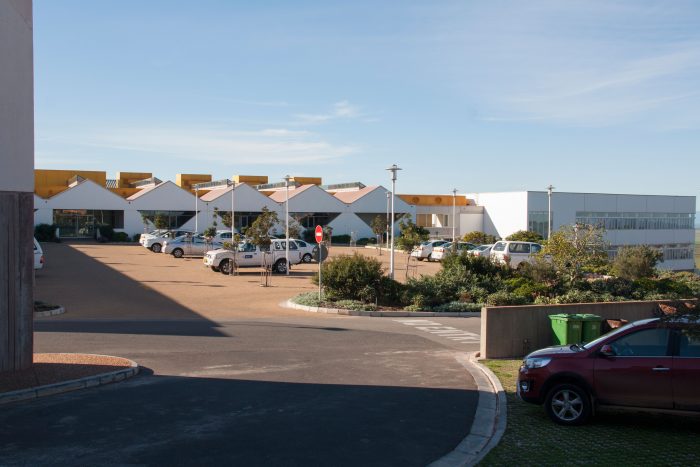
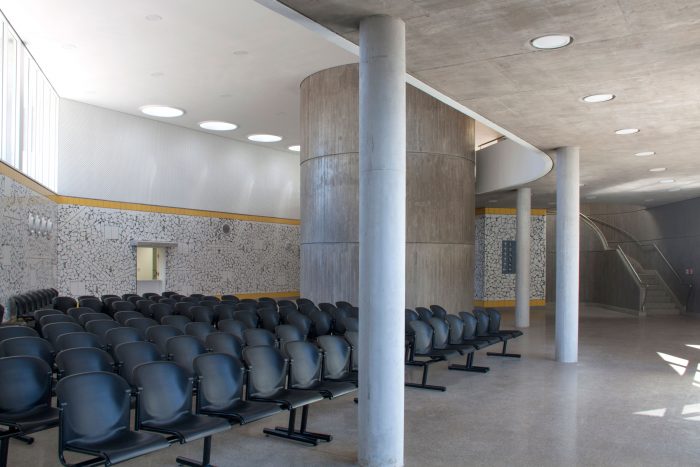
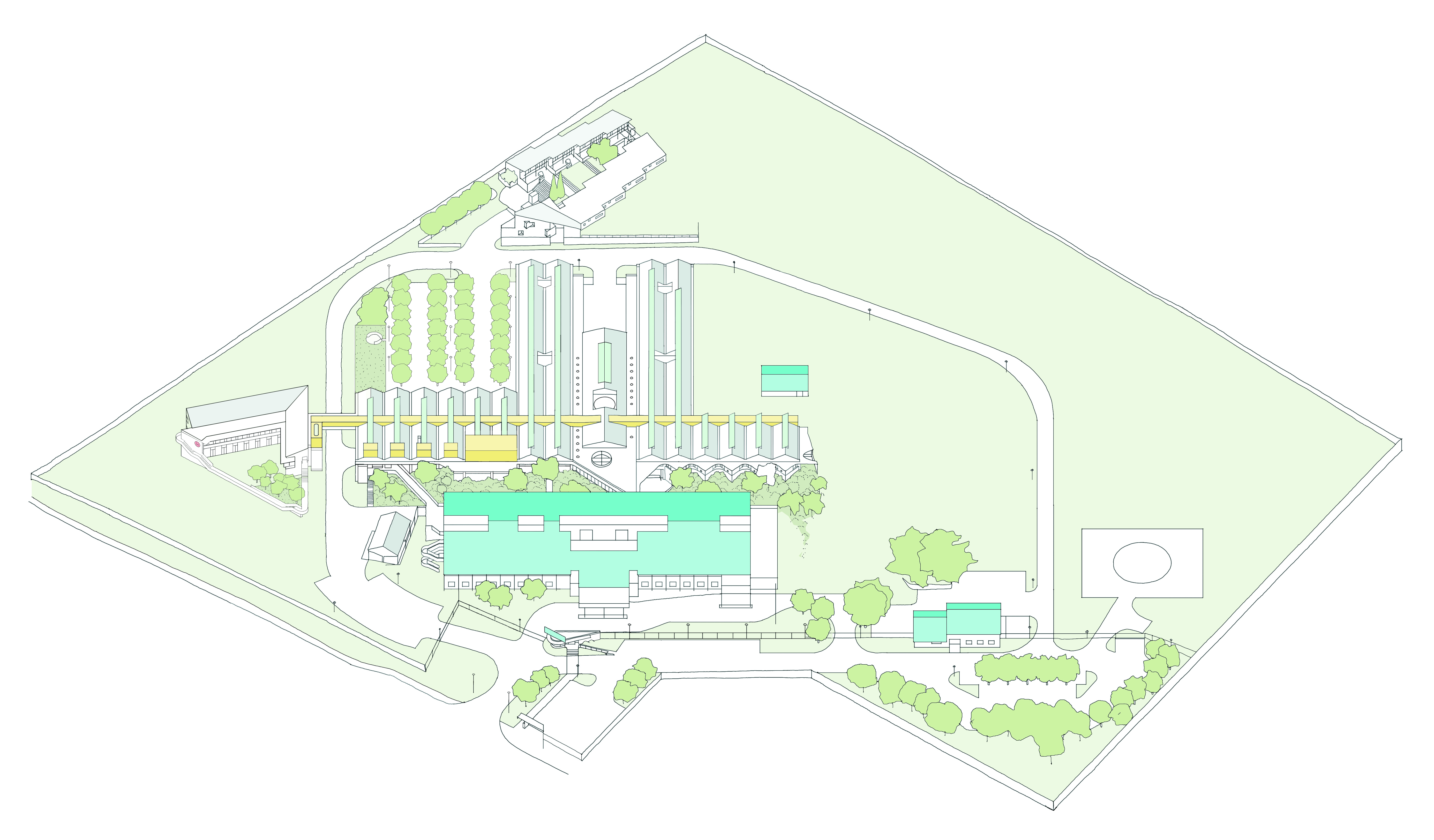
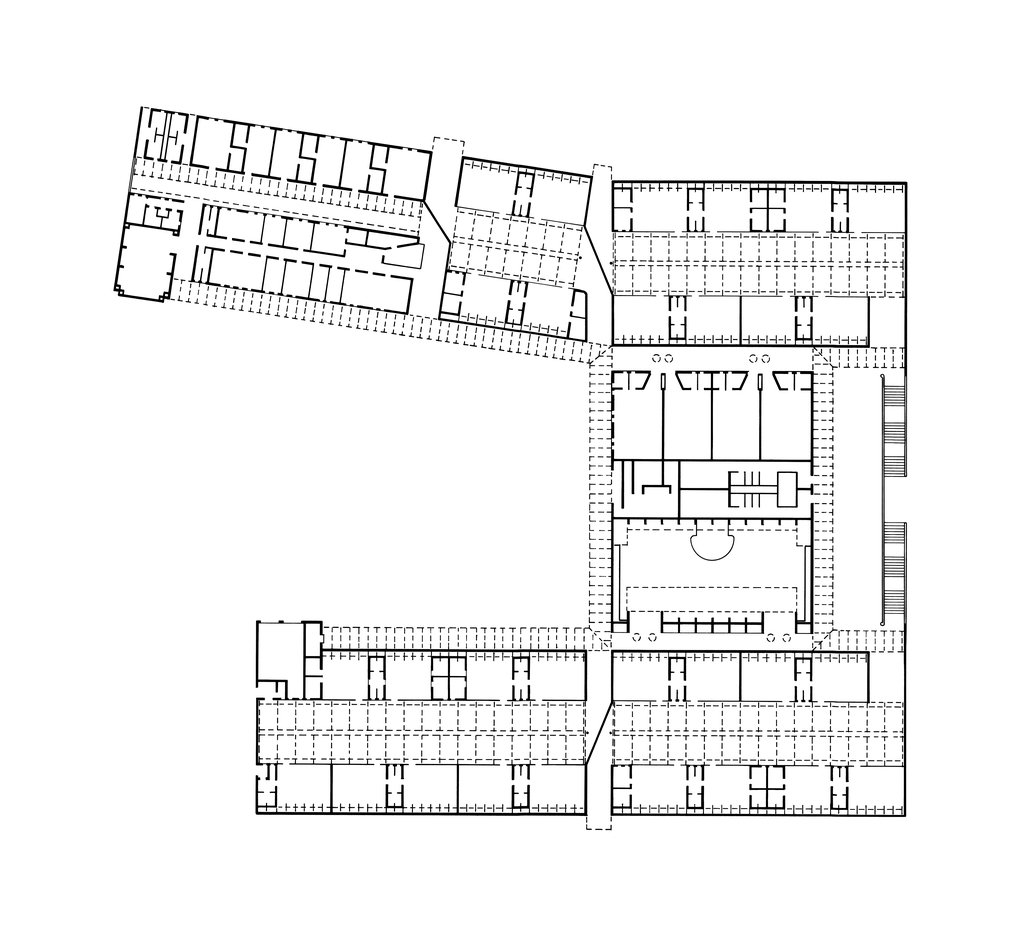
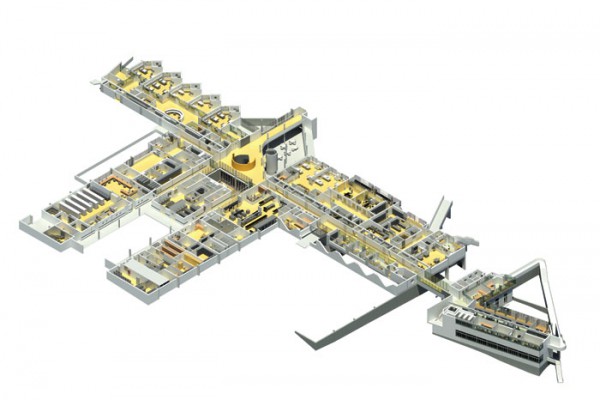
The work that Wolff Architects have undertaken at the Vredenburg Hospital is a major addition to an existing provincial hospital. The existing building contained several wards and significantly, the public entrance. The new extension contains the paediatric ward, theatres, support services (kitchen, workshops, laundry, etc), psychiatric ward and the administration offices.
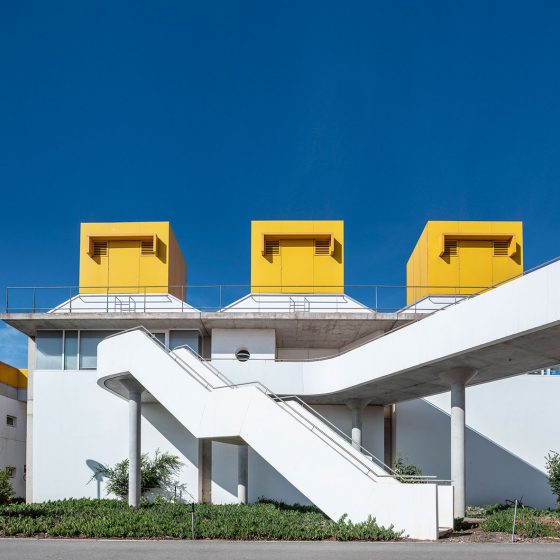
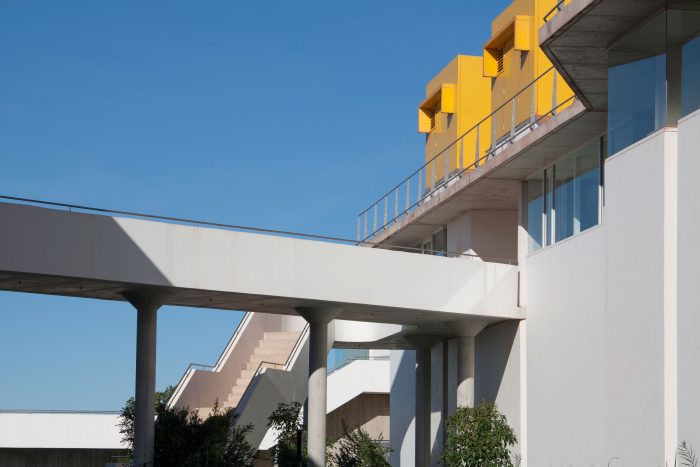


Administration building

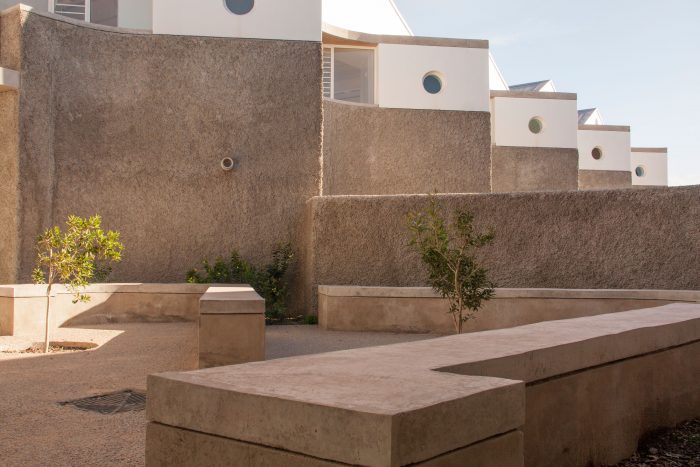
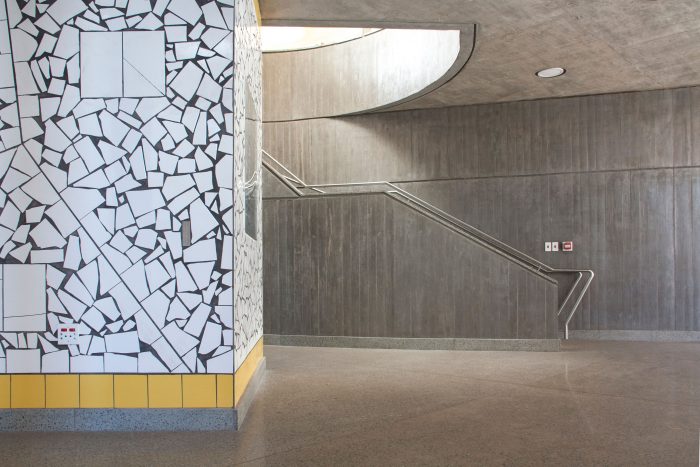
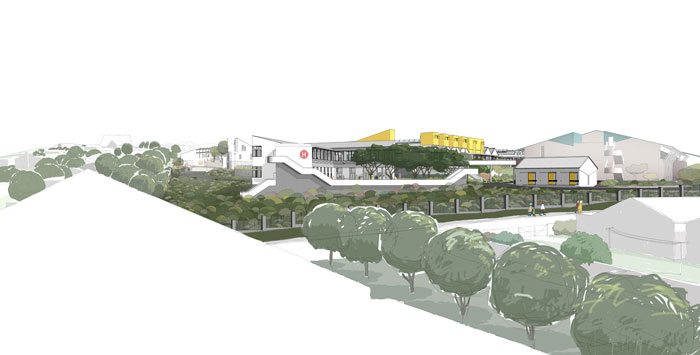
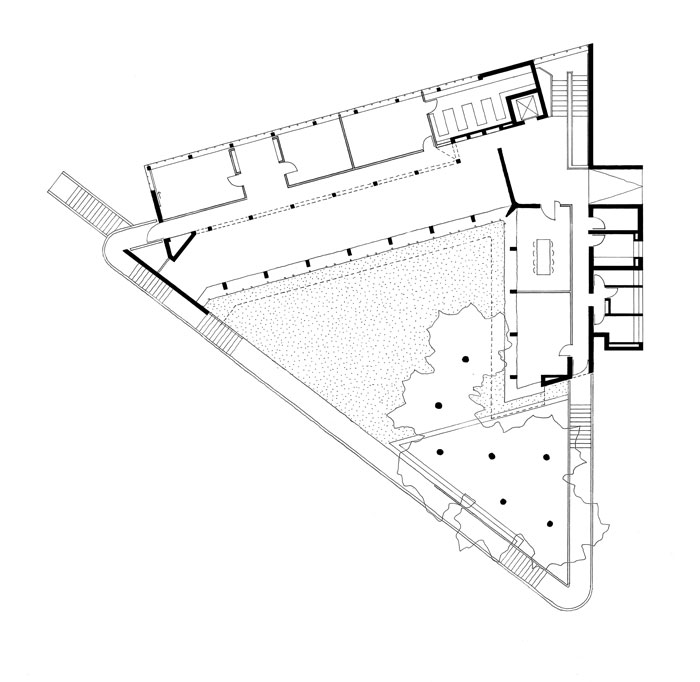
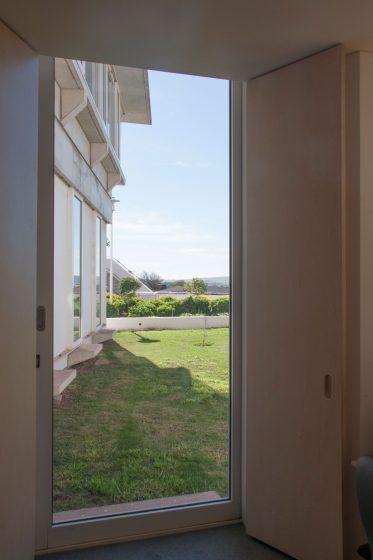
The administration building is entered on the upper floor, via a bridge, over the ring road. From the upper level one can descend to the lower level of offices which face onto a garden. The triangular garden has one open side which faces the town centre. A low wall removes the middle ground from the town view which in turn is bound by two fire escapes ascending to the upper floor.


Site order

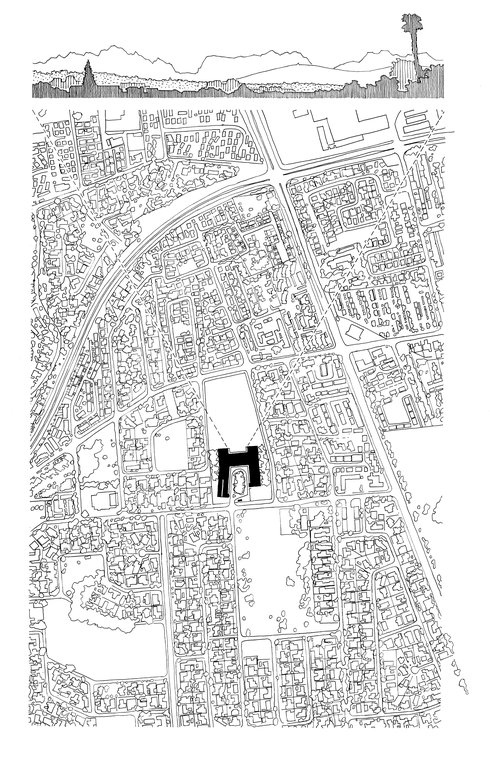
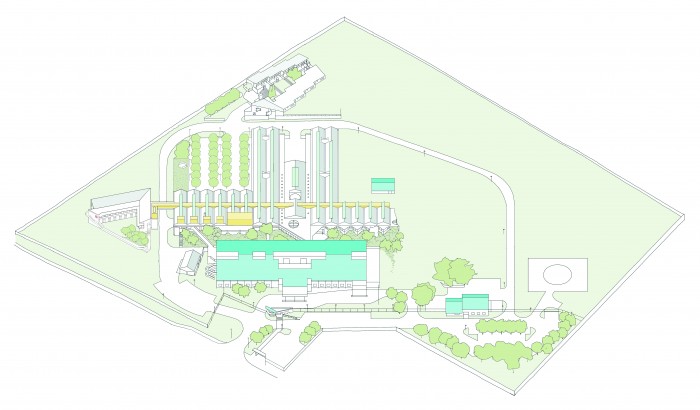
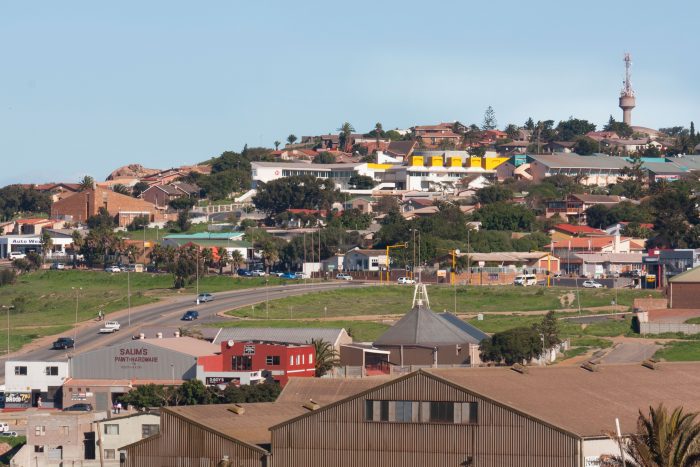
A ring road was introduced to order activities and open space on the site. This ordering device was used to move the hospital campus from a sub-urban arrangement to a more urban arrangement. Buildings could be placed on either side of this road and a series of defined outdoor spaces could be made with views to the distant mountains. Through terracing of the outdoor spaces, the hilltop location of the site is exaggerated.
 

2
vredenburg-hospital-project-03
vredenburg-hospital-project-update-01
The architectural project focussed on two primary objectives; a naturally lit interior and the development of a super-form and a sub-form.


Naturally lit interiors

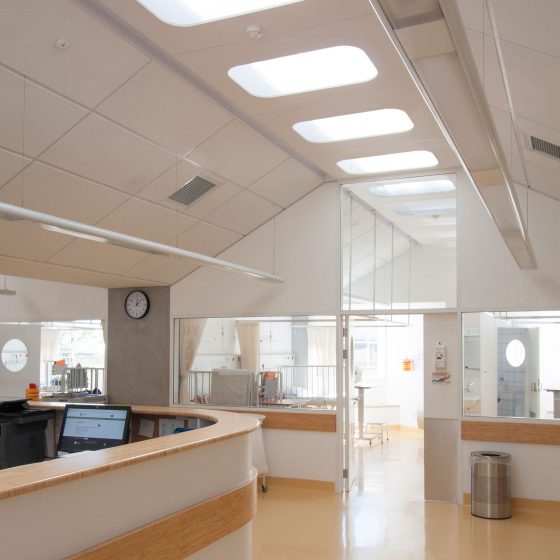
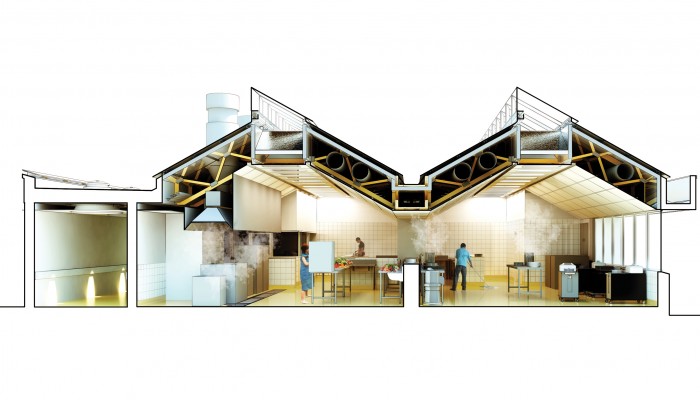
To have the interior of a hospital naturally lit sounds simple enough, but it is often only partially achieved. Conventionally, the demand for deep floor plans and ceiling based MEP services mean that the floor plates of a hospital are overshadowed by a layer of services which is impenetrable to light. Light is usually admitted from the facade into the wards which leaves the depth of the plan, where the staff are often located, artificially lit. Often, primary service runs are located in the ceilings above corridors and therefore they are devoid of natural light.
 

C:UsersMariaWolffDocumentsRoof Light.pdf

1, 300 dpi
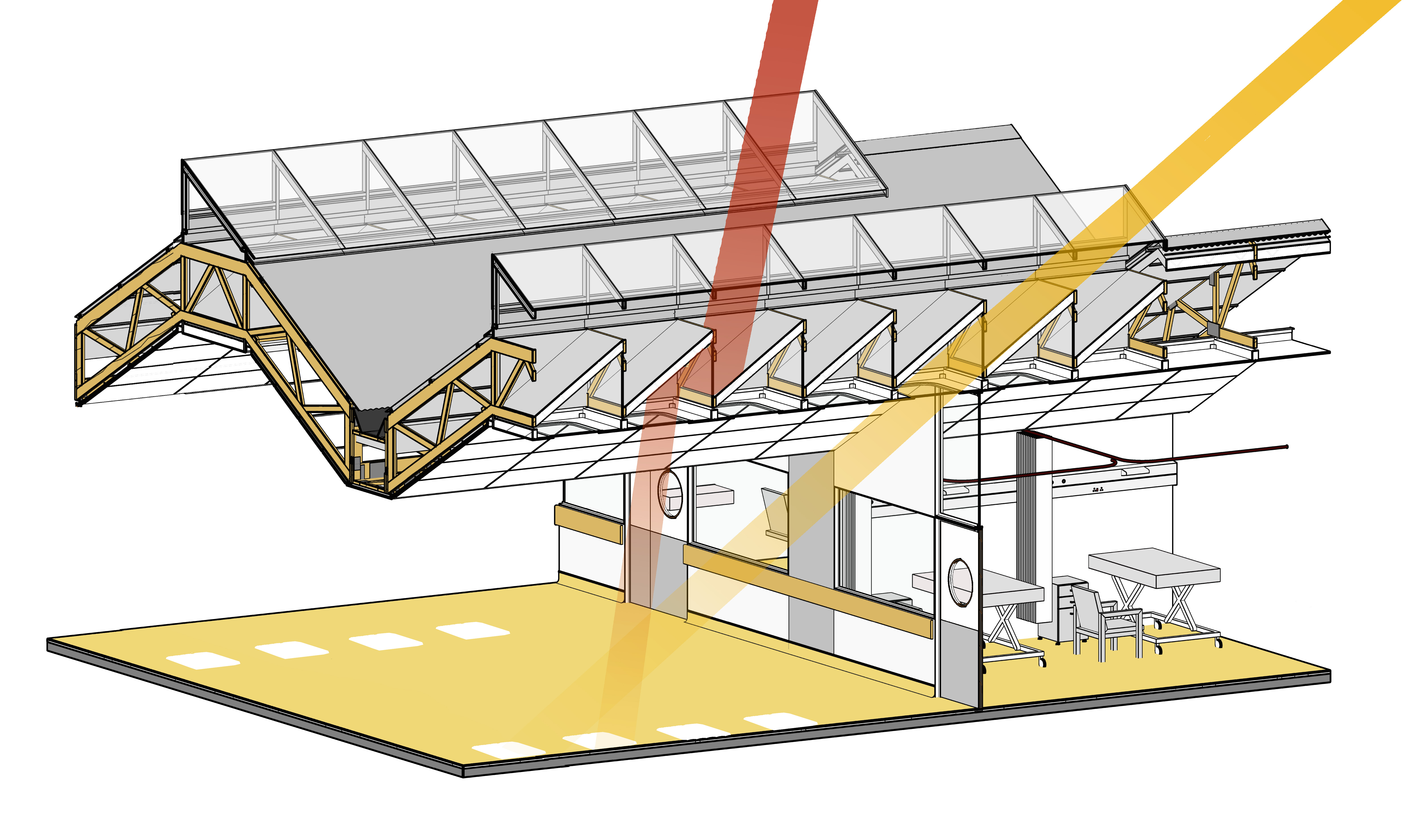
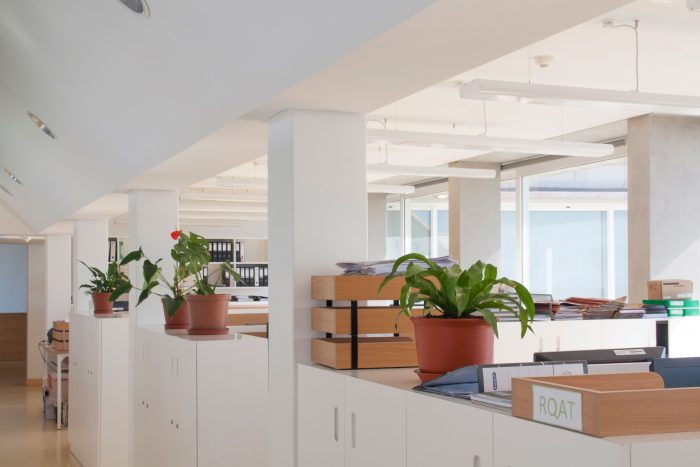
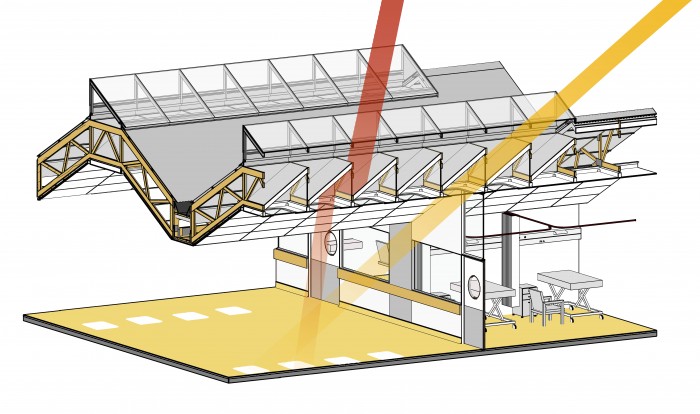
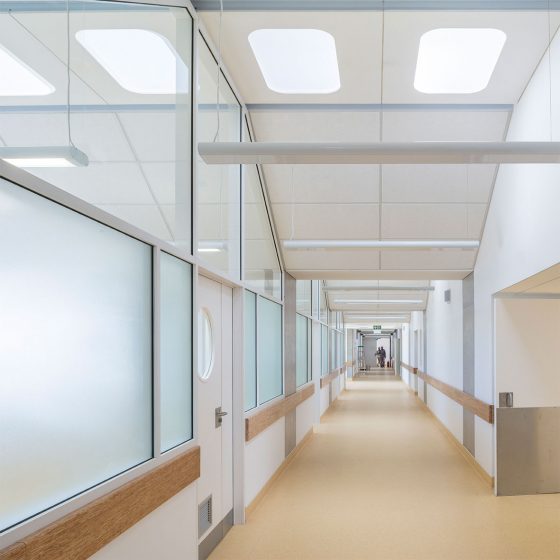
In this design, all habitable spaces are located on the upper floor, and therefore the opportunity existed to have the entire floor plate naturally lit. This was achieved through “combing” the MEP services into a pattern that would allow light to enter between service runs. A primary service corridor was developed on top of a line of service rooms (ablutions, storerooms, sluice rooms, etc) and adjacent to the primary circulation corridor. This move allowed the corridors to be naturally lit whilst having an easily accessible service corridor. From the service corridor, the MEP services branch off perpendicularly which allows roof lights to be located parallel to the service runs.

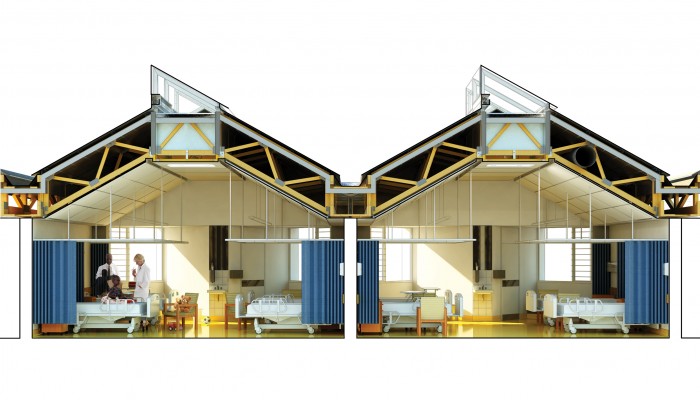
The roof lights were designed to separate light and heat. The roof lights have reflective baffles inside them which allows direct sunlight through in winter, but only reflected light in summer. The outer layer of glass encloses a ventilated void which allows heat to escape.

The design of the roof lights allow the hospital to have a 80% daylight autonomy.
4, 300 dpi
untitled20170125-008882

Super-form and sub-form

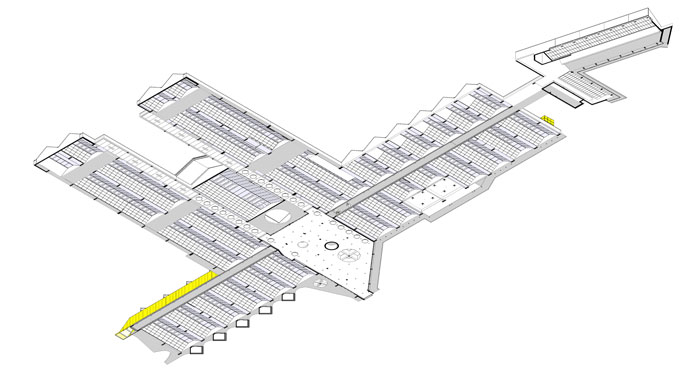
The architecture of hospitals is often overpowered by technical and functional demands. To make matters worse, changes to the fabric and the services over time, systematically removes any architectural quality from the original building by attrition. To allow for adjustment over time, the additions to the Vredenburg Hospital were designed as two autonomous architectural systems: a super-form and a sub-form. The super-form is the physical framework which sets up primary relationships with the city, the outdoor spatial system, with light and the large scale circulation through the building. The super-form is the most permanent part of the building and in this case is achieved through a normative construction system, The sub-form is the plethora of cellular rooms, all of which could be changed without any substantial effect on the super-form.
 

vredenburg-hospital-project-06

In this hospital, the super-form takes the form of an autonomous roof. Substantial inspiration was drawn from the way sub-urban shopping malls are constructed; a single roofing system over the entire plan with the only fixes being the points, where light enters the plan. The plan form becomes changeable but the quality and pattern of light are non-negotiable. The roof is shaped as a series of undulating bays, the size of which corresponds with a typical ward width. The roof lights are in the centre of each bay. When primary access doors are located under the roof light and service doors are located away from the primary light points then spaces with multiple doors become much more readable; the roof establishes a plan order below it. The normative construction system achieves lower construction costs and in its repetition makes for a consistent manner in which MEP services are located within the plan and the section of the roof.


The super-form establishes a consistent architectural language over the entire plan; the surgeons have the same space as the cleaners. This consistent architectural treatment is fundamental in a society where the unequal treatment of people has been entrenched over centuries and architecture been deeply complicit in maintaining such inequality.
vredenburg-hospital-project-07


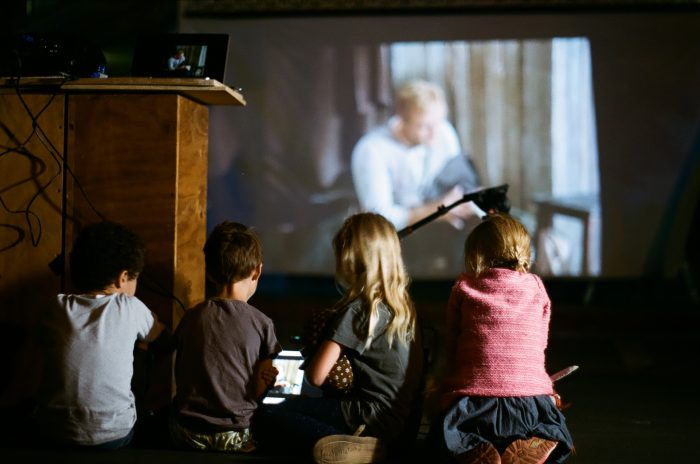
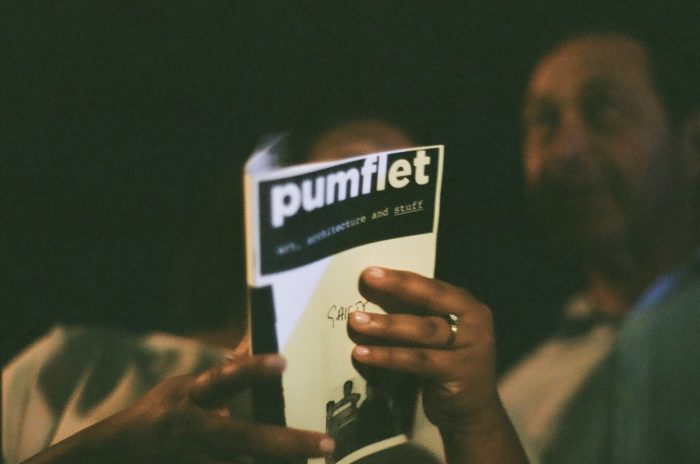
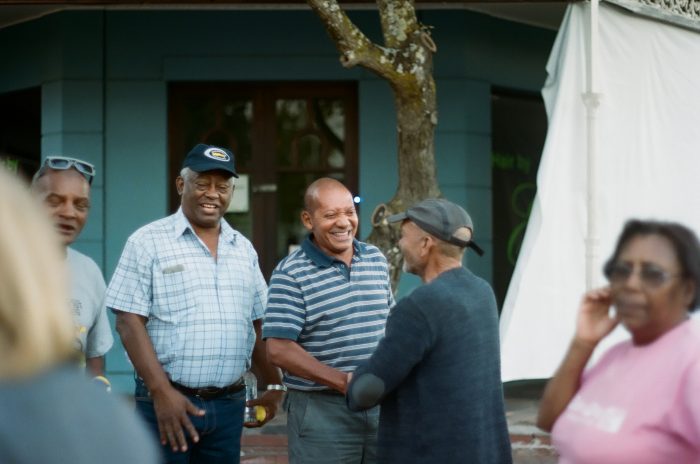
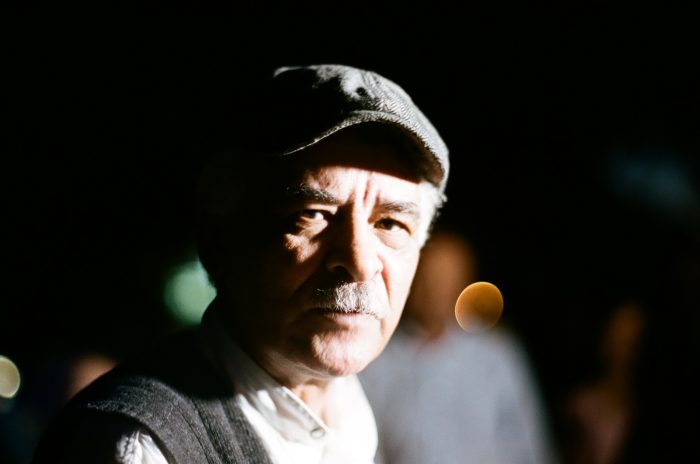
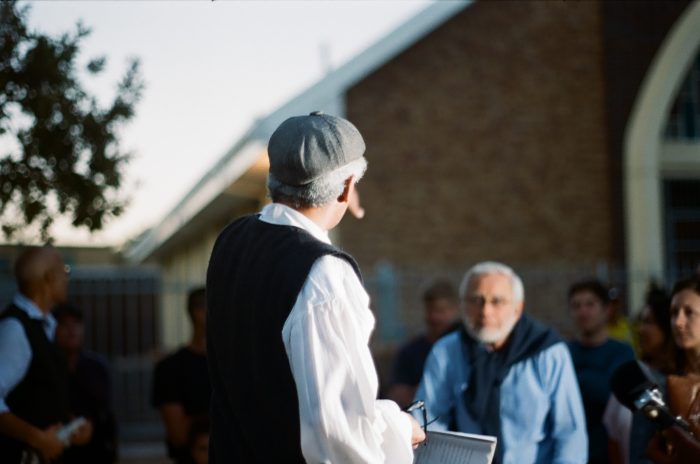
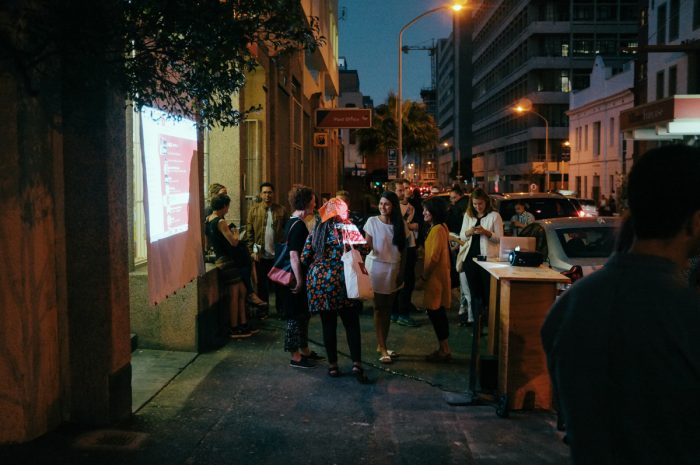
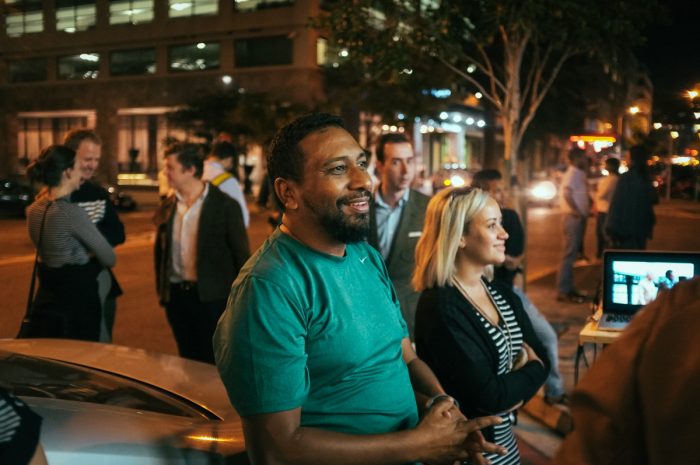
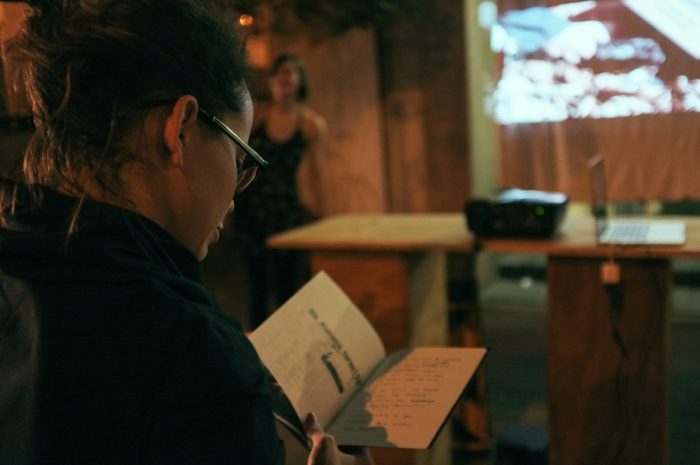
On 30 March 2017, pumflet: art, architecture and stuff distributed its second edition called pumflet  ‘gaiety’.  ‘Gaiety’ published the recollections of Wilfred Damon, ex-resident of Die Vlakte, a site of apartheid forced removals in Stellenbosch. Wilfred’s memories focused on the Gaiety Cinema, the bioscope designated for racialised persons of colour. The intervention included a public tour of the demolished neighbourhood and a screening of La Boheme at the site where the Gaiety once stood, today a commercial complex and a pizza eatery. The Gaiety Bioscope stood in Andringa Street in an area that was known as Die Vlakte in Stellenbosch. Die Vlakte was demolished between 1960 and 1970 as part of apartheid’s project of separate development and forced removals of racialised people of colour from the centre of Stellenbosch. Wilfred recalls particularly two stories. The one occurred during the earthquake of 1969, where the film, a typical Hollywood action flick of the late 1960s, was interrupted because of the effect of the tremor. At that moment, he writes, fantasy and reality was confused. Patrons ran out of the cinema feeling as if stepping out of the cinema meant stepping inside a real life extraordinary drama of the earthquake and its after effects. The second story that Wilfred writes about concerns the Plaza Bioscope, the cinema that was designated for white patrons during apartheid. Back then, films would first be screened at the Plaza, then a week or two later, the same films would be screened at the Gaiety, a cinema for non-white people. He was thrilled to see that the opera, La Bohème was advertised and therefore due to be screened at the Gaiety too. However, he soon realised that those who were in control of choosing the film screenings had no intention of showing La Bohème at Gaiety.  Insulted and disappointed, Wilfred decided to break the law and planned, together with his good friend, Leonard Biscombe, the projectionist at the Plaza, to pretend to be his assistant and in that way watch Puccini’s famous opera.


The legacy and brutality of forced removals have left deep scars in the fabric of the city. Narratives of trauma have dealt with the issues around dislocation, belonging and return. Ideas about home is a key theme in many of the narratives. But how is imagery of the social imagination remembered and dwelled upon?
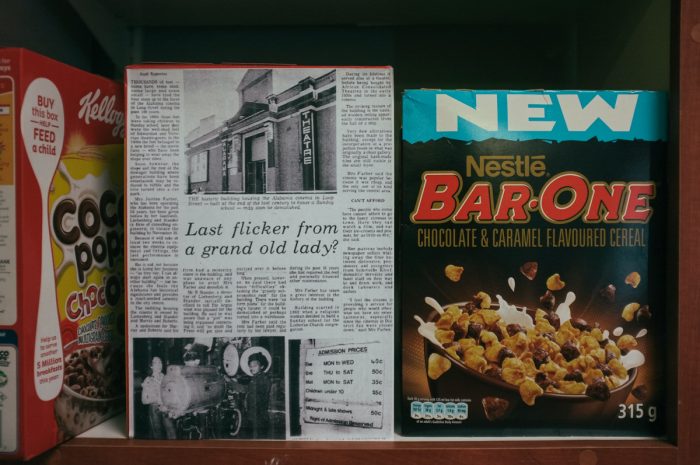
 

pumflet ‘gaiety’ is a publication of Wilfred’s recollections of both events: the earthquake interrupted screening at Gaiety Bioscope and the non-screening of La Bohème.


See more images of the event here.


All photos by Chaze Matakala.


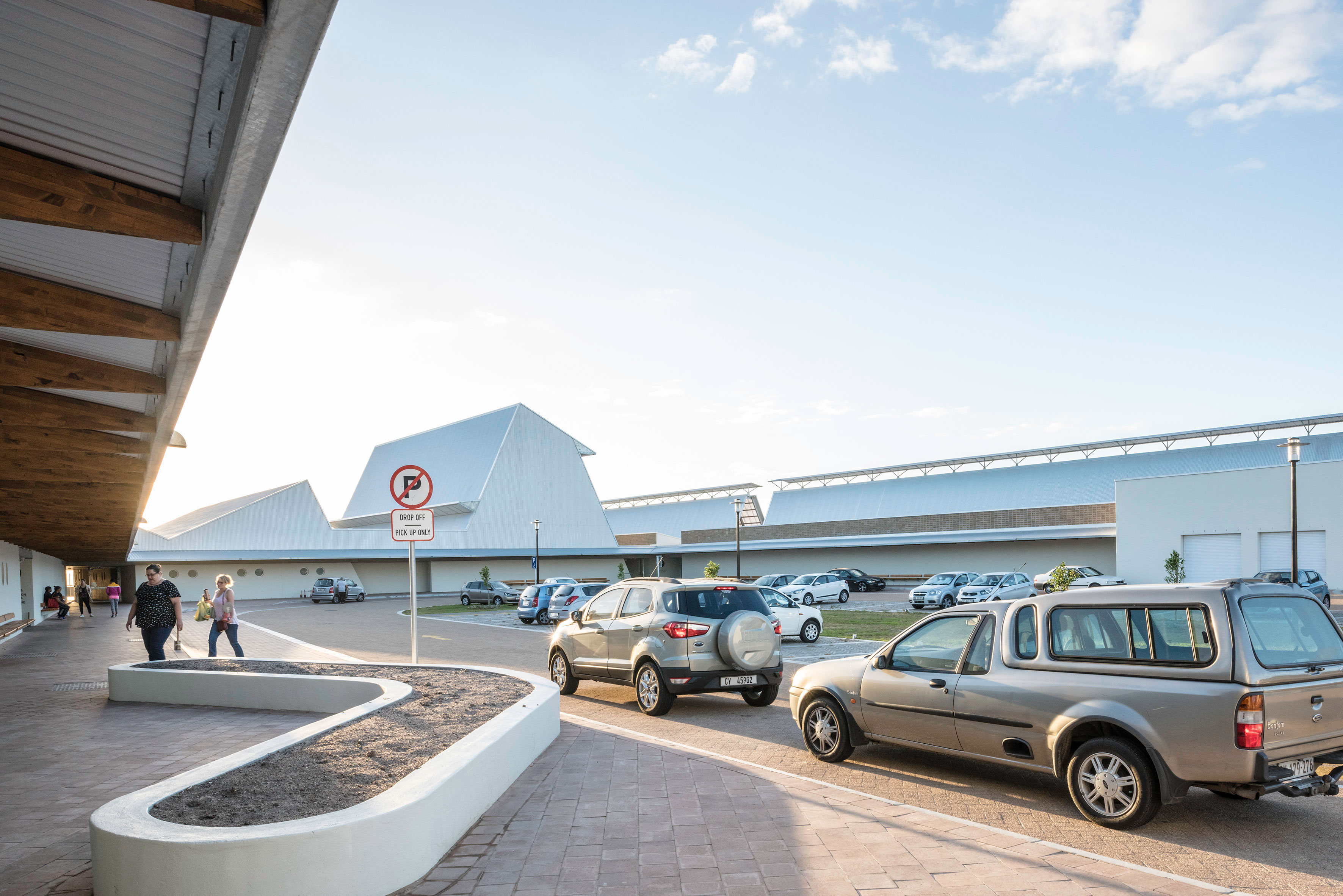
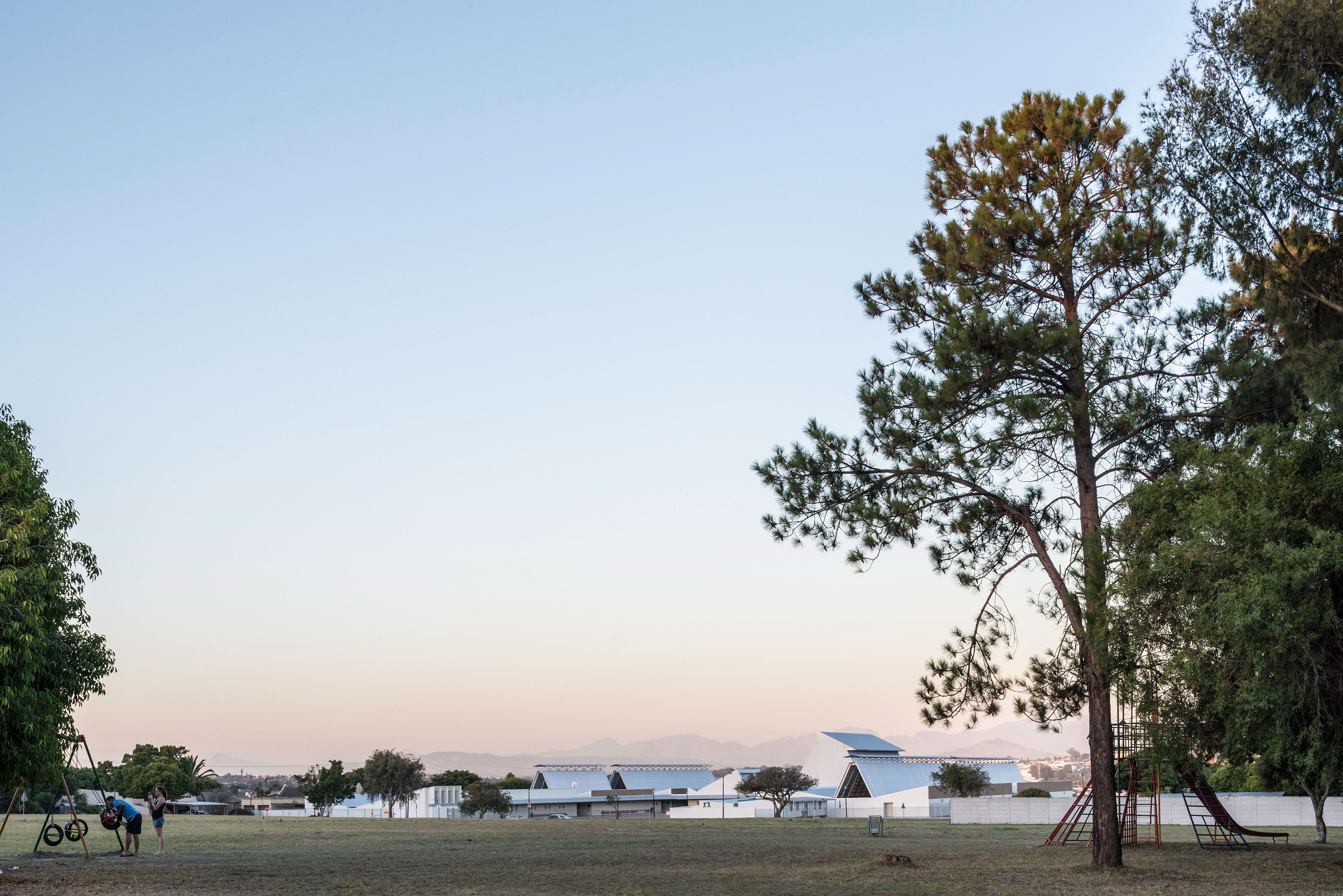
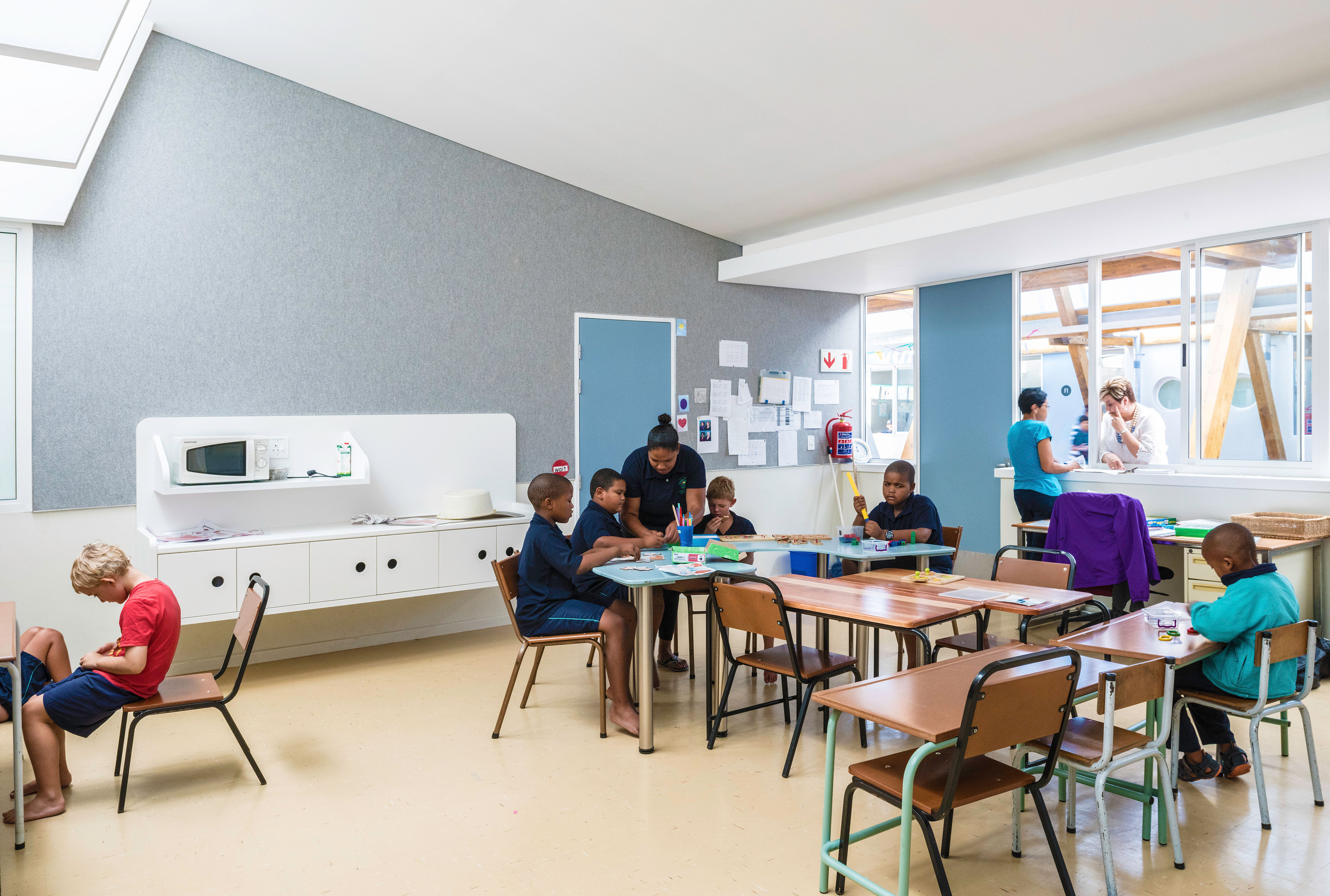
The Cheré Botha School was commissioned by the Provincial Government of the Western Cape for learners on the autism spectrum and with intellectual disabilities. The school will accommodate learners from the ages of 3 -18.


Dave-Southwood_7899-


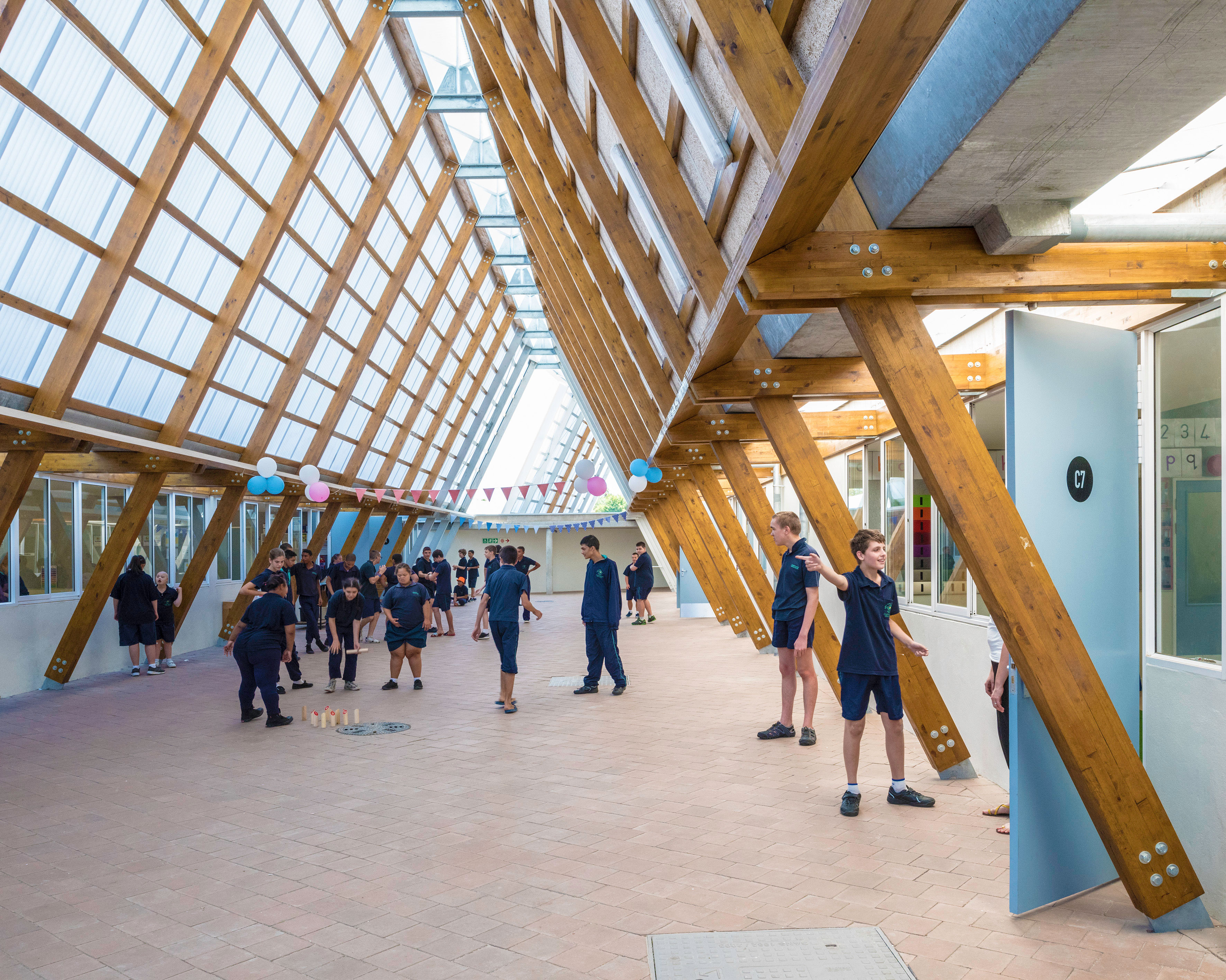
In South Africa, many special educational needs schools are conglomerations of classrooms strung along a central corridor. The need for enclosed corridors originate from the susceptibility of many of these learners to respiratory diseases. The persistent wind and winter rainfall of Cape Town makes open courtyard typologies inappropriate for this kind of school. The result then, is that no collectivity is established beyond the classroom. Although learners with autism and ones with intellectual disabilities are taught in separate classrooms it is mutually beneficial for the learners to play and interact together. The search for collective form therefore serves an educational and developmental purpose as well.


Dave-Southwood_7742-


Dave-Southwood_8259-


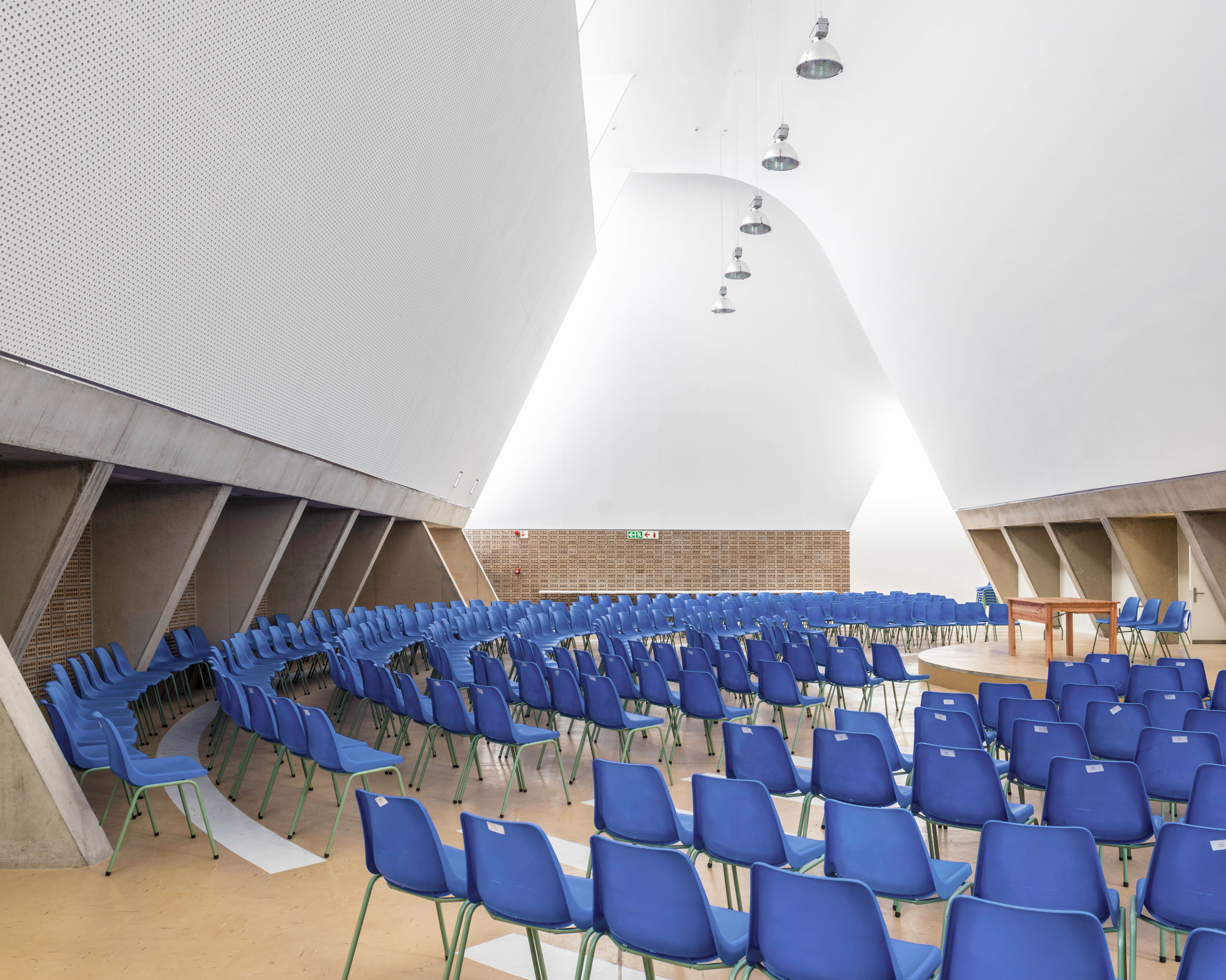
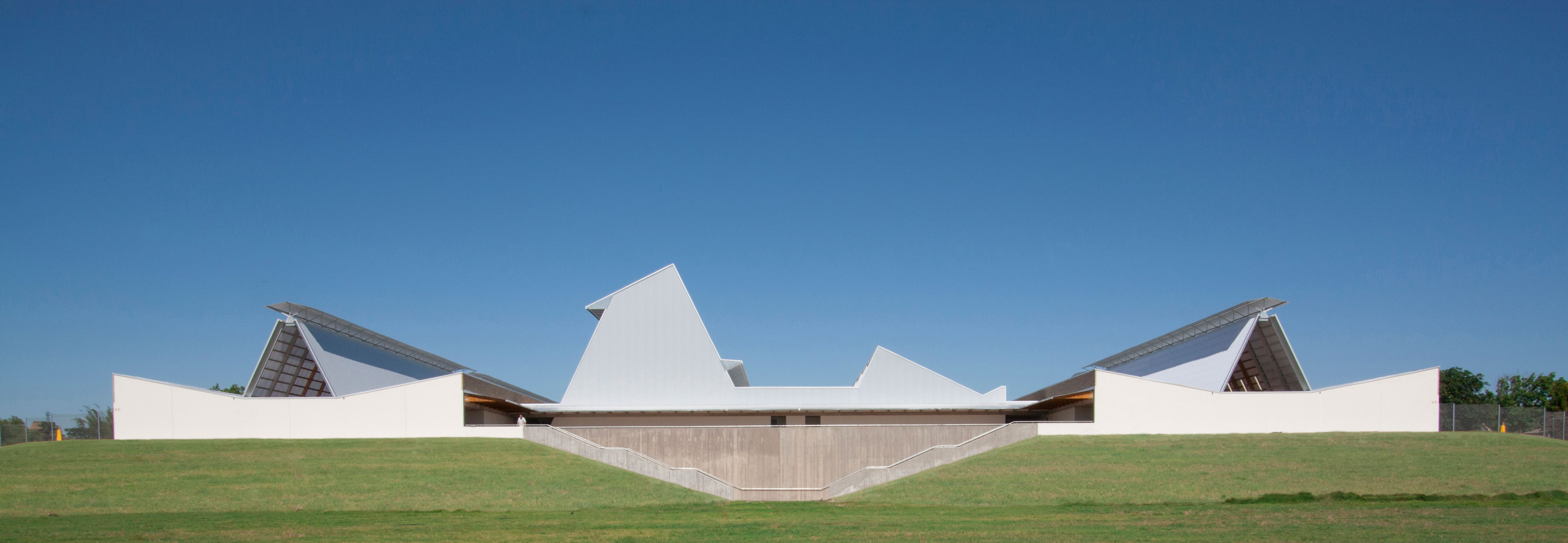
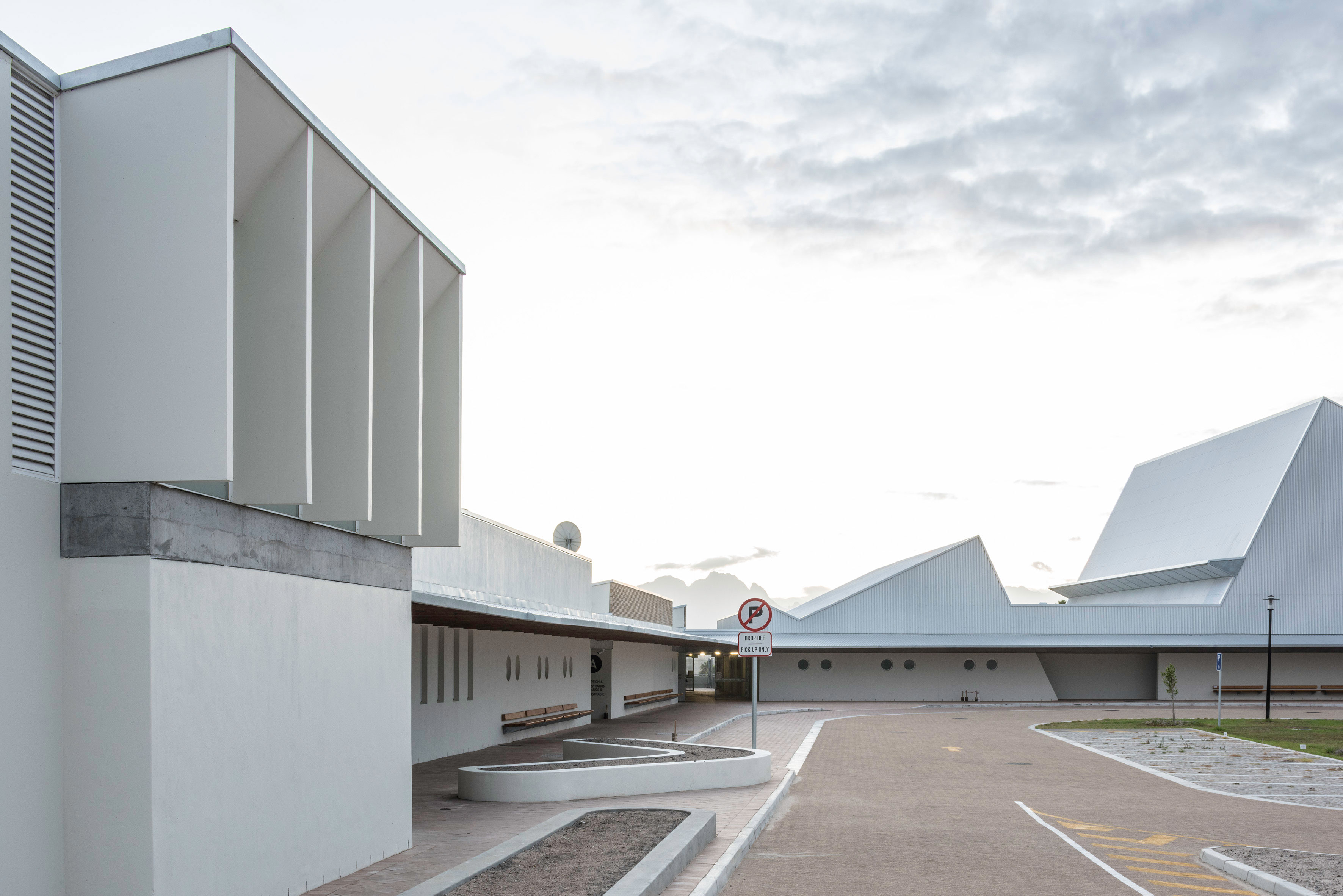
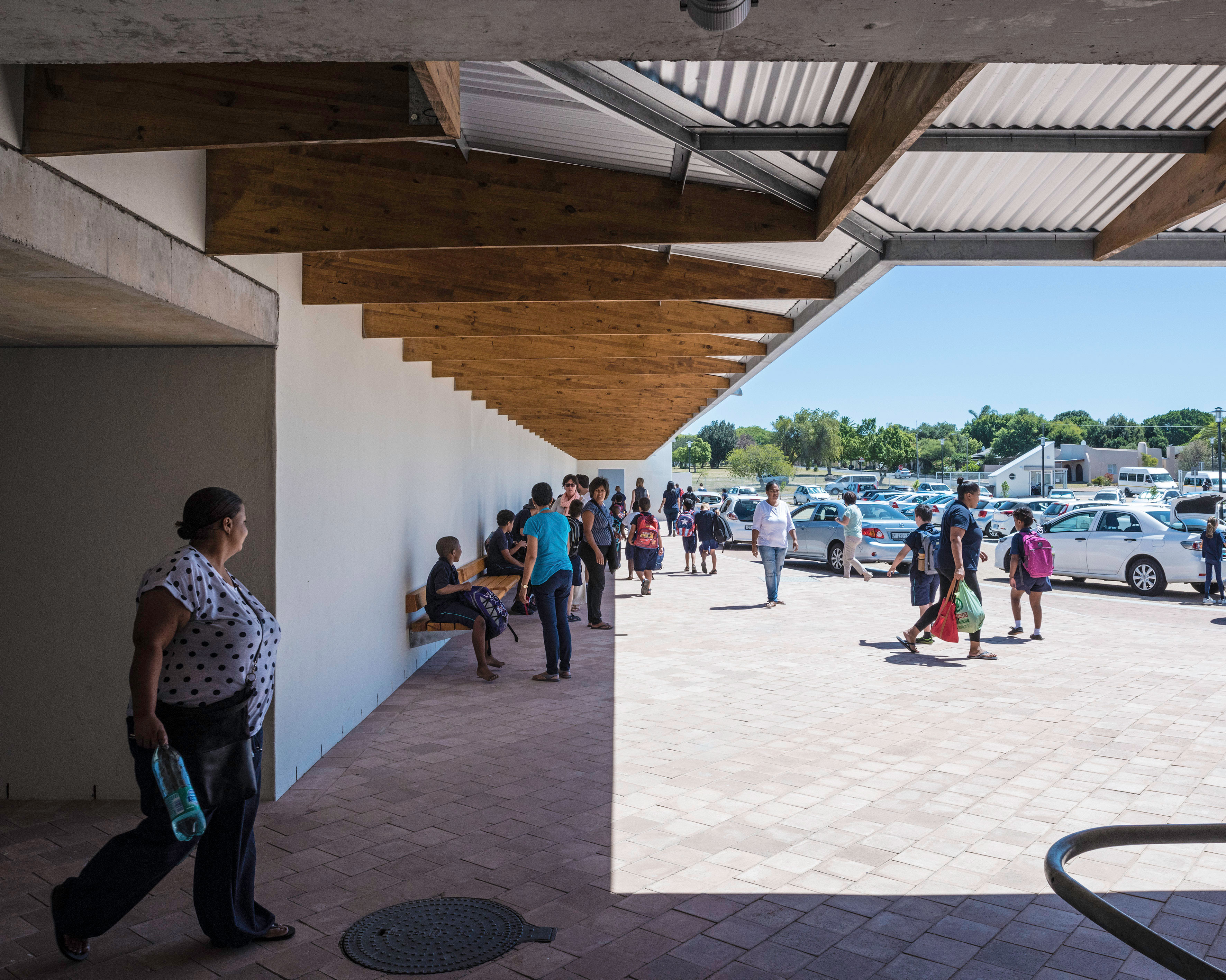
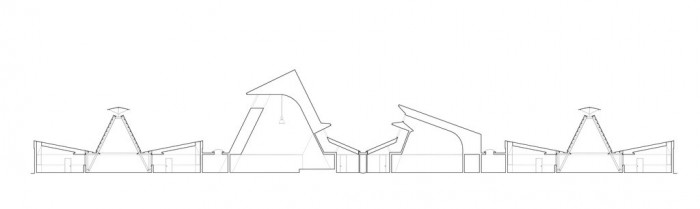
The horizontality of the canopy around the arrival court is contrasted with the verticality of the A-frame structures and the hall. The sculptural volumes of the hall and workshops with its characteristic roof profile are the central moments of the architectural composition. These two volumes are clad in corrugated iron and rise like cumulus clouds from the datum of the canopy at their base. The interior of the hall is triangulated in section just like the A-framed spaces. As another triangulated space, the hall becomes an exaggerated version of other collective forms. Openings for light are carefully arranged to ensure a low glare interior.


Dave-Southwood_000206


Dave-Southwood_7640-


The architecture of this school engages with the speculations of Fumihiko Maki on the nature of collective form. Maki’s speculations focused on the design of authentic urban patterns which respond to the lifestyle, terrain, urban economies and contemporary challenges of societies or urban districts. The character and coherence of villages which developed over long periods of time served for Maki as a benchmark of significant collective form at an urban scale.


Dave-Southwood_8205


Dave-Southwood_7874-


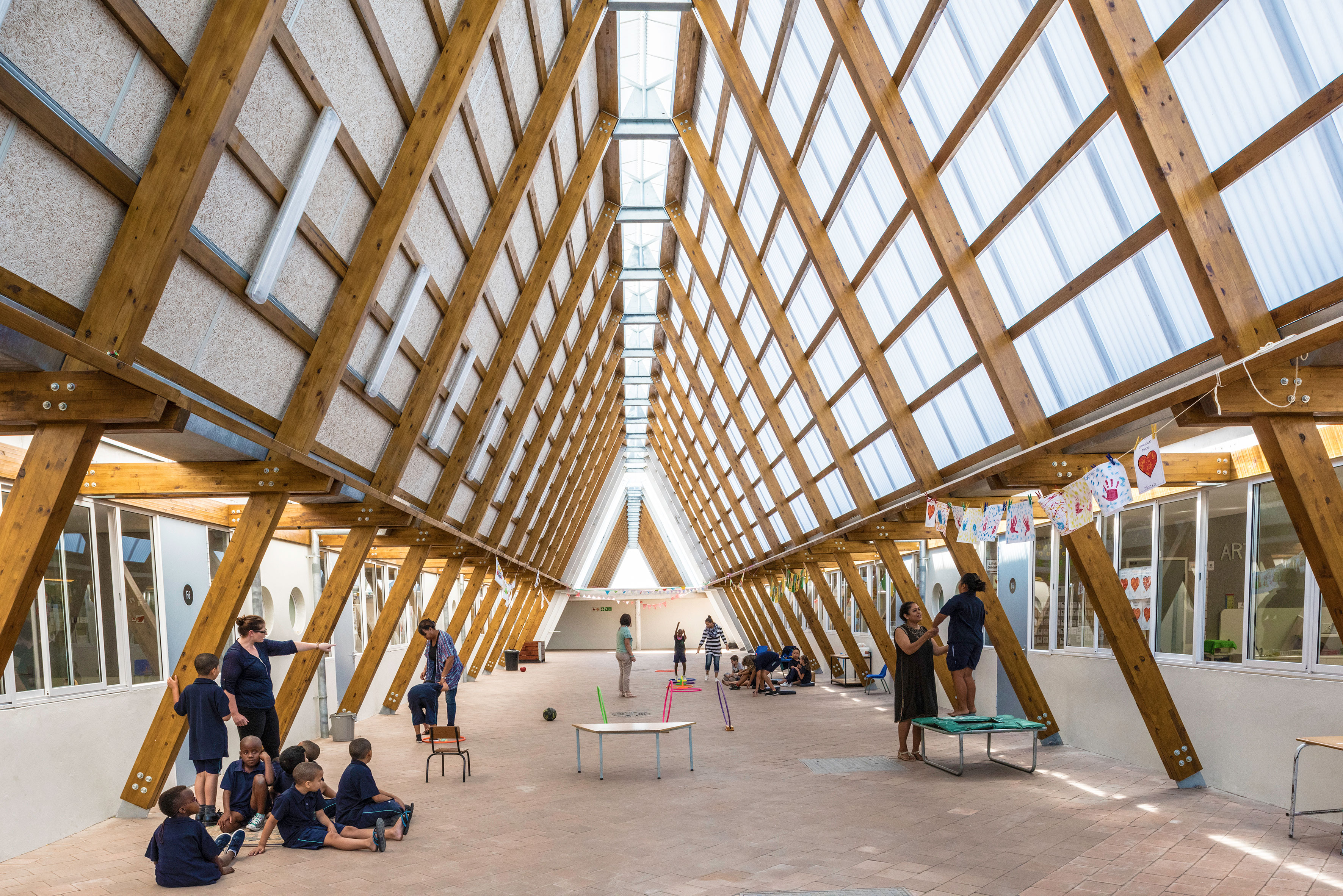
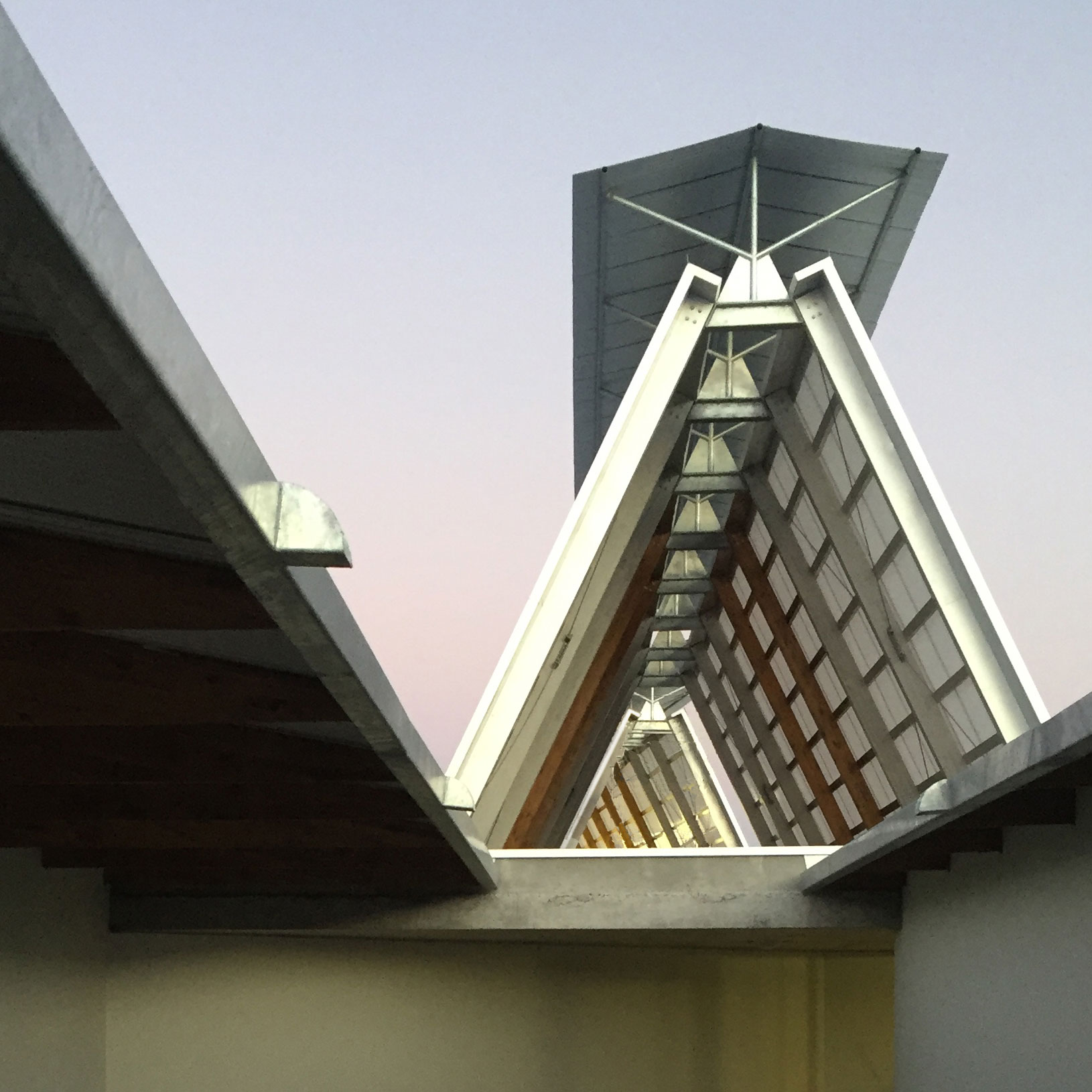
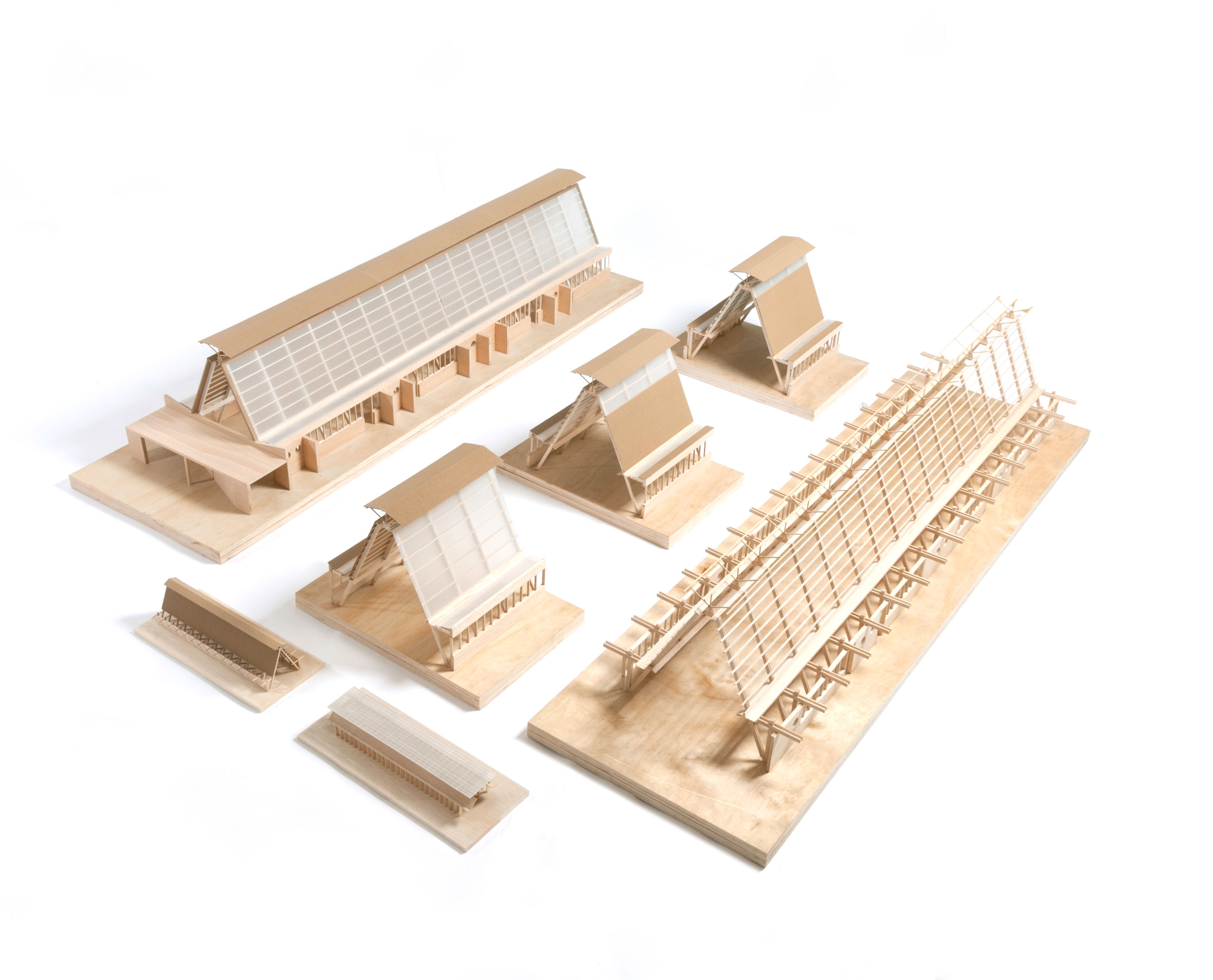
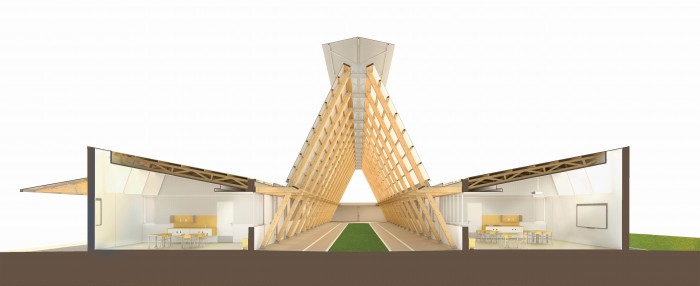
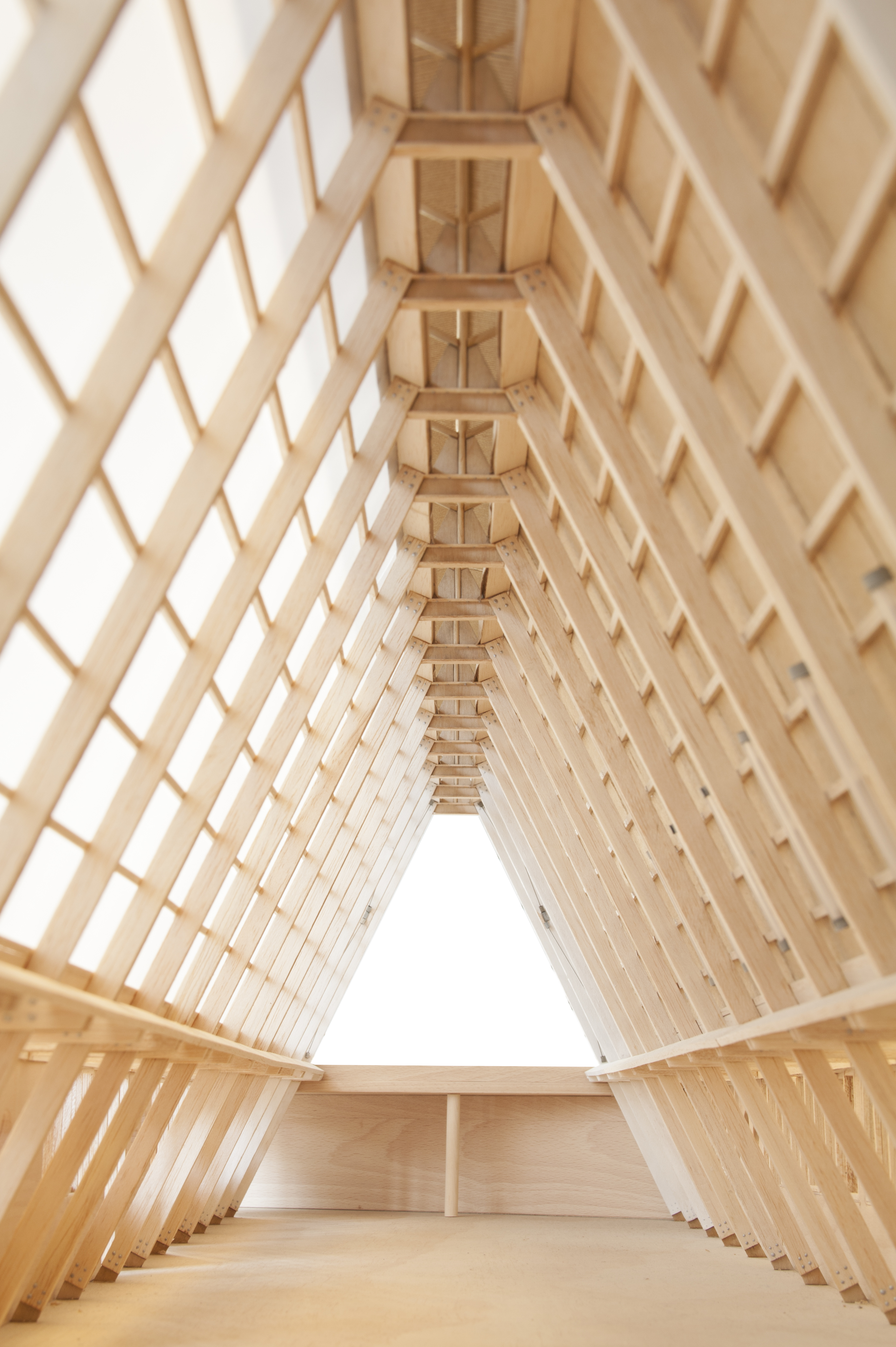
The school is divided into six sections: an administration building, four classroom blocks for learners and divided into various age groups and including one classroom block with the assembly hall, a kitchen and workshops. Each of the classroom blocks is designed around a shared space which is expressed through a timber A-frame, which we have conceptualised as the ‘super-form’. The A-frame ‘super-form’ is identical for every age group but the ground surface is occupied and programmed differently depending on its situation: the creche is filled with play equipment and soft surfaces, the junior sections with lines for walking and riding and in the senior section, vocational situations such as food production or hospitality are set up. These roofed, outdoor spaces establish collective form as a series of social spaces at a scale between the classroom and the school as a whole. It allows learners to play and learn outside even in adverse weather conditions. In previous projects, we have explored the use of roofed, outdoor spaces as expressions of collective form such as in the Watershed located in Cape Town’s V&A Waterfront. In these explorations, collective form becomes the social heart of the architecture and the origin of urban connectivity.


Models built during the development of the timber frame enclosing the communal space


Section_layout_Options-1

 Section through classrooms and communal space


rsz_biennale-section-assembled_section-lines-only

Section


Communal space1

 Light study model of communal space between classrooms


rsz_temp01870


 Site planrsz_plan

Plan


Hall

 Light study model of the hall interior


Beyond the hall is an exercise court, which again is articulated by a horizontal canopy on three sides and open to the neighbourhood on the fourth, except this time it has an incredible view over the landscape to the mountains in the distance. Two generous stairs lead users from the court to the sport field below.


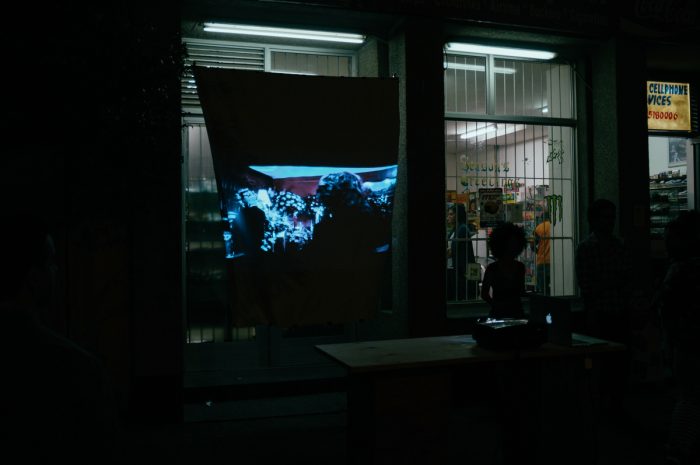
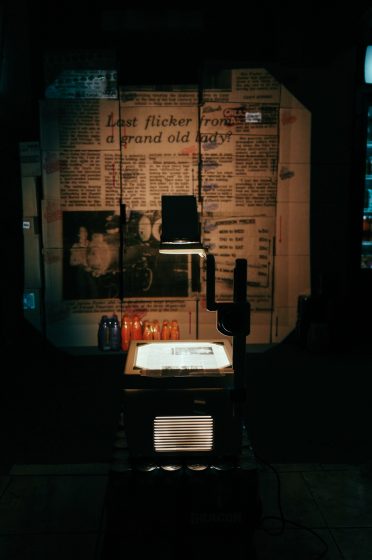
pumflet – art, architecture and stuff is serial publication co-founded with artist Kemang Wa Lehulere. The publication seeks to connect architectural spaces with cultural and social practices of the imagination. “Daar gaan die Alabama’ was the first iteration of the project. The project was conceptualised as a public intervention around the history and demolition in 1984 of an old city cinema. We discovered that the film was interrupted in order for bulldozers to proceed with demolition. The intervention included: the re-screening of the interrupted film on the pavement where the old cinema once stood; the display of newspaper clippings in the corner shop that now occupies the site; and the publication of Pumflet, a set of letter exchanges dwelling on the events surrounding the demolition.

See more images of the event here.


All photos by Barry Christianson.


Louisiana Museum of Modern Art in Denmark

Black line axo1


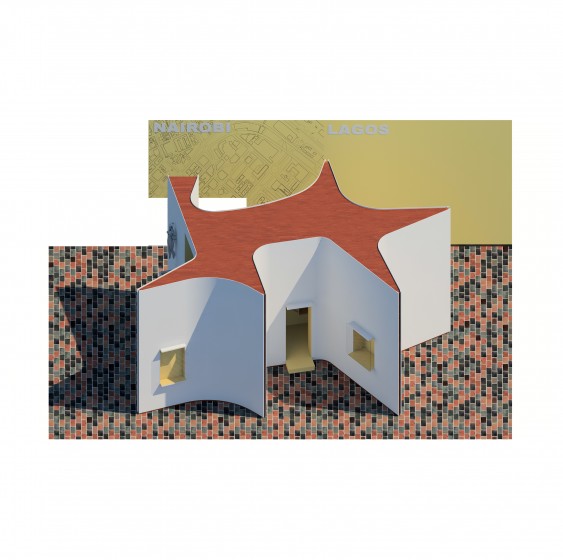
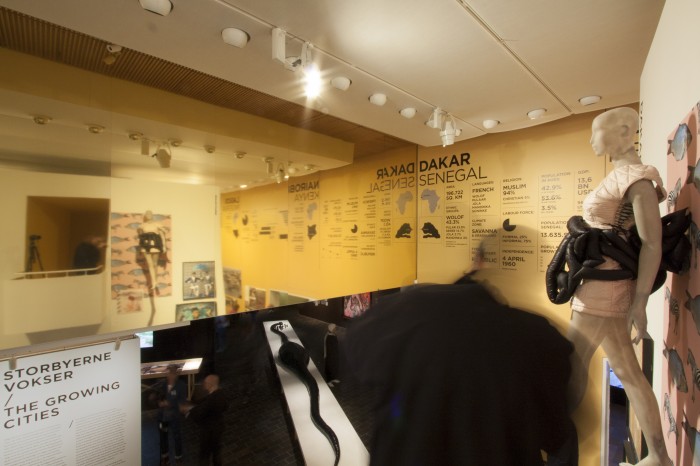
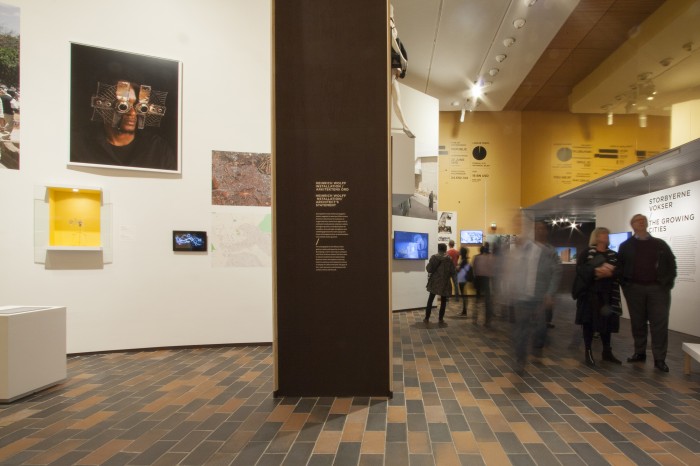
The scenography that we designed for this exhibition focuses on the concept of reflexivity. The content of the exhibition, curated by the museum, focuses on six African cities, Lagos, Kinshasa, Maputo, Dakar, Johannesburg and Nairobi. In the context of a renewed interest in exhibitions on African architecture in Europe it is worth asking whether a bidirectional relationship of learning and entertainment is fostered in such displays. African scholars such as Chinua Achebe have argued that there has been a long relationship between Africa and Europe, where Africa has been a mirror for European self-definition.
Realistic axo

Balcony1

Entrance3


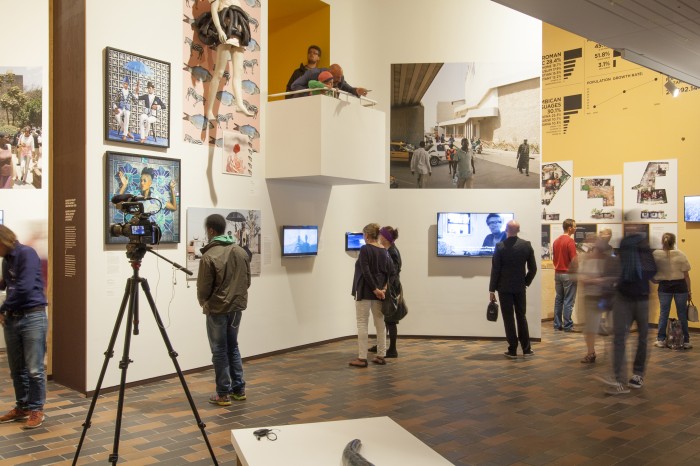
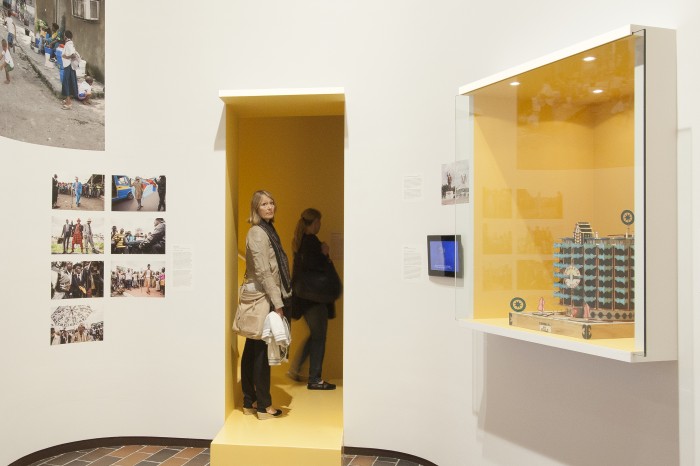
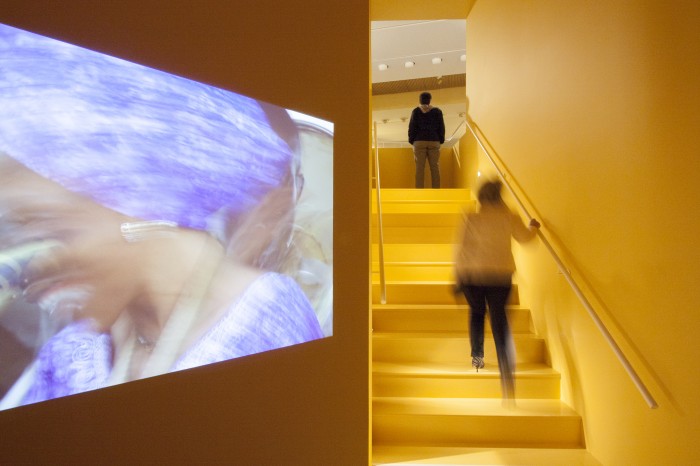
In designing the scenography, the attempt was to make a space that bends back on itself; a space that confronts the viewer with his or her own gaze. In this exhibition, each city is contained in an interleading cell. By shaping a voided cell for each city, a scalloped solid form is left as residue. This form aims to subvert predetermined relationships between viewer and subject by inserting a void into the solid form which sets up confrontations with the other and the self.


Stair1

Golden wall2


The central void has an entrance which is articulated as a display box. In the entrance and on the balcony, the viewer is on display as much as the content of the exhibition is. In short, we gave the walls eyes. The balcony is in the wall facing the entrance into the gallery. The exhibition wall and balcony sets up an ambiguity; on the one hand it is a display surface, on the other hand it contains a gaze. People on the balcony will be looking at people who have just entered and see themselves reflected in a golden mirror wall facing them. The relationship between subject and object is inverted. This construct of reciprocal gazes is important in reflecting on the potential for an us and themreading of the African cities on display. The scenography creates a reflexive construct between content, others and the self.


V3 toV2 1

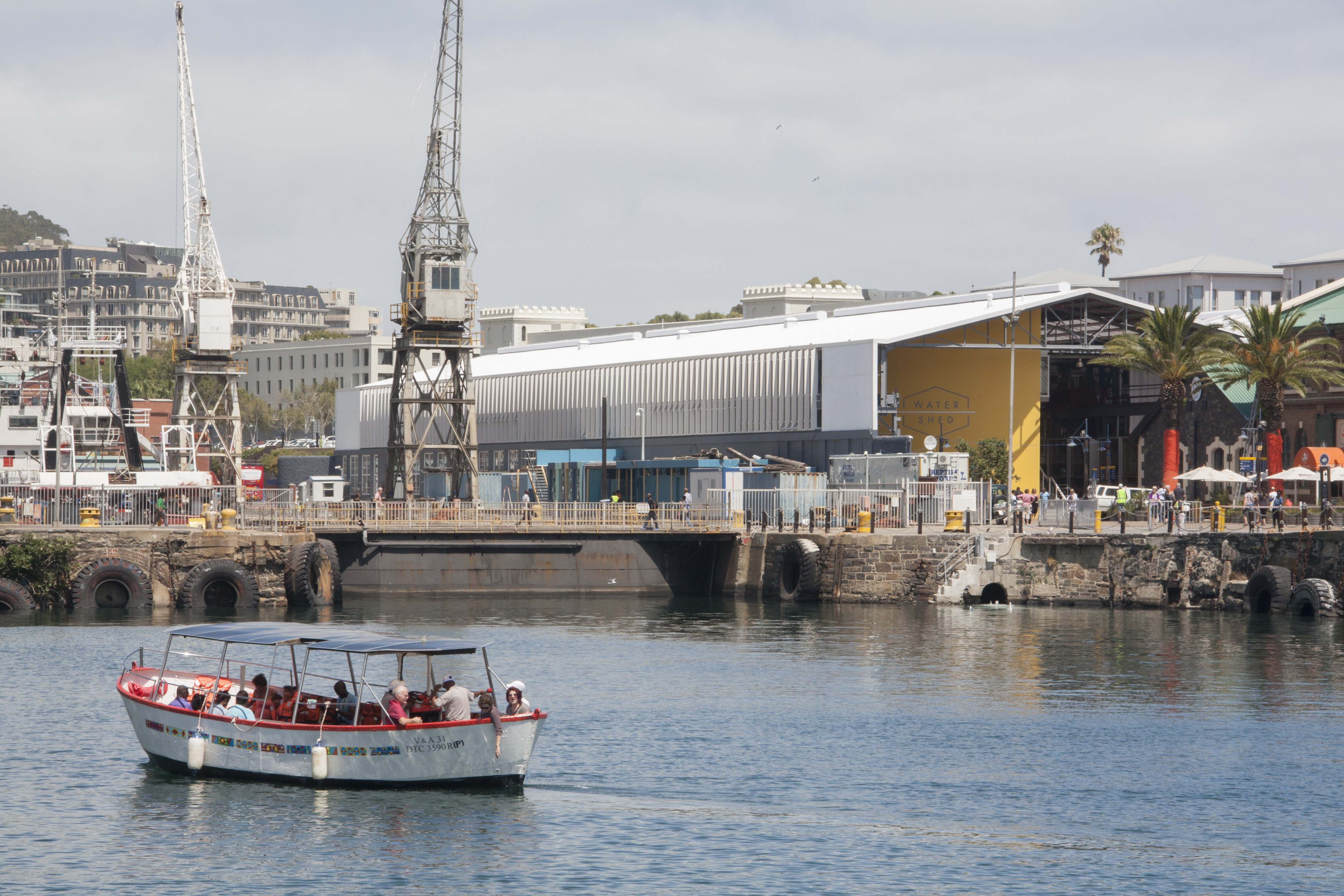
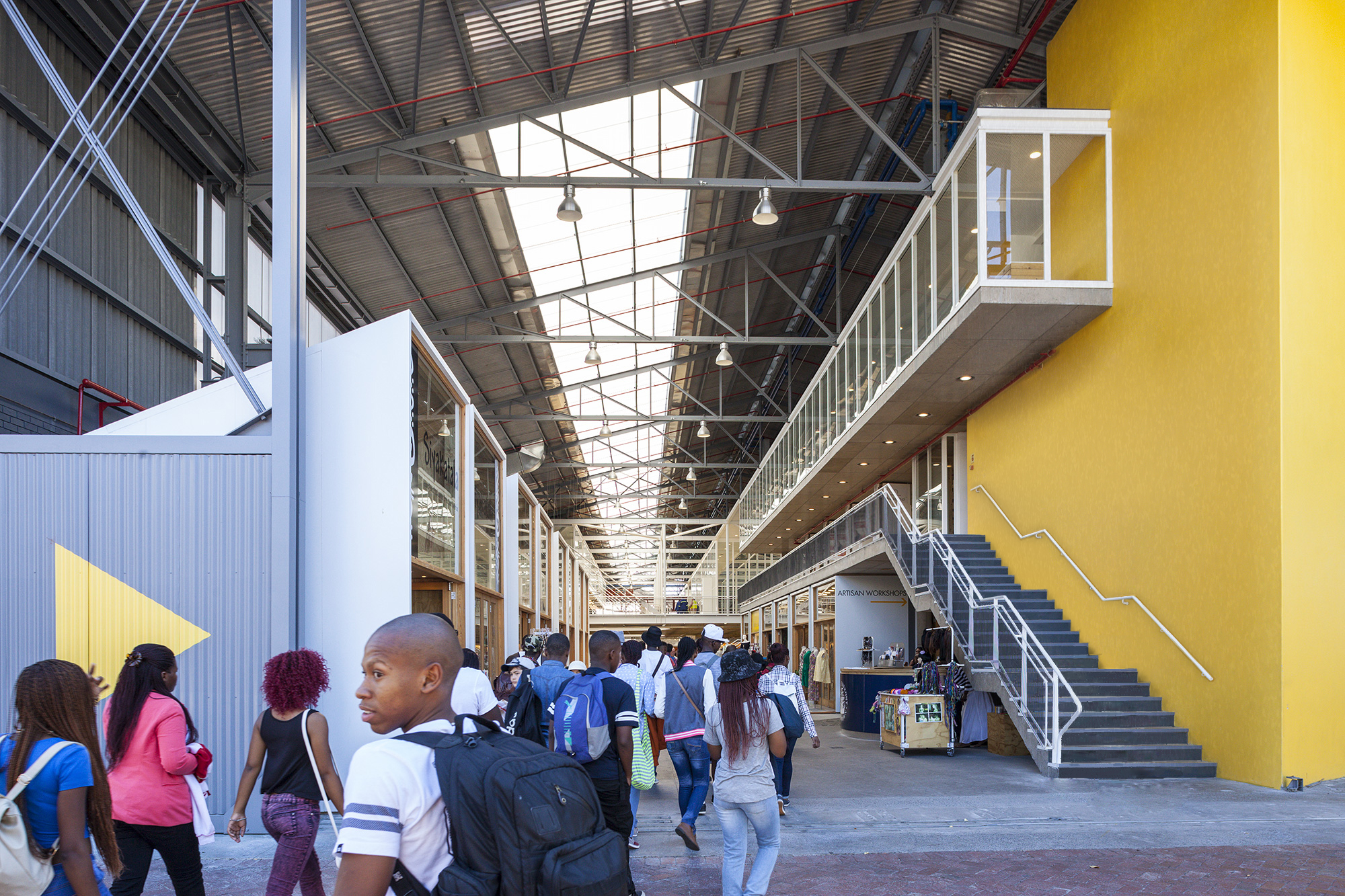
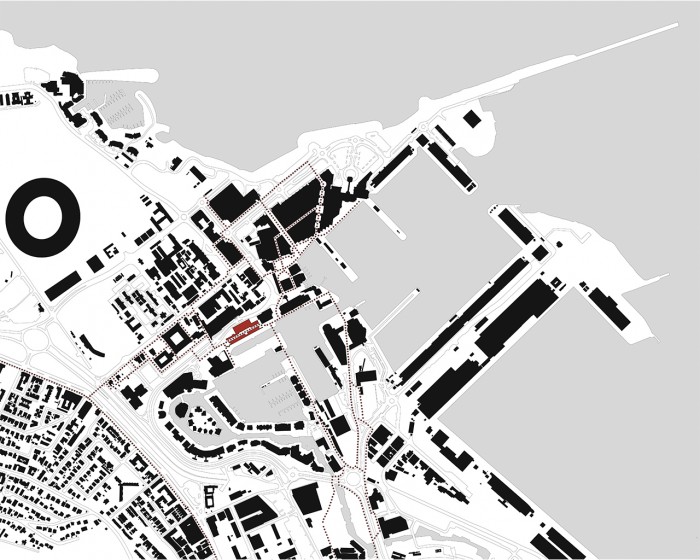
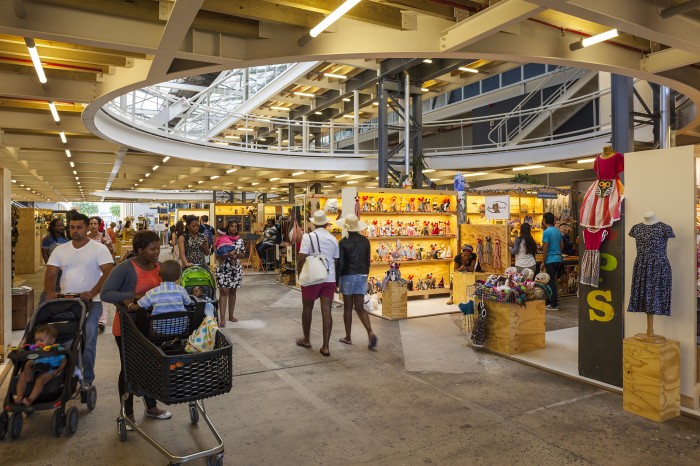
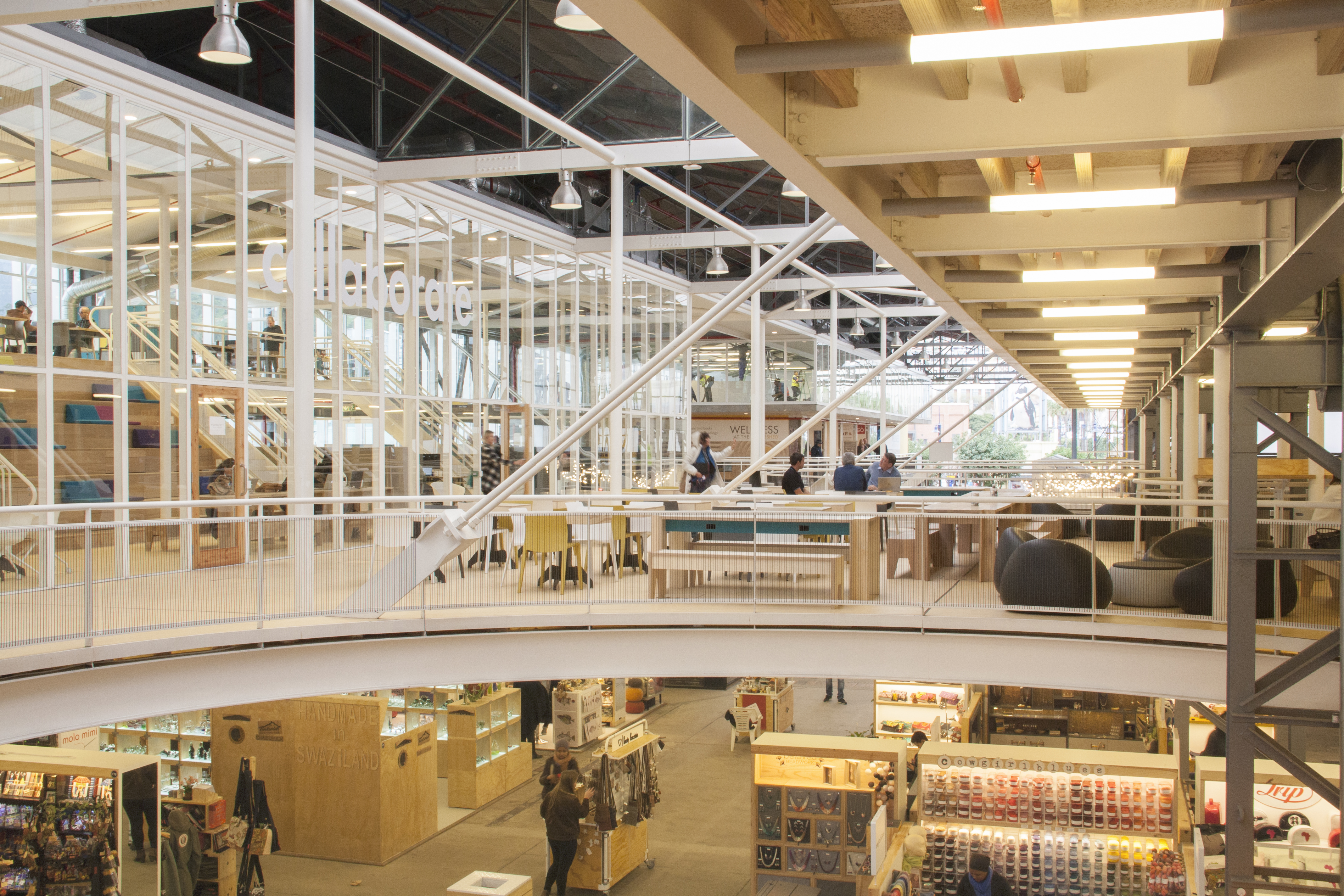
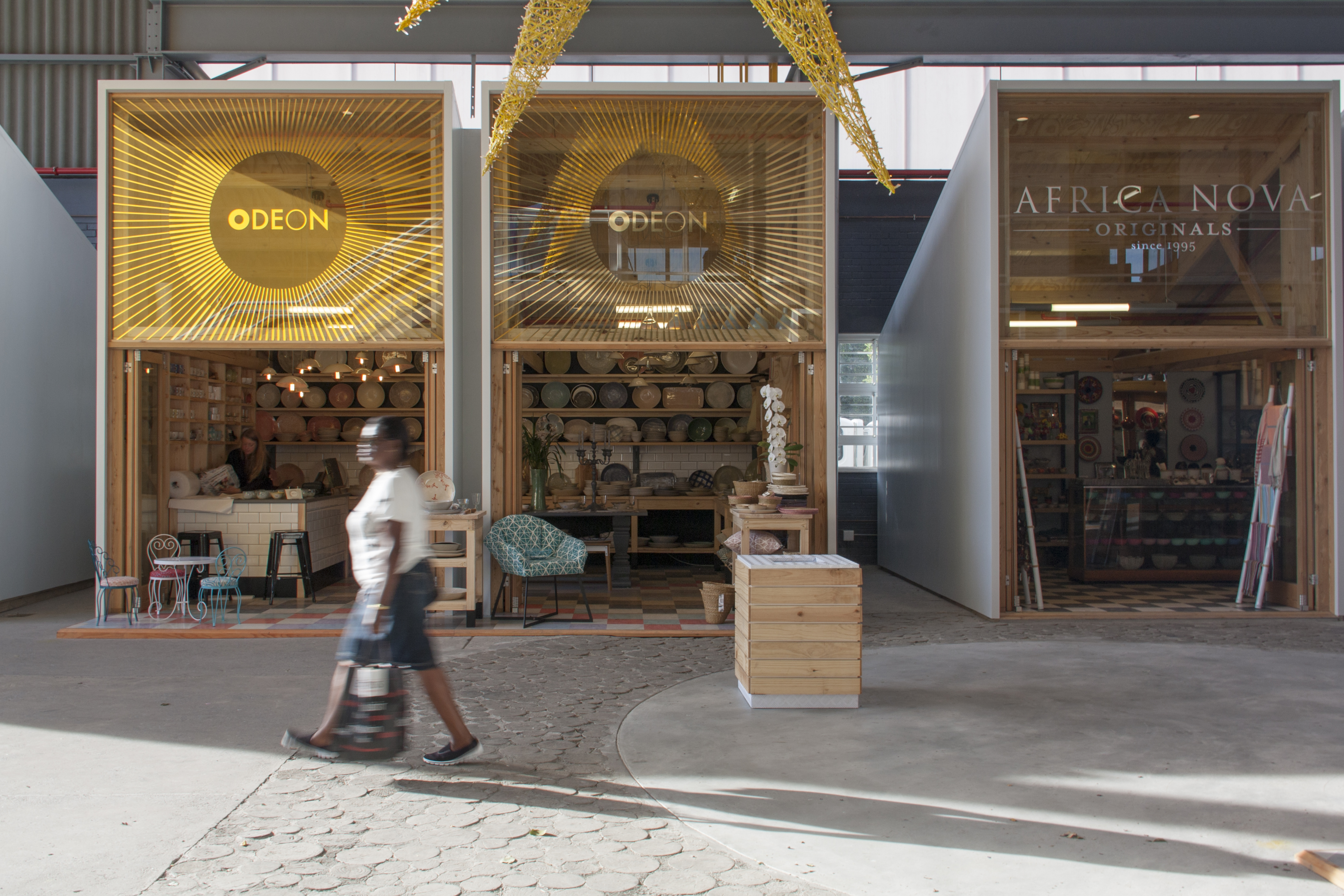
This design demonstrates how an educational institution can show leadership in the formation of the city that would serve interests beyond those of the proposed business incubator alone. Instead of locating the business incubator in a portion of the existing industrial shed (as required in the brief), we proposed a new street throughout the entire shed that sets up an urban pedestrian network which connects several popular areas around the shed. The street reclaims public space which is of a bigger order than the business incubator. Although the street is enacted by the business incubator project, it becomes a device for creating economic opportunity for small businesses; a market.


Watershed


by Heinrich Wolff (3)


by Dave Southwood (7) revised


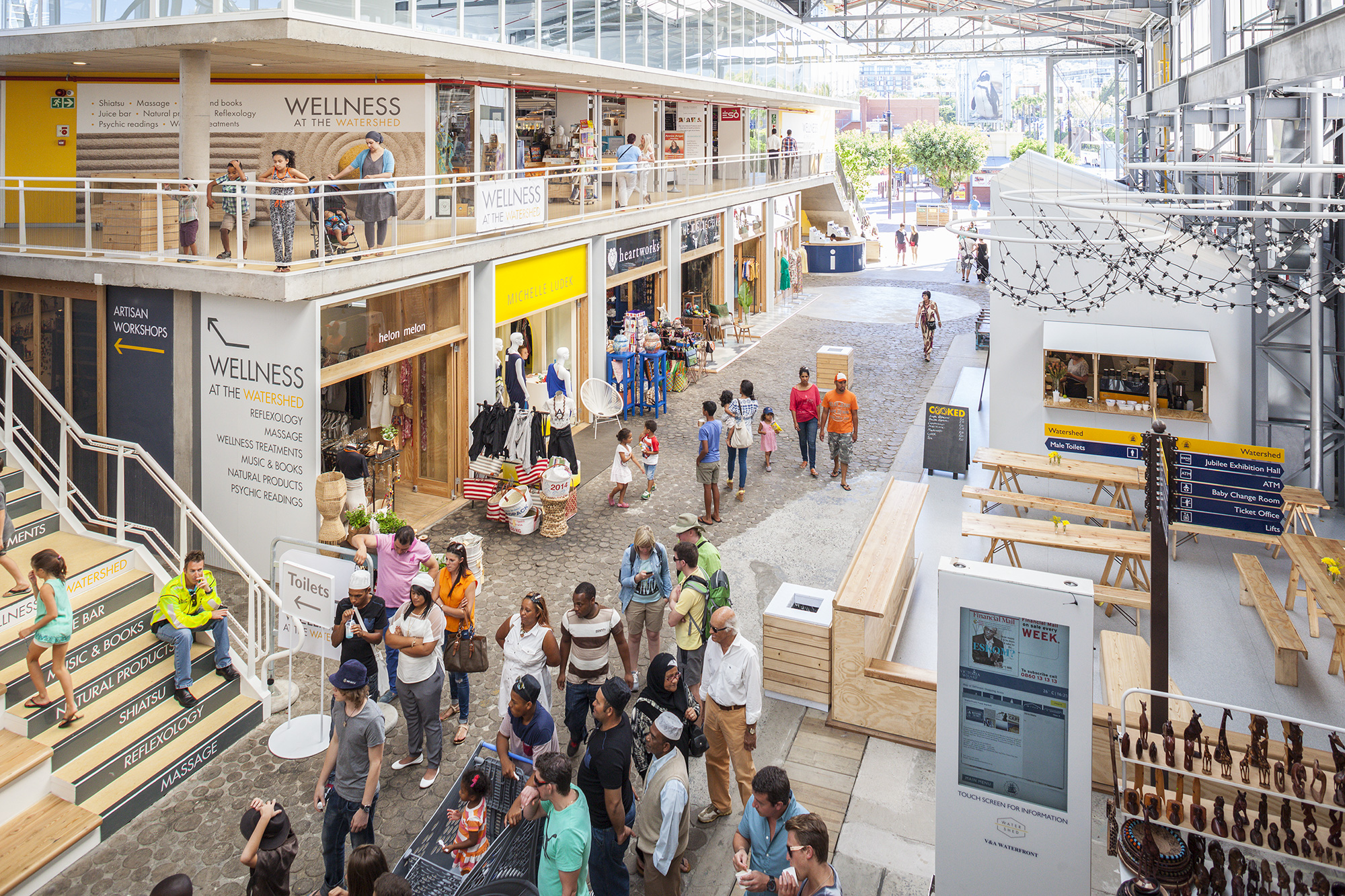
The large numbers of passing traffic in the street and the popularity of the event space and the business incubator results in a constant flow of people through the street from early in the morning until late at night. This pedestrian flow sets up extremely good commercial opportunities. Instead of giving such opportunity to one or two big tenants, the market was devised as many micro tenancies which allow small and emerging businesses to take advantage of the commercial opportunity. This commercial pattern was learnt from studying street based business in various urban situations. It is fundamental, in the context of unjustifiable inequality in South Africa, that big business should establish themselves in the city in a manner that sets up opportunity or benefits for smaller businesses. This project shows how this can be done.
 

01_Site Plan Option 01 WEB


by Dave Southwood (1)


by Dave Southwood (15)


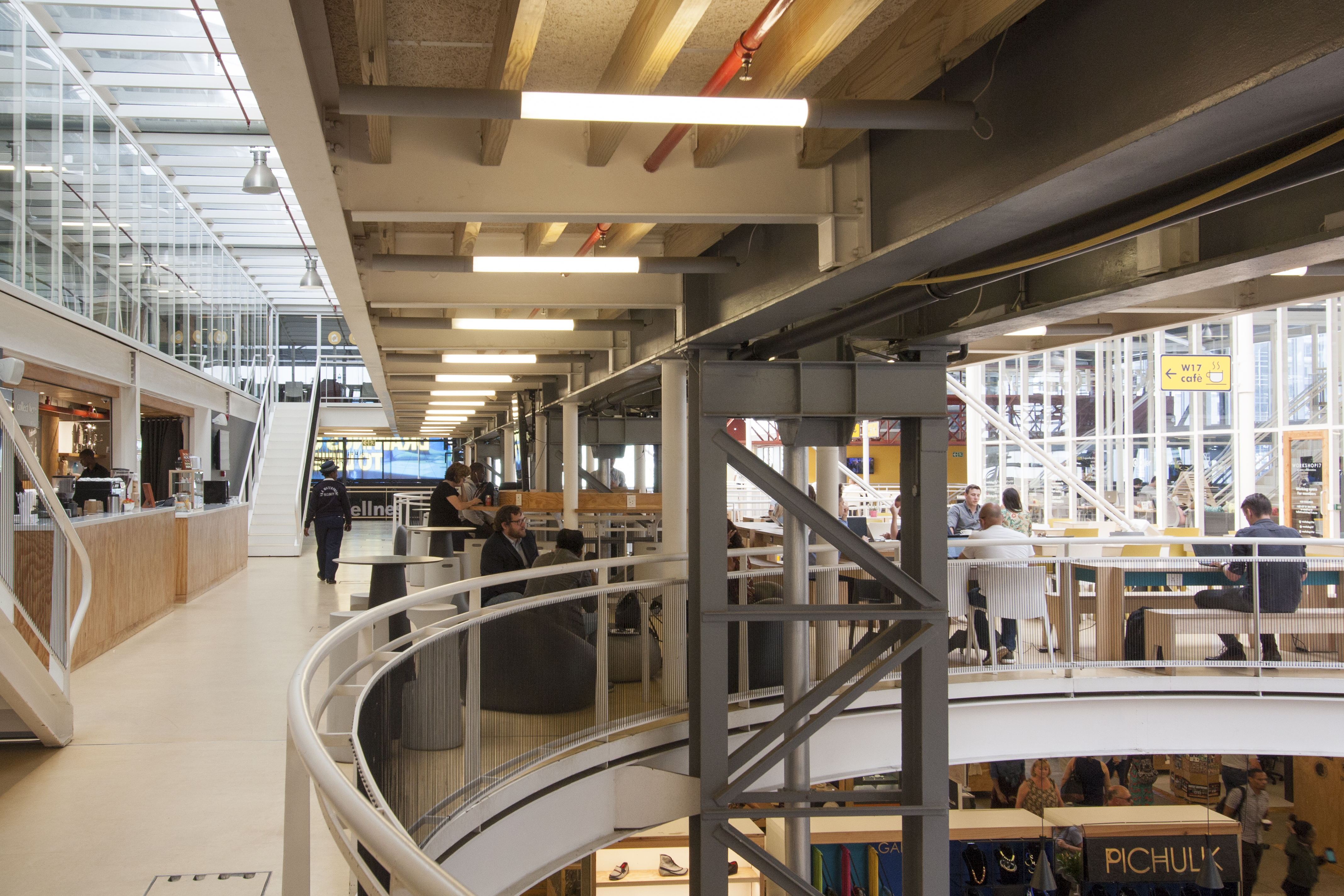
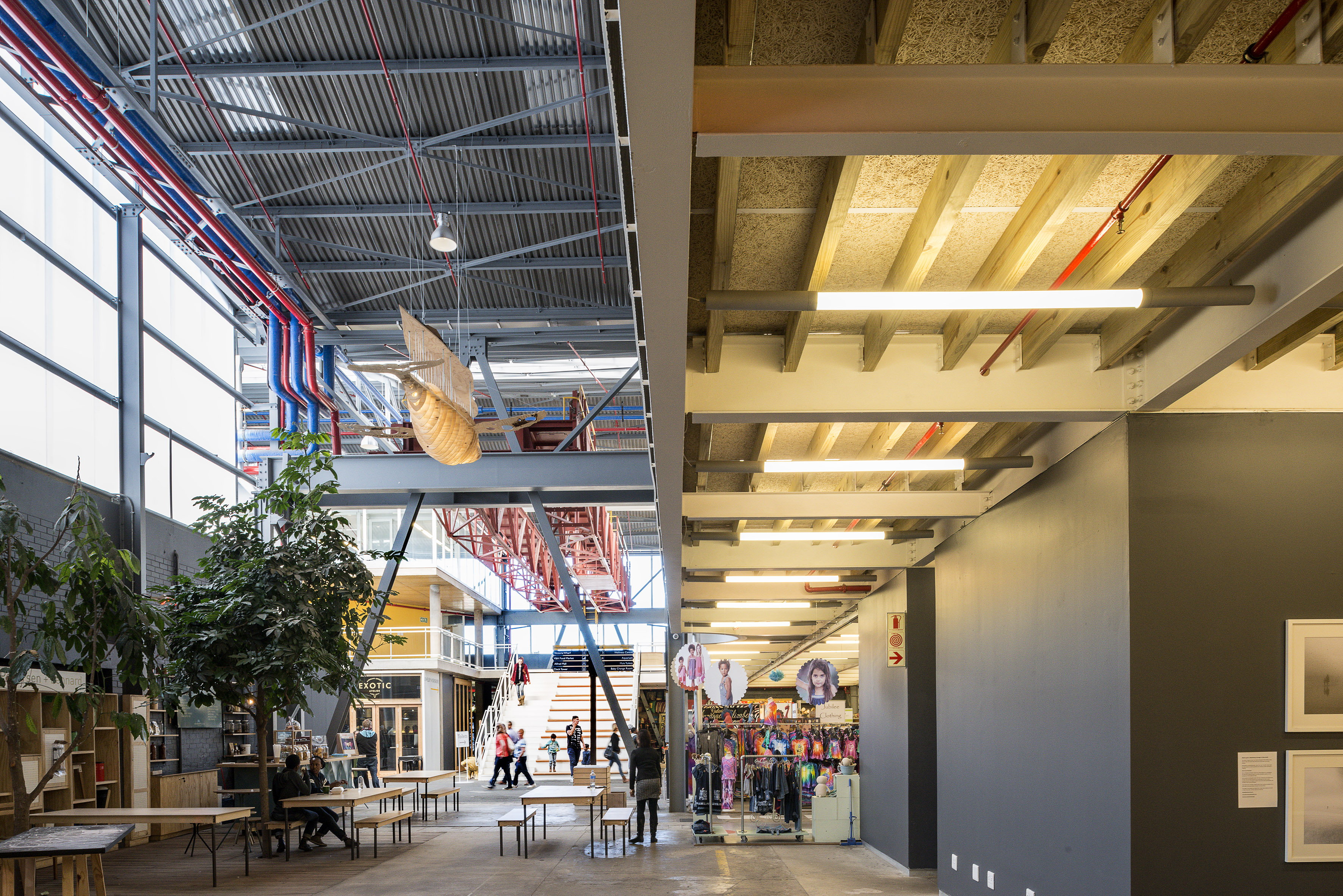
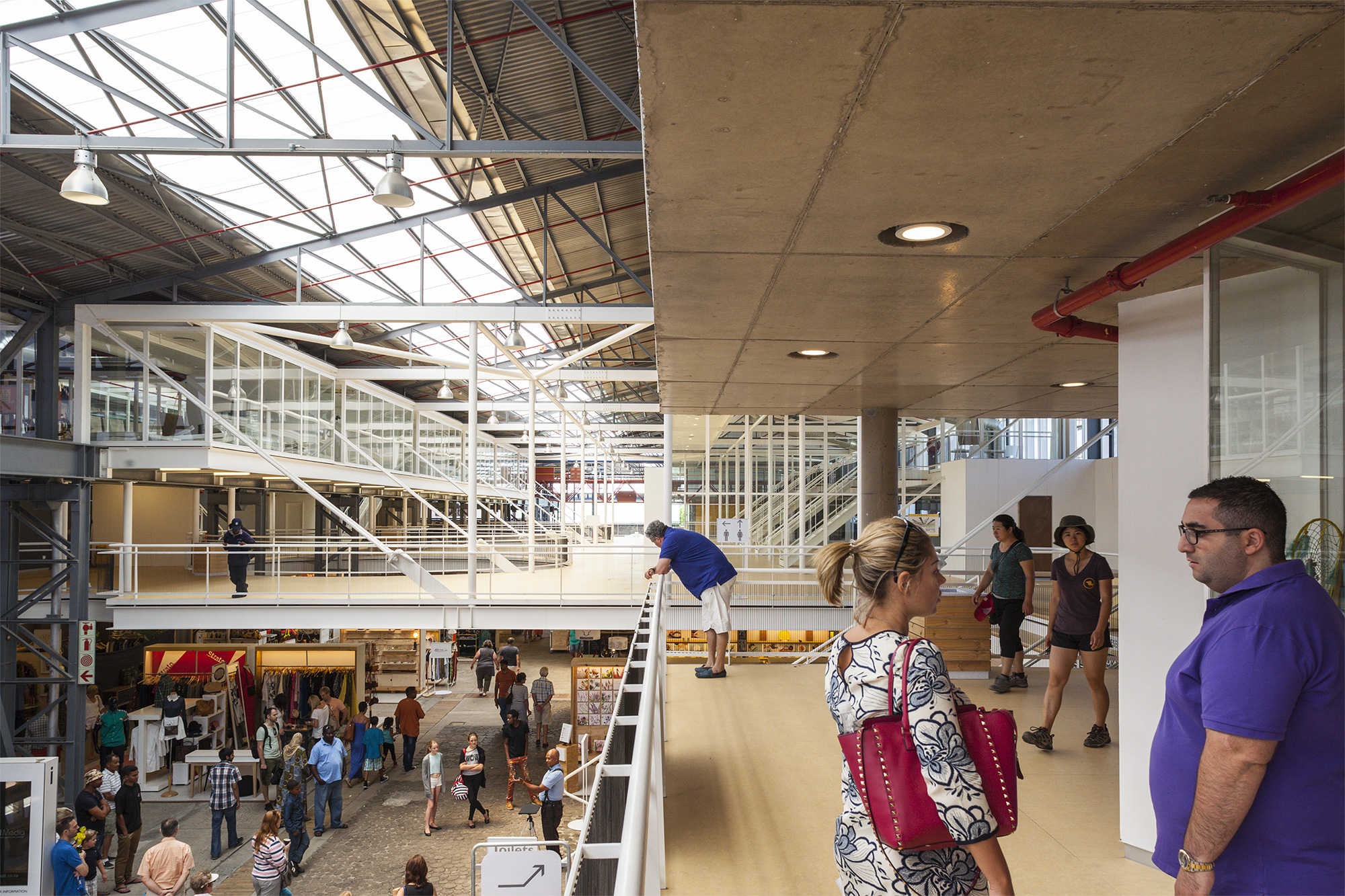
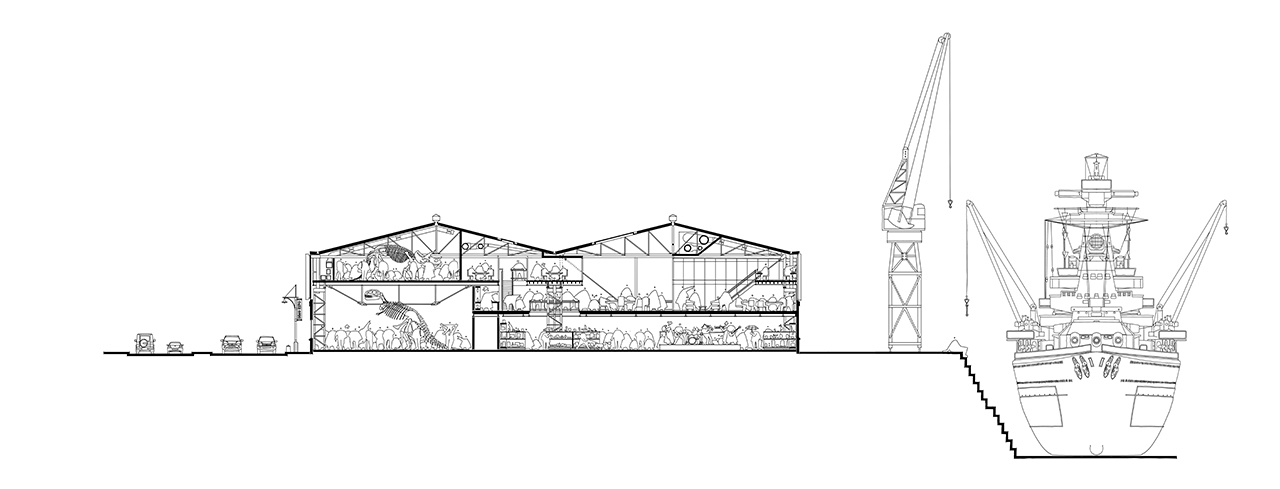
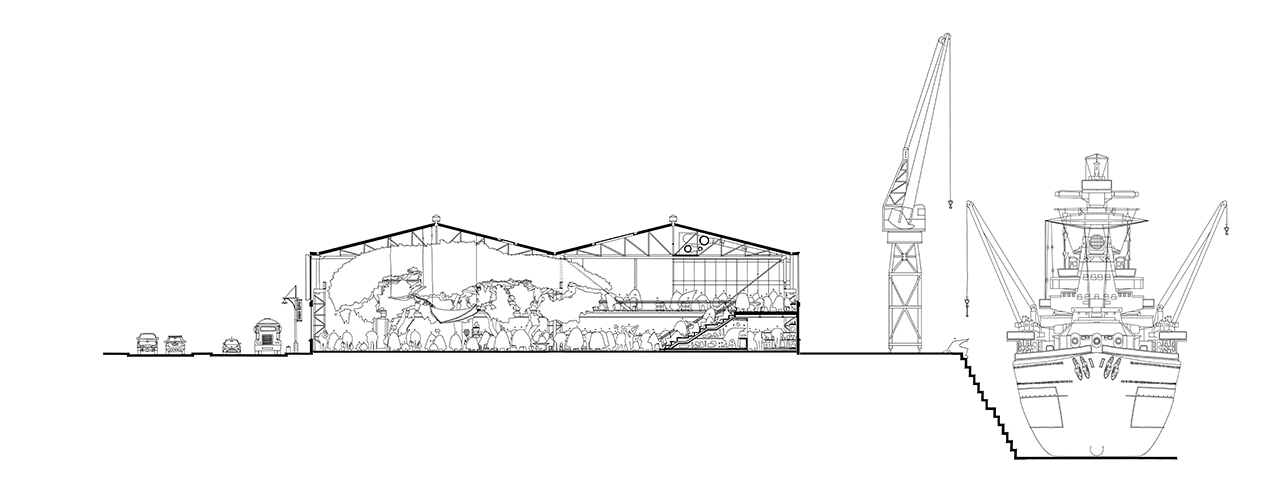
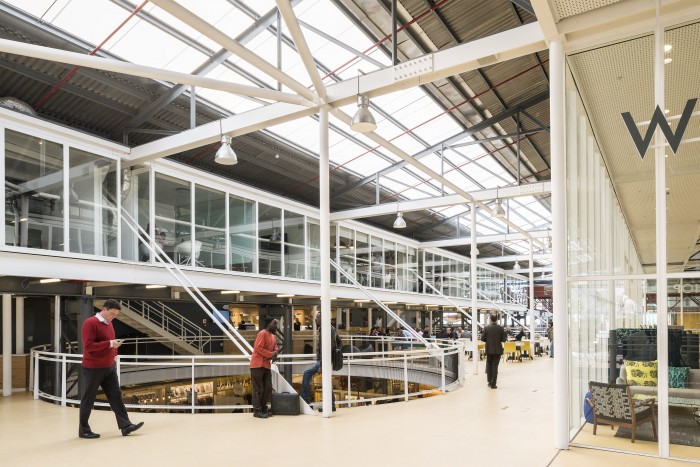
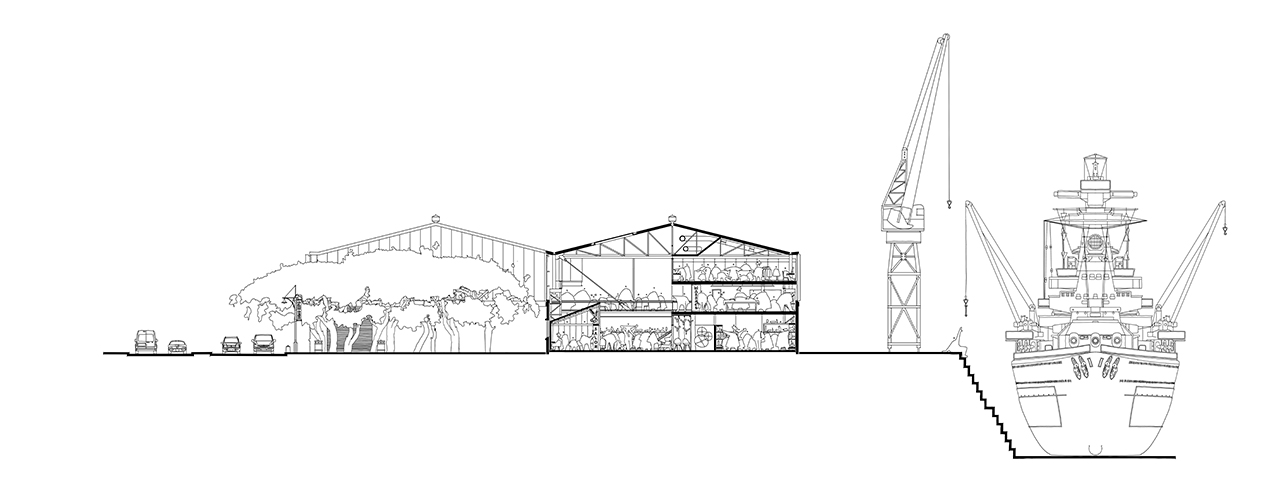
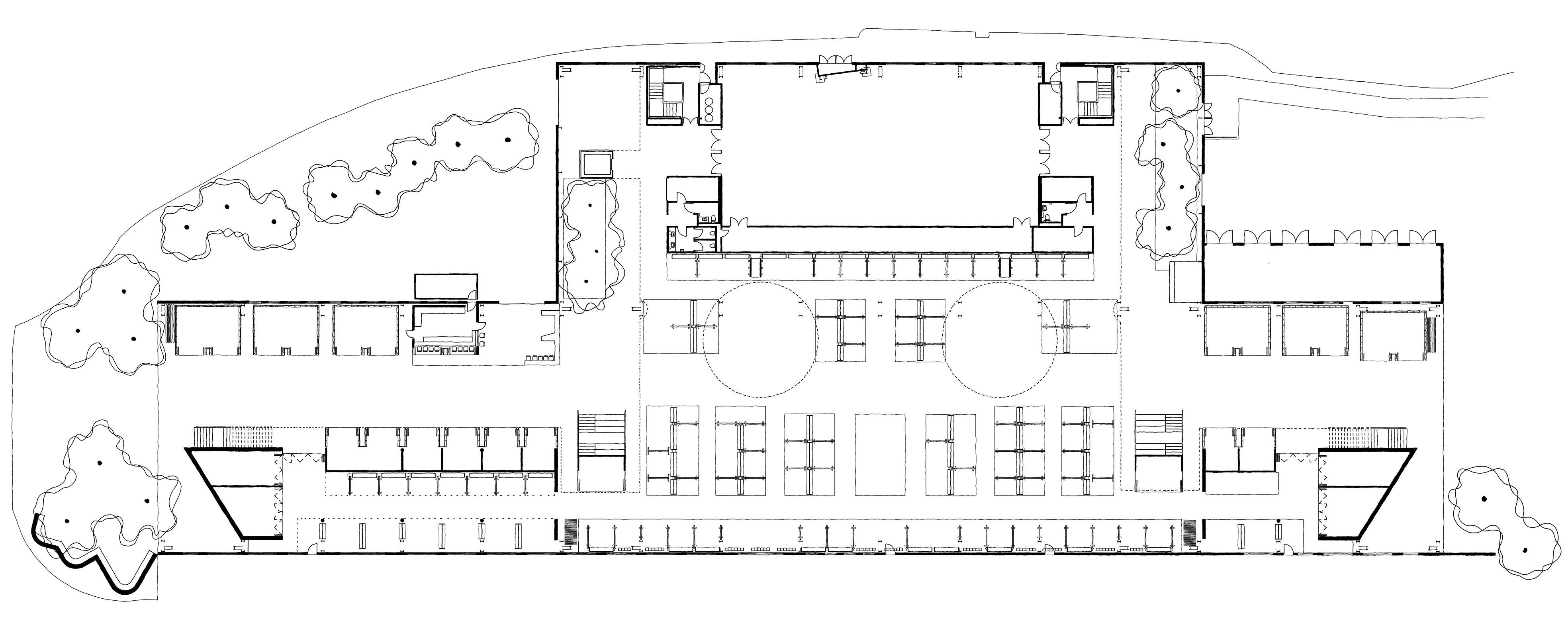
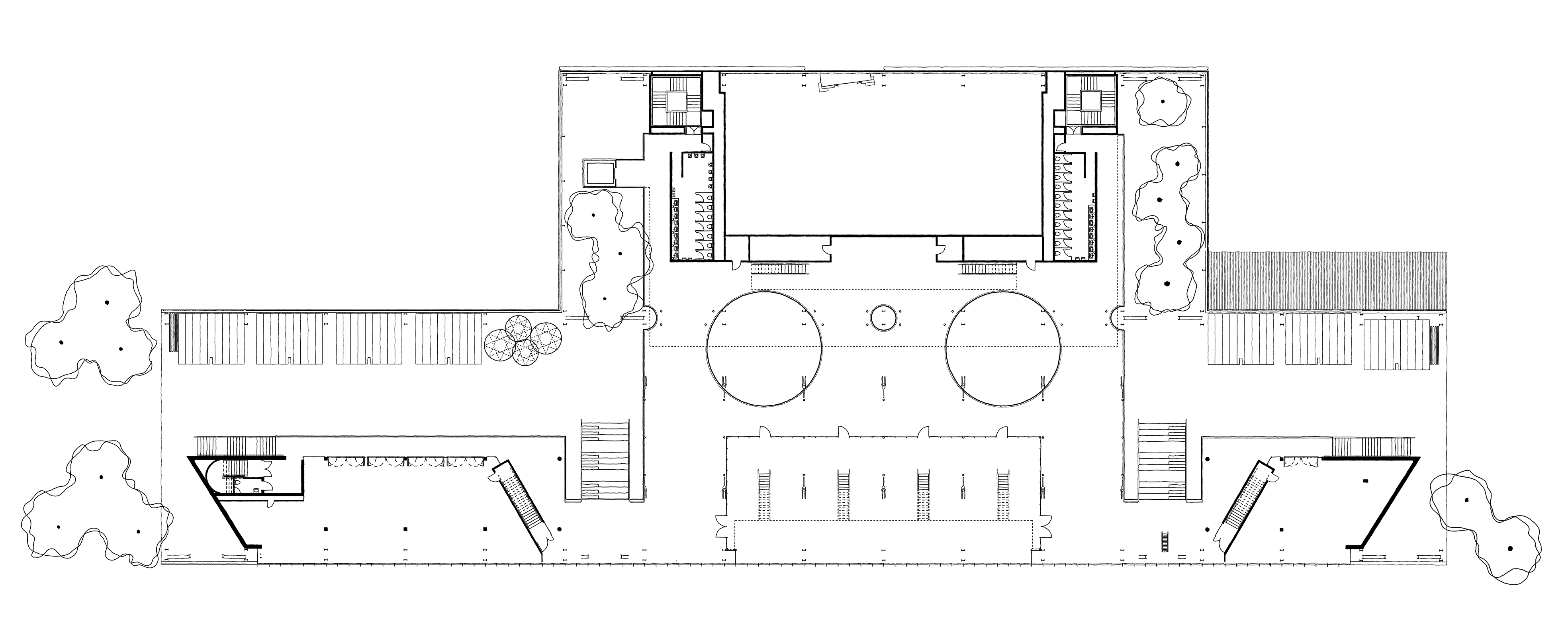
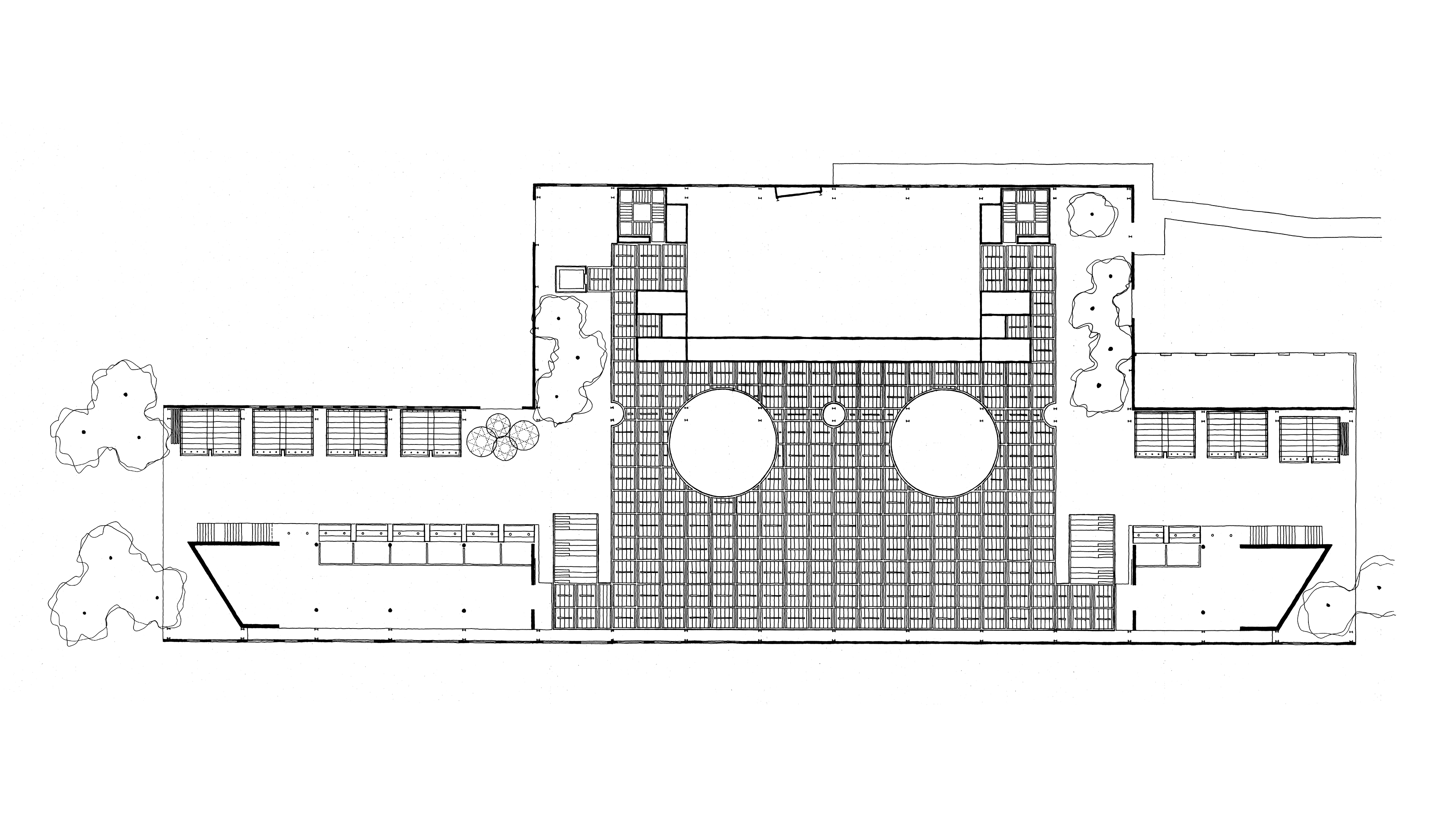
The aim of the project was to increase the intensity and diversity of human interactions in the city. To achieve this, a market, an exhibition venue, some rentable office spaces and green spaces were added to the program. These activities were concentrated along a street which connects to a larger urban network. Perpendicular to the street, a 50 x 50m steel floor hovers over the market with huge openings in the floor that makes interaction between the levels possible. The top floor is a series of mezzanines which are open to the main suspended floor.


by Dave Southwood (6)


To keep the focus on the street rather than the individual stalls, they were designed for the tenants to customise and transform as they want. The urbanity cannot be contingent on a fragile architecture.


by Dave Southwood (2)


05_Cross Section through Deck WEB


by Dave Southwood (17)


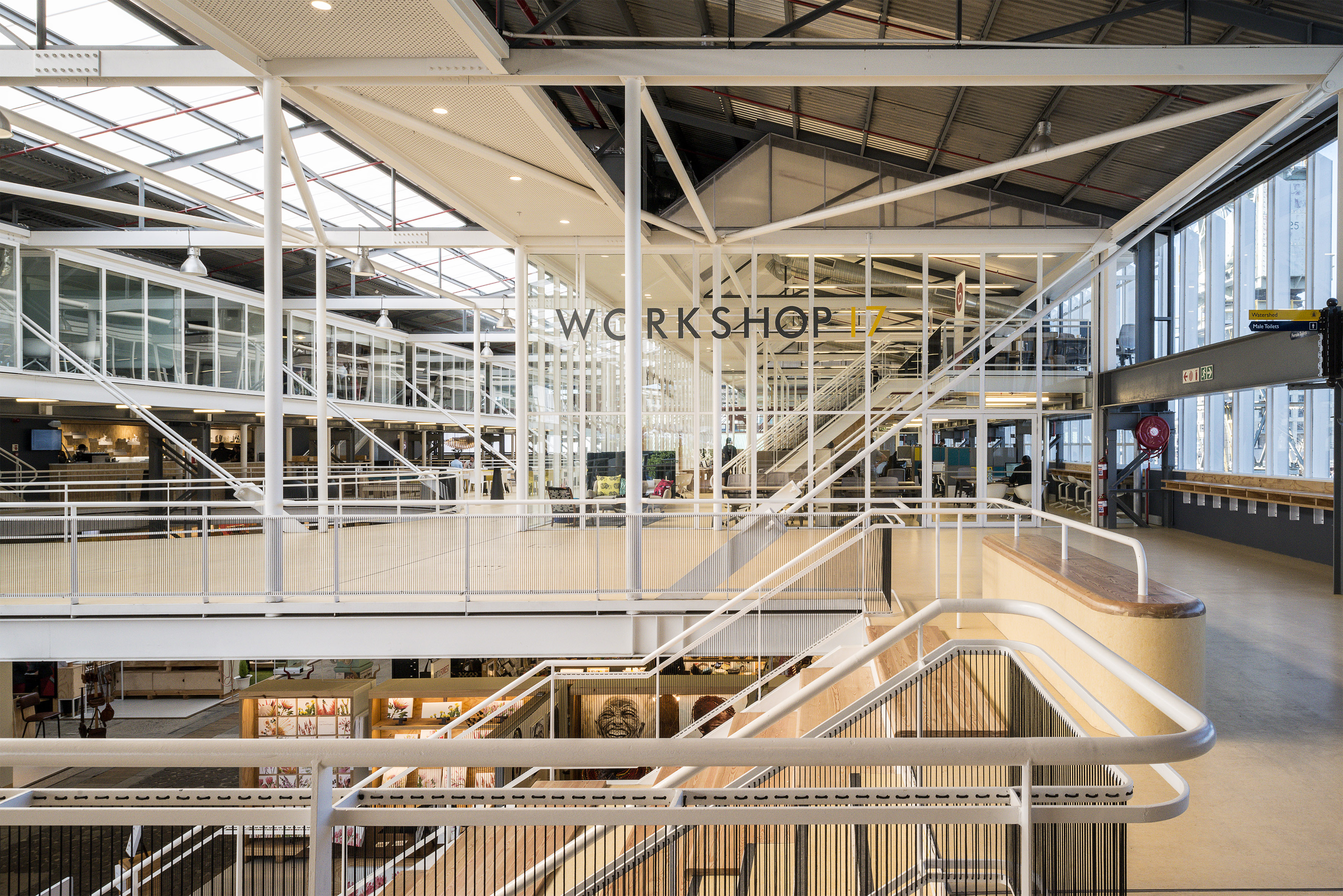
A reciprocity is set up architecturally between the small businesses in the market and the developing businesses in the incubator. For each to watch the activities of the other daily, is educational and stimulating. Both can learn from each other. The business incubator is defined architecturally, not by facades that communicate an appearance, but rather by the suspended floor that makes opportunity below it. This floor also becomes the site for social interaction within an institution that focusses on innovation; a cafe in the centre of the business incubator becomes a social hub for the institution. Socialisation is seen as central to the exchange of ideas and making contact with new people.


by Heinrich Wolff (11)


06_Cross Section through Stair WEB


by Dave Southwood (12)


This project was developed in an existing industrial shed which was originally the electrical repair workshops of the drydock in the Victoria and Alfred Waterfront. The steel frame of the shed contained a gantry crane with gantry rails and lattice columns. The refurbishment of the shed relied on the opportunity offered by the additional structure required for the gantry crane; the 50 x 50m steel floor was suspended off the gantry structure rather than supported from the ground. The large scale A braces which gave lateral stability to the gantry rail were used to mark significant public spaces in the building.


07_Cross Section through Unit A Type WEB


IMG_7743


Z:Central FilesWorkshop 17Workshop17_Market_20140827_Meghan_L

Z:Central FilesWorkshop 17Workshop17_Market_20140827_Meghan_L

04_Reflected Ceiling Plan


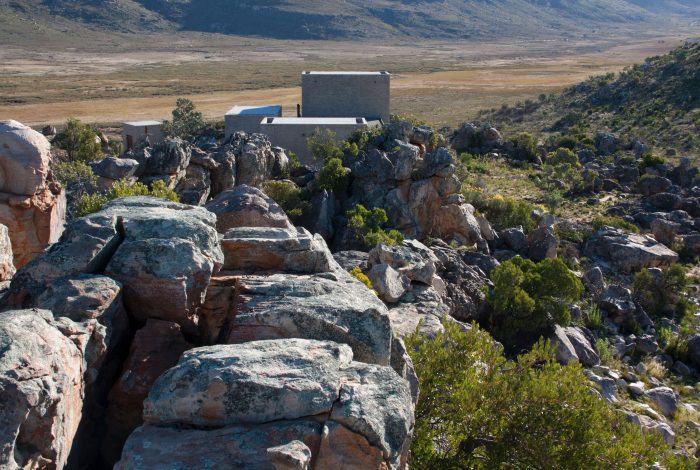
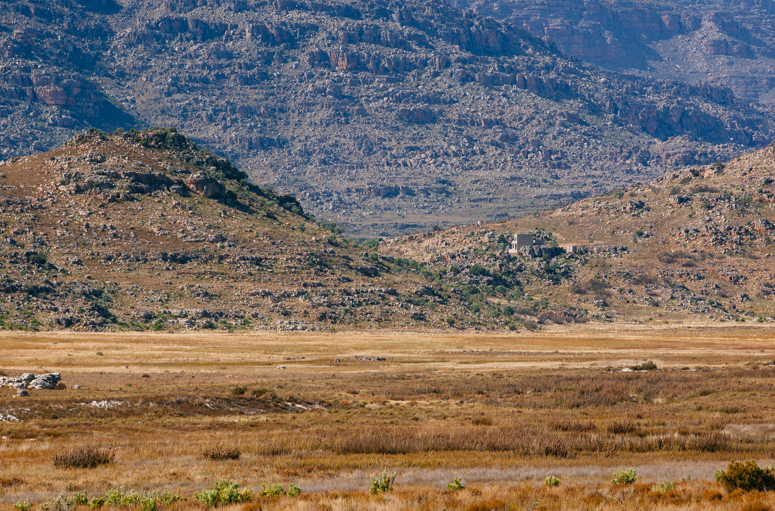
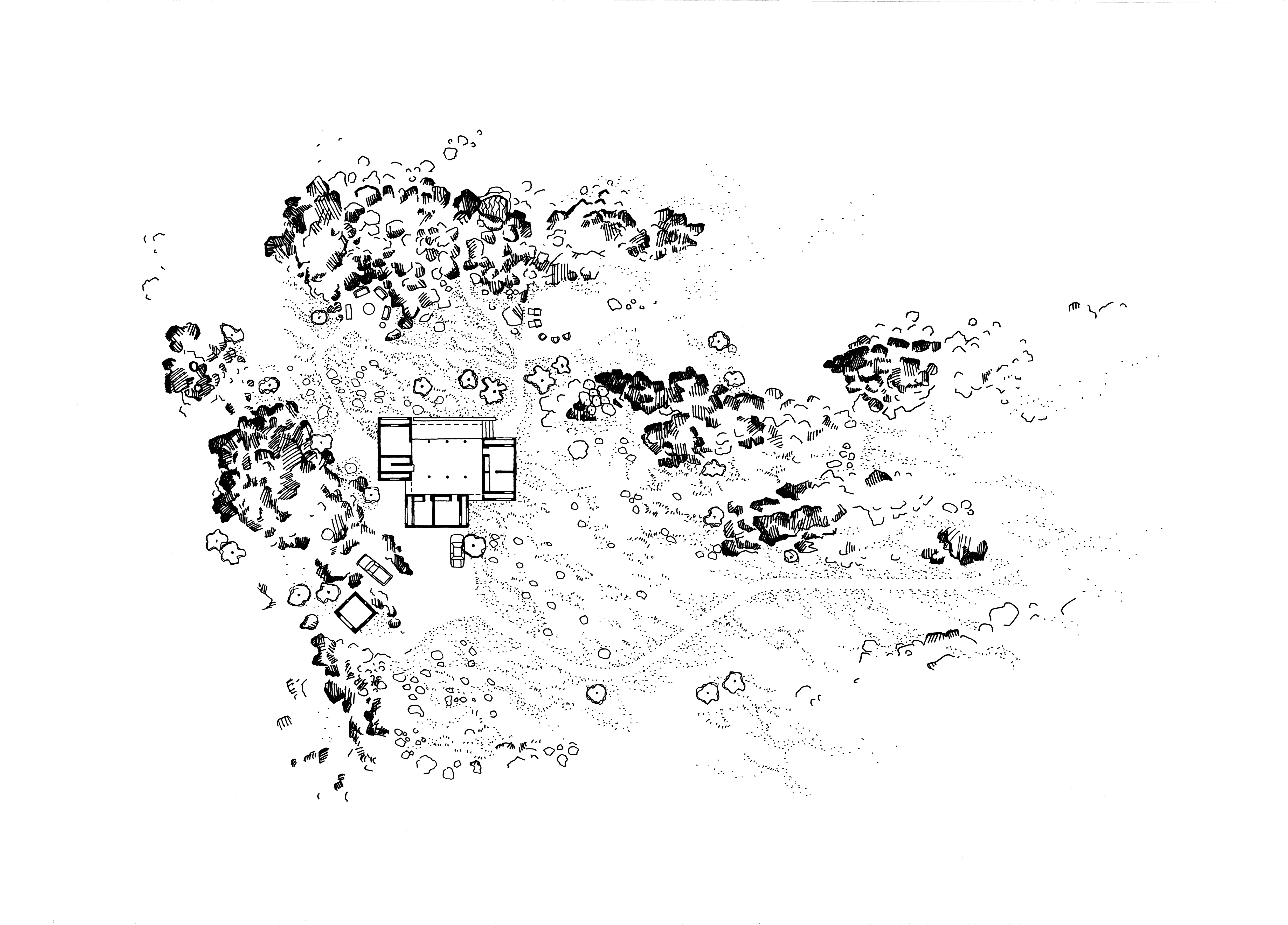
The site for this house is on a farm deep in the Cederberg mountains in South Africa, a landscape dense with biodiversity of the Cape Floristic Region.


The setting for the house was determined by three factors, firstly a ‘bald ’spot in the vegetation was selected (in consultation with botanists) to minimise the impact of the house on the flora.

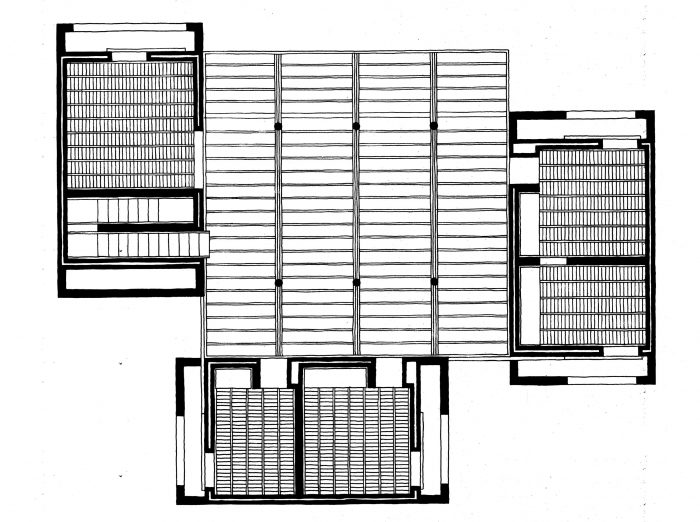
Secondly, since the clients prefer to live outdoors as far as possible, “rooms” were found in the natural landscape which could accommodate outdoor cooking and eating, living and sleeping. The built part of the house facilitates living in the unbuilt part of the house.

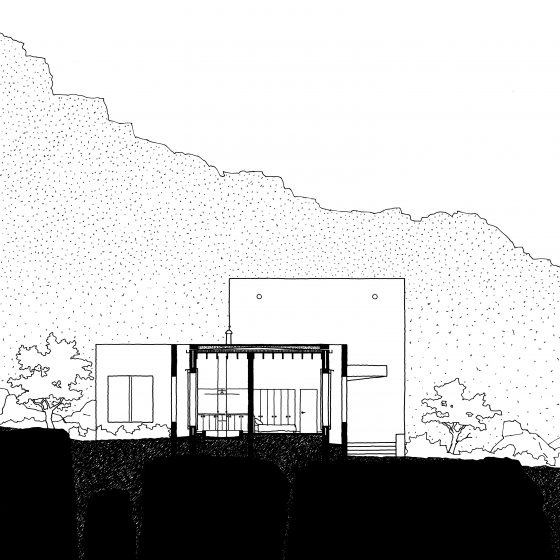
Thirdly, the setting was determined by its ability to compose a view from that specific location; the architects believe that a distant view is not rich enough a view and should be supplemented by articulate landscape features in the foreground and the middleground. For instance, the selected site has rocky ridges right in front of the primary view to the north that creates a defined edge to the space of the house without needing any built means to achieve such a boundary.
1
6

The house should be fireproof and baboon proof, as the area is prone to periodical bush fires and troops of baboons which raid houses for food and will tamper with anything unsturdy which can be grabbed. However, the greatest challenge of the project is to see the site back in our office, 250km away. With no marks of human life on site, (fences, electricity poles, building, etc.) it became very difficult to judge the scale of landscape features. To make matters worse, conventional land surveying produces contour plans that describe the topography only with no ability to describe the plethora of rocks and bush. To design the building we had to develop a way to see the vegetation, rocks and topography simultaneously. The solution was to have the landscape scanned with a 3D scanner, producing a Point Cloud. Instead of following the conventional route of using these scans to produce solid surfaces, we developed ways of using the Point Cloud in its raw state to have the scale and character of the entire natural world present, while we design.


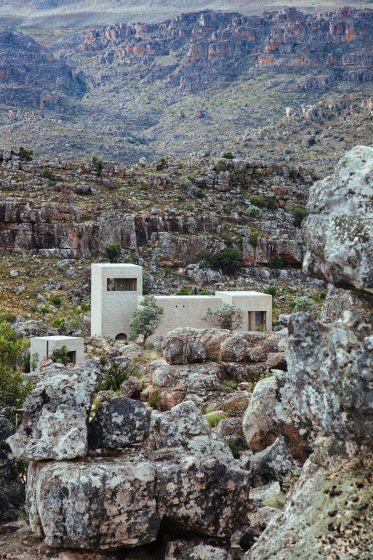
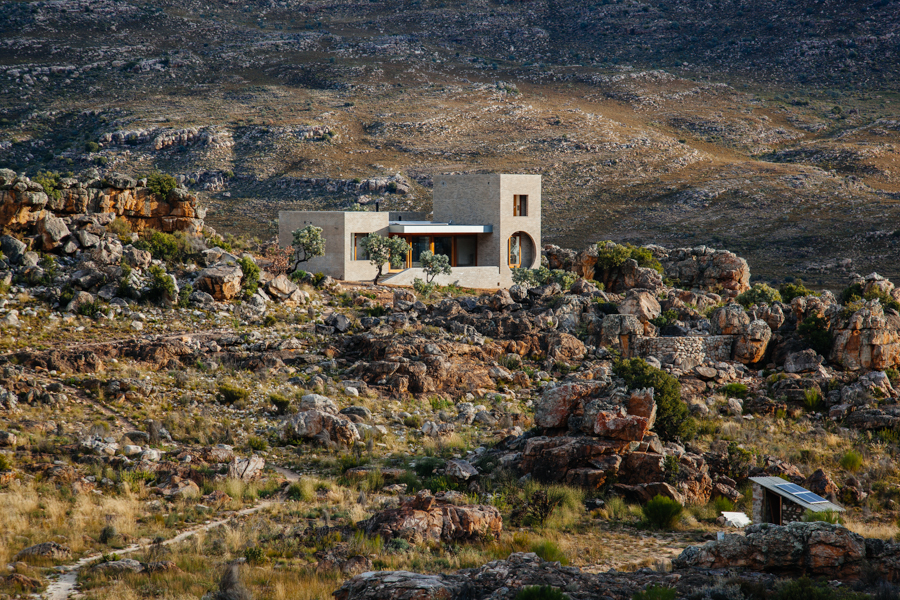
To minimise the visual impact, the house will be built of a material which is identical in colour to the rocks around it; all exterior walls of the blocks are built of fairface cement brick, made with 70% recycled concrete. The brick exterior is necessary to protect the house from bush fires.
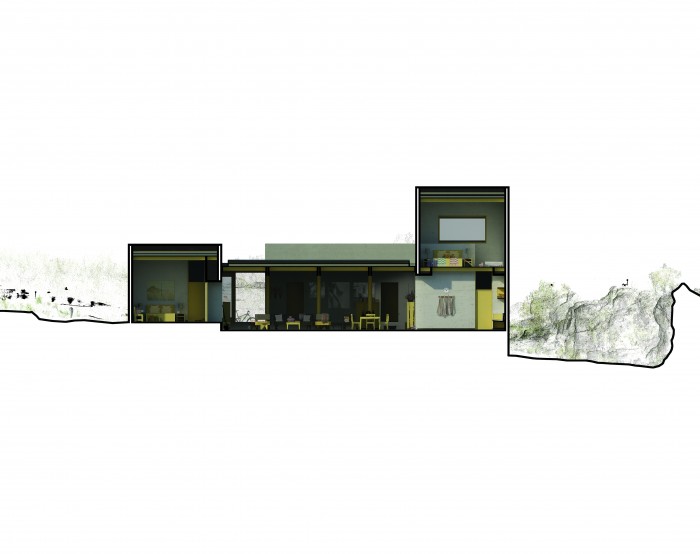
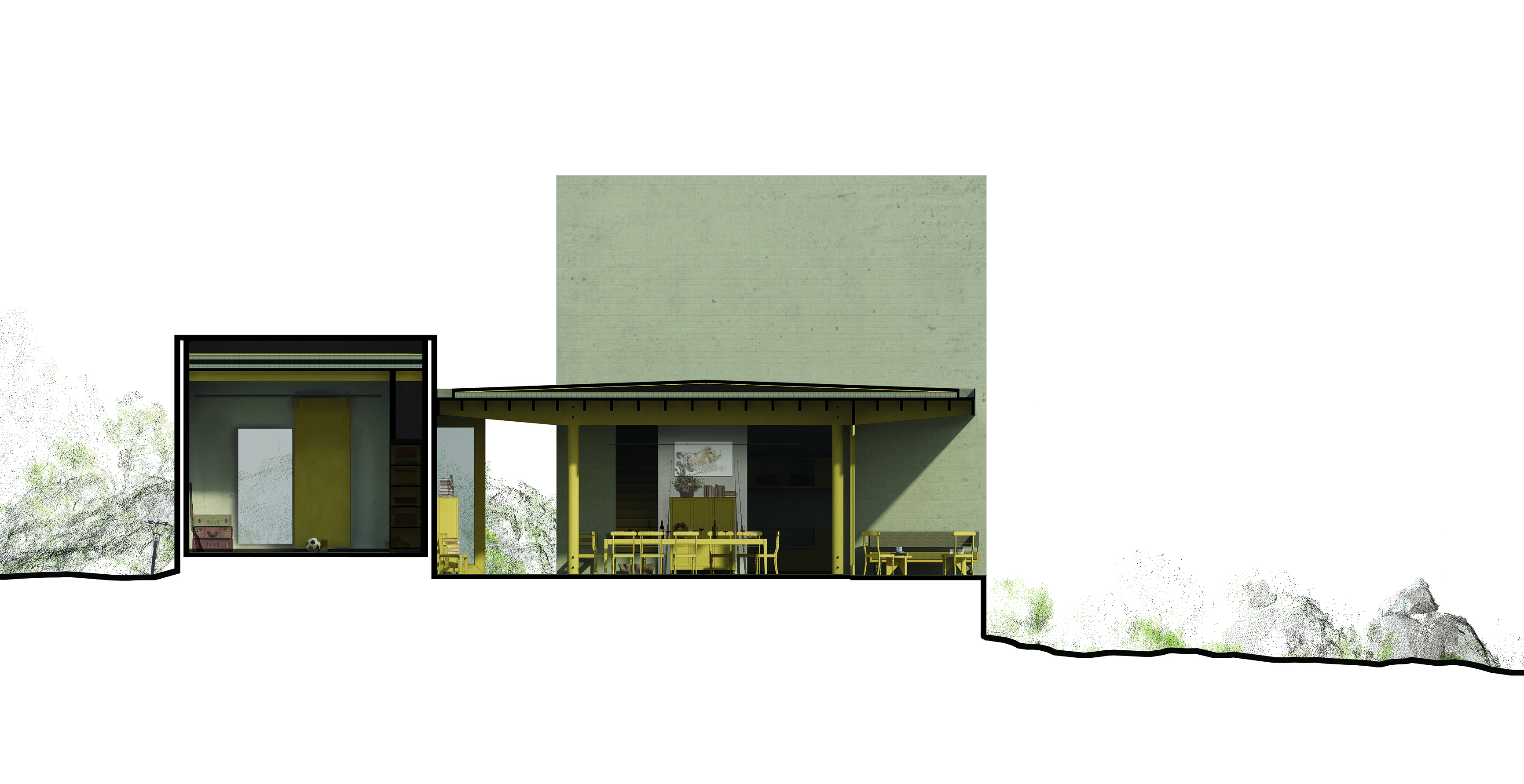
The interiors of rooms are plastered and painted white. All floors are made with polished paving brick with no concrete surface beds. The ceilings are made with South African Pine beams and floorboards, which gives a dominant yellow colour to the interior.


by Dave Southwood
4_by Heinrich Wolff (high res)

8_by Heinrich Wolff (high res)
The farm is within the winter rainfall area of South Africa, with cold winters and very hot summers. A constant Westerly wind comes down the valley and can sometimes be quite harsh. To protect the house against this wind the house was sited next to a rocky cliff to the West. The Western edge of the house was designed to screen the wind from the balcony.

 A large overhang on the Northern side provides protection from the summer sun. The double brick walls to the North do the same job. All the rooms have shutters on the inside of the windows to insulate the openings. Low E glass was used in the living and dining room.

The house has no connection to any outside services; electricity is generated by solar power and stored in batteries for all year round use, water is supplied from a borehole and sewerage is contained on site to protect the vegetation from nutrient rich effluent. The technology used to achieve this was purposefully concealed as we believe that “sustainable” architecture and the aesthetic expressions of “sustainability” are separate matters.

To further minimise the visual impact of the house, the program was split into three separate blocks, containing bedrooms, bathrooms and the kitchen. The living and dining room is conceived of as an enclosed ‘courtyard’between the blocks. The fragmentation of the building mass mimics the broken up rock cliffs around it.
2


In a landscape where there are no marks of human intervention, it is hard to judge the scale of anything. Scalelessness was therefore used as a primary characteristic of the architecture; all conventional external building elements (roofs, downpipes, windows, etc.) were concealed to deprive the observer of anything to judge the scale by. This was achieved by making a double wall on each of the short sides of the blocks which allows openings to be cut into the exterior in the massive brick alone. All openings in the exterior envelope were exaggerated in size to diminish the apparent scale of the building from a distance.

3
5

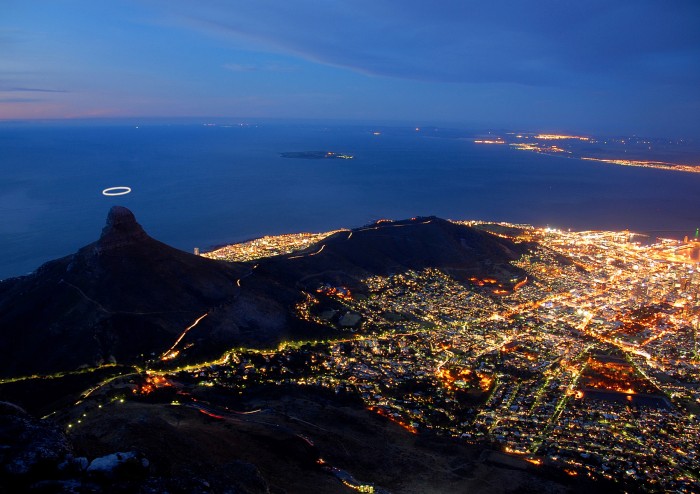
Design something the world will never forget. Something that will be associated with Cape Town forever after. Something temporary.” That was the brief that Wolff Architects received for a structure to celebrate Cape Town as the World Design Capital in 2014.


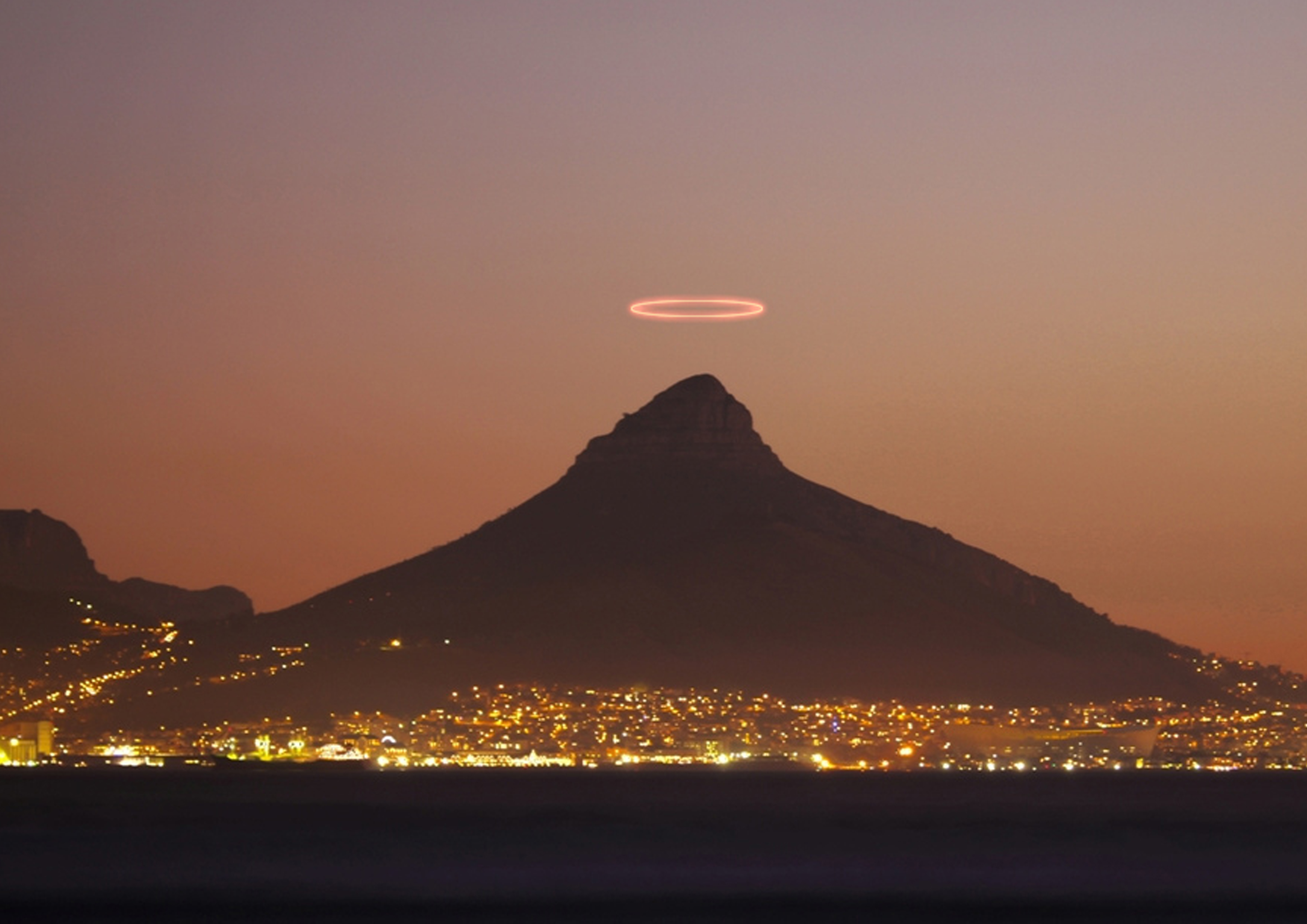
The response was a halo of light, 100m in diameter, that will appear on New Year’s Eve above Lion’s Head. It is an enigmatic device, that celebrates the landscape that defines Cape Town. It is also a gentle satire on the reverence that people have for Table Mountain.


A4 cropped_Project 1_Image 1


As a structure it is more permanent than fireworks and more movable than the Eiffel Tower. The halo has the potential to be used as an instrument of cultural diplomacy; the City of Cape Town can send or lend it to  places and events to celebrate, valorise, question or ridicule. As an incomplete object, the halo requires a site of particular meaning and a moment of revelation. It could be suspended over the Giardini in Venice for the Biennale, Maracanã Football Stadium in Rio for the Soccer World Cup or even the United Nations headquarters in New York during an important decision.


A4 cropped_Project 1_Image 2


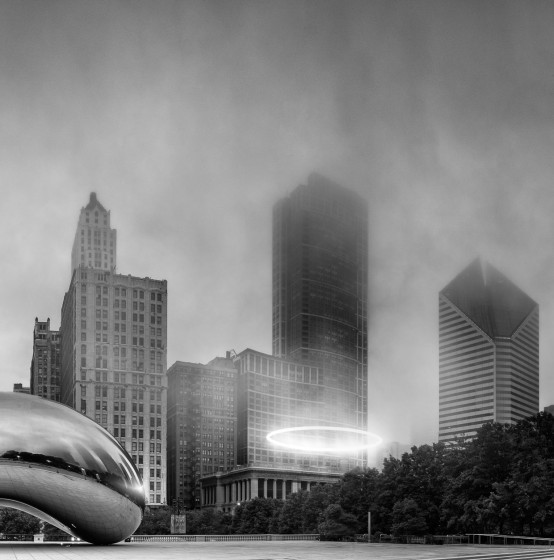
The halo is a time and site specific event, a composite piece that adds meaning and emotion to a place and time. The tensegrity structure of the halo can be supported in various ways which allows adaptation to various sites. Although this project is site specific, it can be specific to various sites. It can be celebratory or political, rooted or intrusive, comforting or critical. As a composite piece, it constructs alternative meanings. Even when removed, the halo leaves an afterimage in which the absence is as memorable as its presence.


Chicago Halo


2017_01_23_Wohnzimmer_Nacht


2017_01_23_Wohnzimmer_tag


2017_02_14_Bad


2017_01_23_Domsicht


2016_05_07_Interim Pinup_5


2016_05_07_Interim Pinup_3


\WOLFF-SERVERWolff-Volume1Central FilesSeippel Gallery2017_


\WOLFF-SERVERWolff-Volume1Central FilesSeippel Gallery2017_