Wolff Architects was appointed to design the scenography for the 61st International Art Exhibition – La Biennale di Venezia 2026, which will take place from May 9 to November 22, 2026 at the Giardini, Arsenale and Forte Marghera venues in the capital of northern Italy’s Veneto region, Venice. Conceived and curated by the late Koyo Kouoh, it features the theme In Minor Keys, calling for a shift in tempo and attention—an attunement to the emotional, sensory and affective registers of art. Rather than offering a didactic survey, In Minor Keys unfolds as a polyphonic composition shaped by motifs such as Shrines, Processions, Schools and Oases.
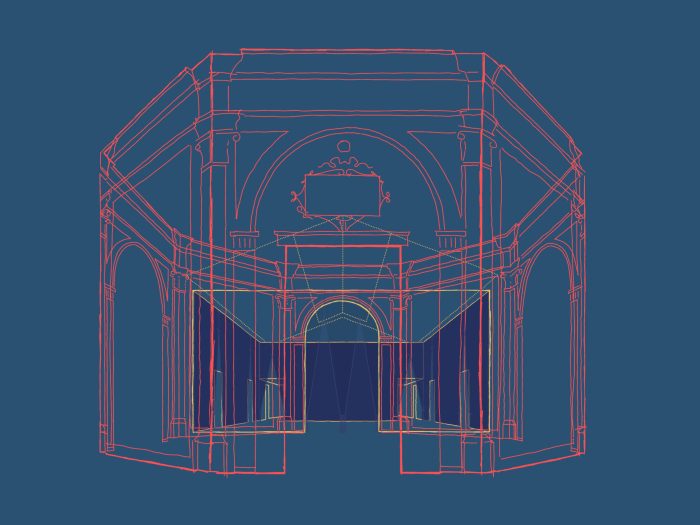
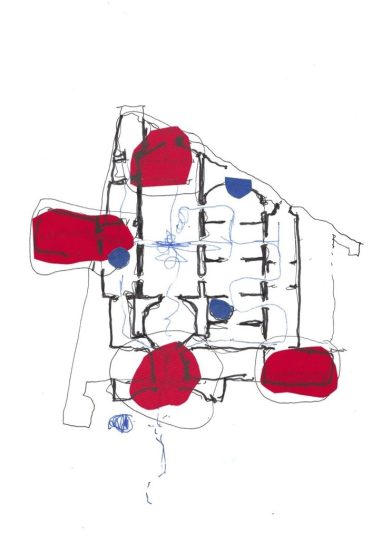
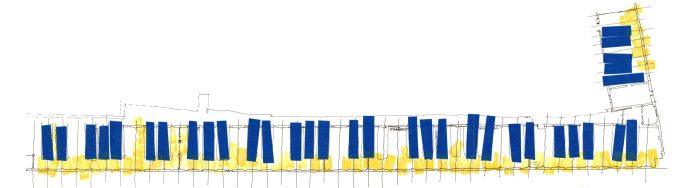
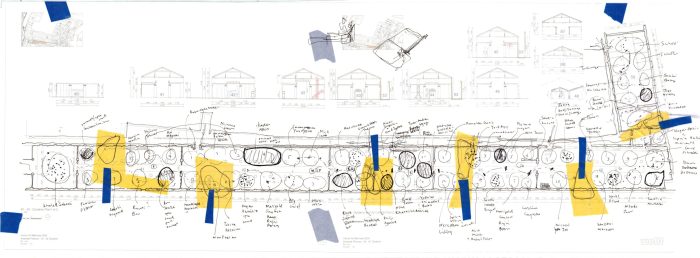
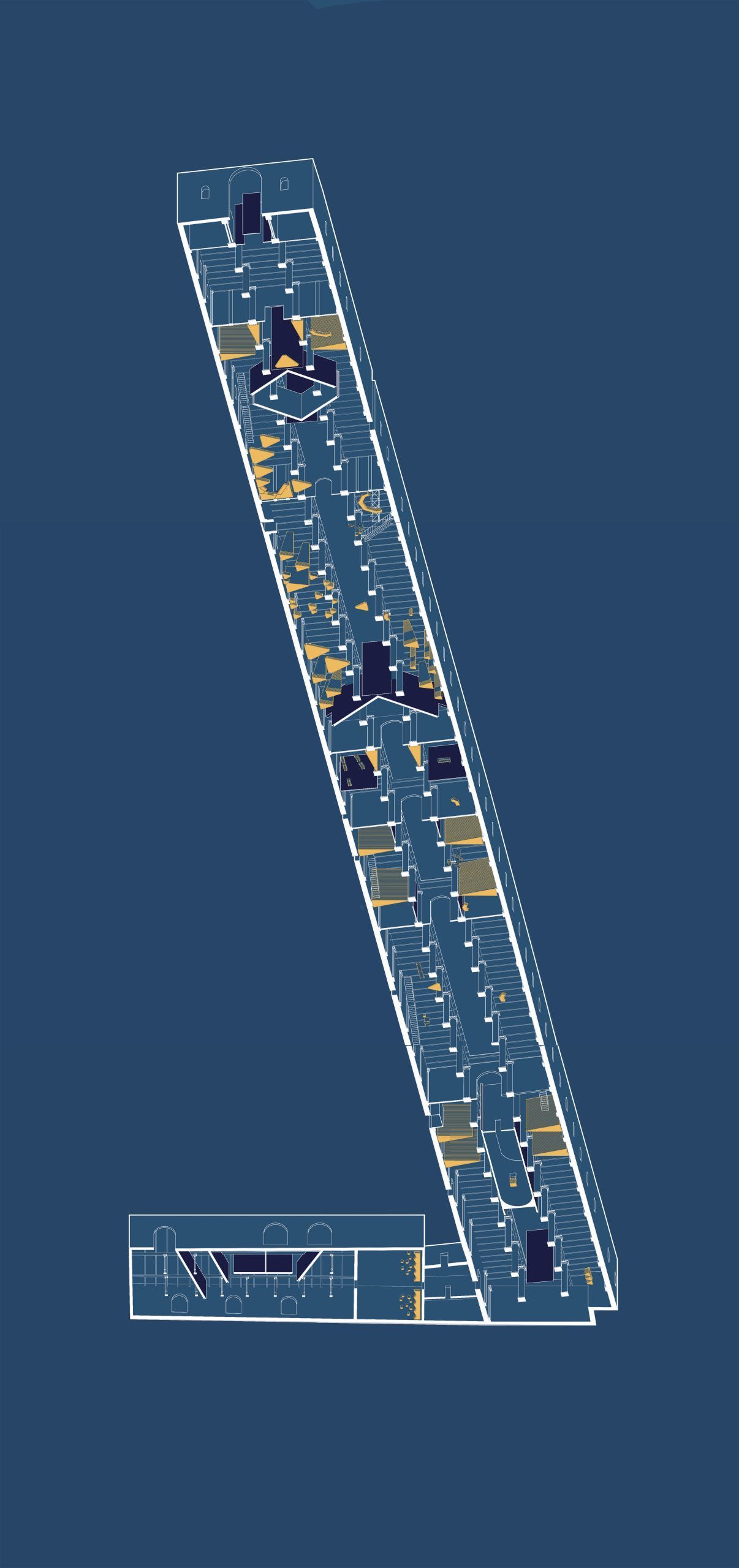
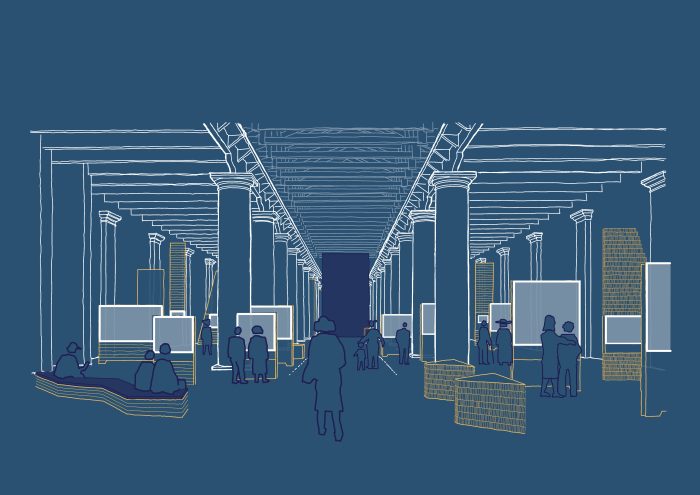
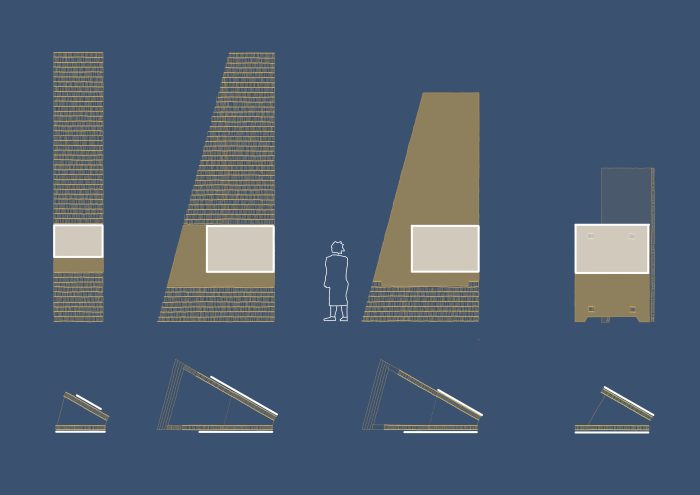
Our design translates this curatorial framework into a spatial language of thresholds, permeability and procession. Across the Central Pavilion in the Giardini and the Arsenale, sweeping indigo textile banners descend from the rafters to graze the floor, marking subtle transitions between atmospheres. These vertical thresholds signal shifts in cadence—closing one spatial movement while opening another—inviting visitors to slow down and cross into distinct yet interconnected artistic universes.
Excerpts from the Curatorial Text by Koyo Kouoh and her team
In Minor Keys – this is an invitation to encounter these words in the immediate physical, meteorological, ambient, and karmic conditions in which they meet you. To shift to a slower gear and tune in to the frequencies of the minor keys. Because, though often lost in the anxious cacophony of the present chaos raging through the world, the music continues. The songs of those producing beauty in spite of tragedy, the tunes of the fugitives recovering from the ruins, the harmonies of those repairing wounds and worlds.
The minor key, in music, alludes both to the structure of a song and to its emotional effects. It is a rich idea, so rich that it quickly overflows its technical definition and spills with metaphor. It summons moods, the blues, the call-and-response, the morna, the second line, the lament, theallegory, the whisper.
The minor keys refuse orchestral bombast and goose-step military marches and come alive in the quiet tones, the lower frequencies, the hums, the consolations of poetry, all portals of improvisation to the elsewhere and the otherwise. The minor keys ask for listening that calls on the emotions and sustains them in return.
The minor keys are also the small islands, worlds amid oceans with distinct and endlessly rich ecosystems, social lives that are articulated, for better and worse, within much larger political forms and ecological stakes. Here, the evocation of the key and the island extends to an archipelago of oases: gardens, courtyards, compounds, lofts, dance floors – the other worlds that artists make, the intimate and convivial universes that refresh and sustain even in terrible times; indeed, especially in terrible times.
Look at the creole garden, you put all species on such a little lick of land: avocados, lemons, yams, sugarcanes …plus thirty or forty other species on this bit of land that doesn’t go more than fifty feet up the side of the hill, they protect each other. In the great Circle, everything is in everything else. — Édouard Glissant, 1993
Koyo saw several conceptual motifs guiding the exhibition. These were not abstractly determined but rather sifted from a reservoir of art that acts deeply on the soul and mind – one of Koyo’s words for artists who worked in this way was galactic. They brought into focus a compositional method for the exhibition, which is not organised according to sections but rather in respect of undercurrent priorities. Among these are “Shrines” – in which prominence is given to the practices of two lodestar artists while exceeding a retrospective impulse; processional assemblies; enchantment in the face of cynicism about what art can do; spiritual and physical rest opened up by the oases – the keys or small islands of artists’ universes; and finally, Koyo’s commitment to artist-centred institution building or “Schools”, in which energy and resource is directed towards a social purpose. These strands leap from practice to practice, snaking an intergenerational path to build across the sites of In Minor Keys.
The motifs carried working titles with the understanding that they would develop in time, yet it wasn’t long before they reached the shores of our collaborators, reverberating with reference points that Koyo had shared. Toni Morrison’s Beloved and Gabriel García Márquez’s One Hundred Years of Solitude were two such touchstones that Koyo offered, as inspiration and gift: texts that connect in their evocation of thresholds between lifeworlds and temporalities. In Beloved, Sethe’s decision to remain at 124 Bluestone Road – a house haunted by her child who died at Sethe’s hands, to spare her from a life of enslavement – sees the protagonist dare to give form to a history when “remembering seemed unwise”. Or consider the image, in One Hundred Years… of a trickle of blood that crosses domestic thresholds, turns corners, and moves across the parlour to arrive at the feet of the character Úrsula, carrying details of the adjacent yet distinct worlds of her neighbours. In both novels, magical realism deepens rather than distracts from an emotional register.
Wolff Architects, were appointed by Koyo Kouoh to realise the design and scenography for In Minor Keys. Following these literary cues, the team honed in on the transformative spatial power of the threshold as a portal to alternative comprehension and experiences, if we follow the invitation there. The intelligence of their design is its generosity to each artist’s universe and to the sensorial experience that can open up between constellations of practices. In the Central Pavilion at the Giardini and in the Arsenale, thresholds are marked via sweeping indigo banners that meet the rafters and graze the floor, calming the senses at the dénouement of one phase and signalling the opening of another.